Bridging Worlds: How Wētā FX Realized the Heightened Reality of Disney’s Live-Action Moana

With the highly anticipated arrival of Disney’s live-action Moana on Disney+, audiences are being treated to a visual spectacle that defies traditional categorization. The film, directed by Thomas Kail, represents a landmark achievement in visual effects, serving as a masterclass in blending tangible, human performances with a digital environment that is as expressive as the characters themselves. Behind this transformation lies the technical artistry of Wētā FX, the powerhouse studio responsible for bringing the volcanic fury of Te Kā, the restorative rebirth of Te Fiti, and a living, sentient ocean to the screen.

In a recent deep-dive episode of the fxpodcast, the creative leads from Wētā FX—Animation Supervisor Anneka Fris and Visual Effects Supervisor Stephen Unterfranz—peeled back the curtain on the studio’s massive undertaking, which encompassed 441 complex VFX shots. The result is a film that exists in a state of "heightened reality," where the line between the physical plate and the digital extension vanishes.

The Challenge of a Heightened Reality
The core mission for the Wētā FX team was to navigate a unique visual tightrope. This was not a standard live-action film requiring simple digital set extensions, nor was it a fully animated feature with the freedom to stylize every frame at will. Instead, the team had to ground Catherine Laga‘aia (Moana) and Dwayne Johnson (Maui) within a world that felt both physically plausible and magically elevated.

"The goal was to create this really heightened reality," explains Anneka Fris. "We wanted to nod to the original 2016 animated feature, where everything was based in reality but possessed a distinct, magical quality."

Achieving this required a seamless integration of light, physics, and performance. The production team had to ensure that when an actor stood in front of a blue screen, the lighting cues—flickering lava, moonlight, or the spray of the sea—felt as though they were being captured by the same camera lens. This was not merely a technical hurdle; it was a narrative necessity. If the environment felt too "CG," the emotional weight of the actors’ performances would be undermined.

A Chronology of Innovation: From Previs to Final Frame
The development of the film’s visual language began early in 2023. Fris and the team spent months working through extensive pre-visualization (previs) and technical visualization (techvis) to solve the logistical puzzles presented by a film set almost entirely on the open ocean.

The Foundation: Motion and Mechanics
For the critical canoe sequences, the production utilized a full-scale, practical canoe mounted on a motion-base gimbal. This was a crucial decision; by providing the actors with real physical movement, the team ensured the performances were authentic. Wētā FX then generated vast libraries of simulated water movement. By connecting the digital sea to the mechanical rise, fall, and roll of the gimbal, the camera felt physically tethered to the ocean’s dynamics, avoiding the "floating" sensation often found in heavy-VFX sequences.

The Third Act: Sculpting the Storm
As the film progresses into its high-stakes third act, the environment becomes an emotional participant. Around the volcanic goddess Te Kā, the landscape is shrouded in ash and perpetual night, creating a visual contrast with the lush, light-filled island of Te Fiti. Visual Effects Supervisor Bill Westenhofer pushed for a "flexible" boundary between these states. Wētā FX responded by constructing an art-directable ceiling of volumetric clouds. This allowed the filmmakers to control exactly when and where sunlight pierced through the darkness, ensuring the lighting matched the emotional intensity of the scene.

Te Kā: When Animation Becomes Effects
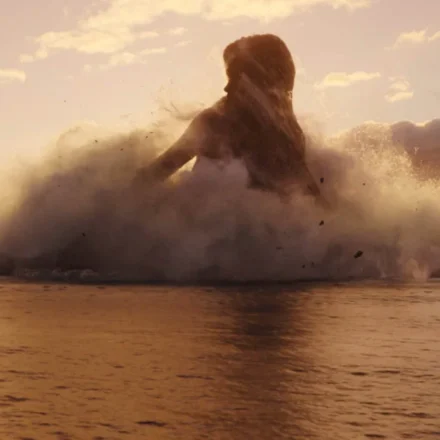
Perhaps the most daunting task for the team was the creation of Te Kā. The character represents a rare intersection where the traditional boundaries of animation, fluid simulation, and lighting completely dissolve.

Te Kā’s performance is a hybrid. Her surface is constantly in flux—crusting, breaking, and reforming—yet she must deliver an emotional performance that communicates her internal pain and rage. The animation team utilized a simplified puppet to define the character’s emotional temperature and limb placement. This data served as the blueprint for the effects artists, who then built complex, high-fidelity simulations around the animation.

The collaboration was a continuous loop. If a simulation threatened to alter the "emotional pose" of a shot, the team adjusted the animation to compensate. This was particularly vital for the lighting: Te Kā is a living, moving light source. If her lava glow was too bright, it washed out the scene; too dim, and she lost her menacing presence. Wētā FX introduced subtle heat haze and flickering light onto the actors, binding the character to the live-action plate and keeping the audience immersed in the danger.

The Living Ocean and the Demigod
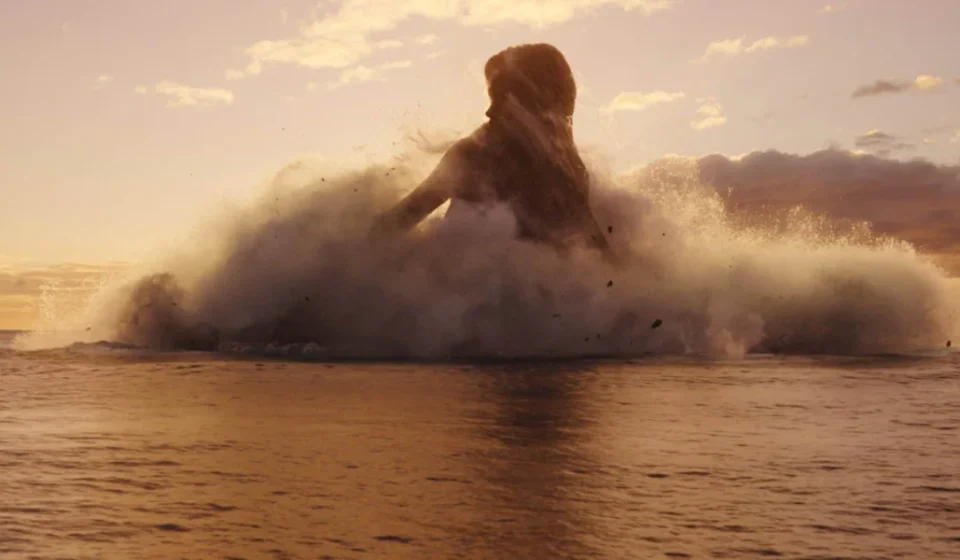
The ocean itself is perhaps the most famous character in the Moana universe. Simulating water at scale is notoriously difficult, but making that water "act" with playfulness and curiosity is an entirely different beast. Wētā FX approached the ocean using the classic "flour-sack" animation exercise—focusing on base shapes and timing to convey intent before adding the complex details of foam, spray, and bubbles.

Similarly, the digital version of Maui had to bridge the gap between Dwayne Johnson’s physical performance and the demigod’s heroic, animated proportions. The team utilized custom motion-capture sessions, where performers were suspended in harnesses to mimic the gravity-defying leaps of the character. These movements were then blended into the digital double, ensuring that even when the character transformed into a giant hawk, the audience could still feel the distinct "Maui-ness" in his flight patterns.

Supporting Data and Technical Precision
The scale of the production is reflected in the sheer volume of data managed by Wētā FX. The studio handled 441 shots, each requiring a sophisticated mix of:

- Fluid Dynamics: Used for both the ocean and the volcanic lava, requiring days of processing time for individual sequences.
- Volumetric Rendering: Employed for the storm clouds and ash, allowing for real-time adjustments to density and lighting.
- Digital Ecosystems: The rebirth of Te Fiti involved an intricate library of Pacific-inspired vegetation, which had to be carefully managed to prevent "clipping" during the character’s transformations.
The team’s ability to maintain continuity across these disparate elements is a testament to the power of their proprietary software and the collaborative spirit of the artists involved. By building "geometric proxies" for elements like Te Fiti’s crown, animators were able to understand the physical space occupied by the vegetation, allowing for realistic interactions between the goddess and the environment.

Official Perspectives: The Philosophy of Belief
In their conversation on the fxpodcast, both Anneka Fris and Stephen Unterfranz emphasized that despite the cutting-edge technology at their disposal, the ultimate goal remained the "oldest challenge in animation."

"It’s about persuading the audience that what they are seeing is believable," Unterfranz noted. "Even with all the fluid equations and the rendering power, there is still a massive amount of human input required to get things dialed in."

The studio’s philosophy was to treat every shot as a physical space. By having the camera "ride" the waves and having the actors react to light sources that were simulated later in the pipeline, the team ensured that the digital work never felt like an overlay. Instead, it felt like an extension of the physical world.

Implications for the Future of Filmmaking
The work on Moana sets a new benchmark for live-action adaptations of animated properties. By successfully merging the stylized, magical aesthetic of the original 2016 film with the tactile, realistic demands of a live-action production, Wētā FX has provided a roadmap for future filmmakers.

The implications are significant. We are entering an era where the distinction between "live action" and "animation" is increasingly irrelevant. As software becomes more efficient at handling complex, art-directable simulations, we can expect to see more films that lean into this "heightened reality." The success of Moana suggests that audiences are not only ready for this aesthetic but are deeply engaged by it, provided the technology remains in service of the emotional story.

For those interested in the minutiae of the production, the full fxpodcast interview with Fris and Unterfranz provides a granular look at the specific software pipelines and artistic decisions that turned a blank blue screen into the vibrant, living world of Motunui. As the industry looks toward the next generation of visual storytelling, the techniques pioneered for Moana will undoubtedly serve as a foundational pillar, proving that when physics and art are perfectly balanced, the impossible becomes entirely believable.