Bridging the Immersive Divide: Main Course Films Achieves First Full Conversion of Apple Immersive Video to 2D Cinema

In the rapidly evolving landscape of high-end digital cinematography, the challenge of "format agility" has long plagued content creators. Filmmakers working with cutting-edge immersive technologies—specifically Apple Immersive Video (AIV)—have historically faced a daunting "walled garden." Footage captured for the expansive, 180-degree stereoscopic environment of the Apple Vision Pro was essentially tethered to the headset, with no viable path to reach the global audience of traditional 2D displays without compromising the integrity of the work.
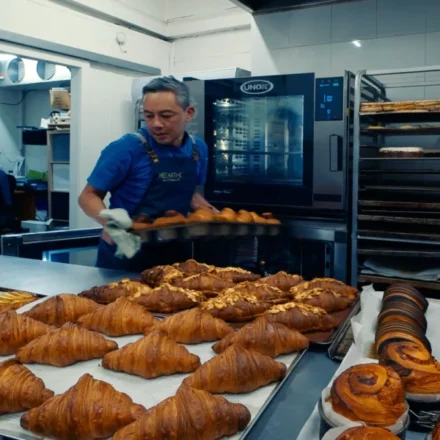
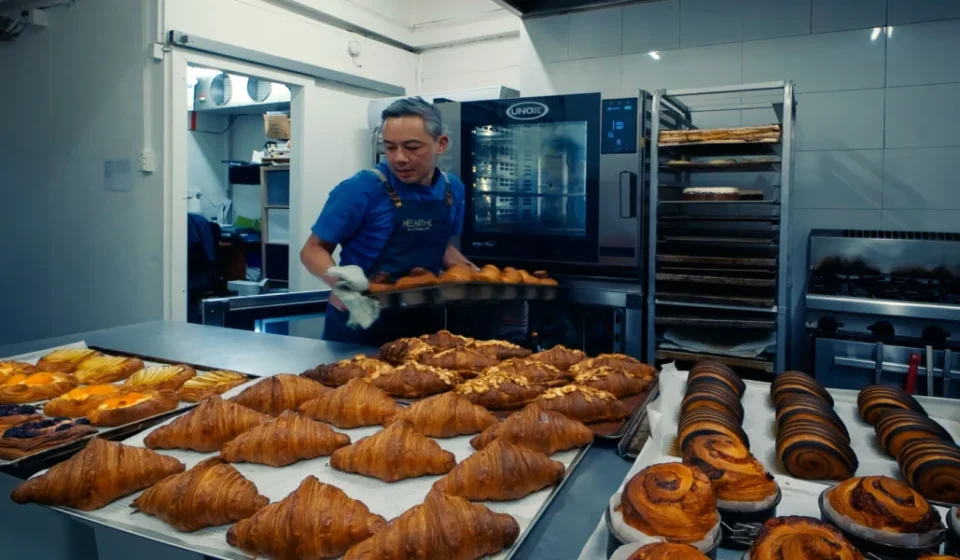
That barrier has officially been broken. Main Course Films (MCF), the production house behind the acclaimed documentary short Thé Fine Dining Bakery, has successfully completed what is being described as the world’s first full-length conversion of an Apple Immersive Video project into a conventional 4K Scope (2.40:1) format, complete with a 7.1 surround sound mix. This milestone marks a pivotal moment for producers, potentially turning the high-barrier entry of immersive filmmaking into a multi-platform asset.

The Technical and Conceptual Chasm
The difficulty in converting AIV content is not merely a matter of resolution or bitrate; it is a fundamental collision between two different philosophies of visual storytelling. In AIV, the viewer is the director of their own gaze, possessing the freedom to pan, tilt, and scan a 180-degree field of view. The cinematographer’s role in this medium is to provide "soft guidance," ensuring that while the viewer has autonomy, the narrative beats remain accessible.
Translating this into a fixed 2.40:1 frame—where the filmmaker dictates every aspect of the composition—requires a complete reimagining of the editorial flow. Writer, Director, and Editor Clara Chong notes that the obstacles were as much conceptual as they were technical.

"Because the way we experience AIV is on a biological level, there are many factors that we had to take into account, such as pacing," says Chong. "We have been attempting to reach a down-converted version of this over the last year, but we are only now at a point where we are happy with the results in terms of both technical quality and the conceptual approach."
Chronology of the Transformation
The journey to bring Thé Fine Dining Bakery to traditional screens began shortly after the film’s initial release in mid-2025. While the original immersive version continues to find its audience on the Fovii and Theatre platforms, the MCF team, led by Chong and cinematographer/colorist Ben Allan (ACS, CSI), sought to unlock a wider distribution window.

The production timeline saw several distinct phases:
- Initial Capture (2025): The film was captured using the URSA Cine Immersive camera, recording high-resolution stereoscopic files that retained complex metadata, including Inter-Lens Pupillary Distance (ILPD) and motion data.
- The Workflow Shift: The team moved from a direct-from-BRAW workflow to a sophisticated ProRes pre-render pipeline. By rendering the conformed edit into stereoscopic 3D ProRes, they could retain essential metadata while applying noise reduction and technical corrections.
- Dynamic Re-Framing: Over the latter half of 2026, the team utilized DaVinci Resolve’s Fusion page to "re-shoot" the film within the 2D frame. Using the Immersive Patcher tool, they mapped the 180-degree fisheye space onto a flat 2.40:1 canvas.
- Audio Reconstruction: Following the visual lock, the team tackled the complex task of folding an Apple Spatial Audio (ASAF) mix into a 7.1 surround sound environment, culminating in the final master released in late 2026.
Supporting Data: Workflow Innovations
The technical heavy lifting was performed within Blackmagic Design’s DaVinci Resolve Studio. The team avoided the pitfalls of attempting to force an AIV project into a standard timeline by utilizing Dynamic Project switching.

Frame Rate and Color Management
The decision-making process regarding frame rates was a masterclass in compromise. While AIV natively runs at 90 fps—providing a liquid-smooth motion experience—this is not a standard delivery format for cinema. Converting directly to 24 fps would have introduced judder, so the team opted for 30 fps. This allowed for a proportional 3:1 conversion, ensuring cleaner motion handling while maintaining a "filmic" aesthetic.
Color management was handled through the DaVinci Wide Gamut (DWG) Intermediate color space. By maintaining the same color management chain used in the 2025 immersive master, the team avoided the data-heavy pitfalls of ACES, allowing for a seamless transition from the 1000-nit PQ HDR required for the Vision Pro to the Rec.709 (Scene) output required for traditional displays.

The "Undistort" Techniques
MCF utilized two distinct methods for flattening the footage:
- The Technical Approach: Using the Fusion "Immersive Patcher," the team performed precise geometric undistortion. This allowed for granular control over the pan, tilt, and roll of the frame, treating the 180-degree source as a virtual camera.
- The Organic Approach: For specific shots, they employed a chain of Transform and Lens Distortion nodes. By introducing subtle optical imperfections, they mimicked the "real-world" artifacts of physical glass, adding a layer of grit and realism that purely mathematical undistortion sometimes lacks.
Official Perspectives: The Director’s Intent
Ben Allan, who served as cinematographer, colorist, and sound mixer, highlights the difficulty of translating spatial guidance into traditional framing. "In Apple Immersive, the pan and tilt is controlled by the viewer in real-time. Converting to a traditional format involves converting that pan and tilt guidance into formal, deliberate framing decisions," he explains.

The most profound realization during the edit was that the film’s original pacing felt "slow" when viewed in 2D. To fix this, the team did not re-edit the story, but rather re-cut the shots. They split long, single-perspective immersive clips into multiple shot sizes—cutting from wide to close-up using the same source material. This created a visual rhythm that mimicked the emotional impact of the original without changing the narrative sequence.
The Audio Challenge: Solving for ASAF
Perhaps the most complex hurdle was the audio. Apple Spatial Audio (ASAF) is an object-based format, not a channel-based one. It is designed to track with the viewer’s head movements, making a direct downmix to 7.1 impossible.

Allan’s solution was a callback to the analog era. By using the software Loopback to create virtual outputs, he was able to "re-record" the stems of the mix. He patched the monitoring outputs of the ASAF master bus into new tracks within Fairlight. This allowed him to capture dialogue, foley, and effects as discrete stems. These were then used to build a 7.1 mix from the ground up, ensuring that the spatial integrity of the room tone and ambience was preserved while allowing the dialogue to be anchored to the center channel—the standard for conventional cinema.
Implications for the Industry
The success of Thé Fine Dining Bakery conversion signals a paradigm shift. For producers, the "Immersive-Only" stigma is effectively removed. If a film can be shot in 180-degree immersive format and then reformatted for a 4K cinema screen, the financial risk of investing in high-end immersive hardware is significantly mitigated.

The implications are threefold:
- Increased Content ROI: Producers can monetize the same project across both the premium VR headset market and the traditional theatrical or streaming market.
- Standardization of Workflows: The methods developed by MCF provide a blueprint for other studios using the URSA Cine Immersive and DaVinci Resolve ecosystem, potentially leading to a standardized pipeline for "Immersive-to-Flat" deliverables.
- Creative Freedom: Filmmakers no longer need to choose between the cutting edge of VR and the reach of traditional cinema. They can prioritize the immersive experience during production, knowing that the "flat" version is no longer a technical impossibility.
As Clara Chong aptly summarized, "For anyone who doesn’t have access to a Vision Pro, it means they are able to see this film for the first time." By bridging the gap between the infinite space of the headset and the defined borders of the screen, Main Course Films has ensured that the future of immersive storytelling remains accessible to all.