The Perils of Proximity: A Deep Dive into ‘Trust Me, I’m A Doctor’ and the Trial of Sandeep Kapoor

Andy Warhol’s mid-century prophecy—that in the future, everyone would be world-famous for fifteen minutes—has become a foundational axiom of the digital age. However, in the case of Dr. Sandeep Kapoor, that window of notoriety was stretched into a grueling multi-year legal saga and is now further elongated by the one-hour and 51-minute runtime of the biopic Trust Me, I’m A Doctor. Directed by Thane Economou and starring Kal Penn, the film attempts to navigate the treacherous waters between medical ethics, celebrity obsession, and the predatory nature of the American legal system.
The film serves as a dramatization of Kapoor’s memoir, chronicling his tenure as the personal physician to the late Anna Nicole Smith. It is a story that begins in the sterile confines of a private medical practice and ends in a high-stakes criminal trial that saw a doctor fighting for his professional life against the backdrop of a global media circus.
Main Facts: A Biopic of Scandal and Survival
Trust Me, I’m A Doctor centers on Sandeep Kapoor (Kal Penn), a closeted Indian American physician who finds his quiet life upended when he inherits a high-profile patient from a retiring colleague. That patient is Anna Nicole Smith (Abbie Cornish), the Playboy Playmate and reality TV star whose life was a constant fixture of 21st-century tabloid culture.
The film’s primary narrative thrust is not merely the relationship between doctor and patient, but the fallout of Smith’s 2007 death from a prescription drug overdose. Kapoor, along with Smith’s lawyer Howard K. Stern (David Julian Hirsh) and psychiatrist Khristine Eroshevich (Virginia Cowan), found himself at the center of a criminal conspiracy case. They were accused of over-prescribing thousands of pills to the troubled star, effectively acting as enablers to her addiction.
While the film is ostensibly a "medical drama," it functions more as a legal thriller and a critique of the "fame by association" that plagues those in the orbit of superstars. Writer-director Thane Economou utilizes a stylistically aggressive approach, blending traditional narrative scenes with fourth-wall-breaking monologues and archival-style montages. However, critics have noted that this "cheeky" tone often clashes with the gravity of the subject matter—specifically the tragic deaths of Smith and her son, Daniel.
Chronology: From the Exam Room to the Courtroom
The narrative structure of the film—and the real-life events it depicts—can be broken down into three distinct phases: the Professional Honeymoon, the Descent, and the Legal Reckoning.
The Professional Honeymoon (2004–2006)
The story begins with Kapoor taking over a practice in Los Angeles. To his surprise, he discovers that Anna Nicole Smith is on the roster. Initially, Kapoor attempts to maintain a rigorous professional distance. However, Smith’s "childlike charm" and persistent vulnerability wear down his defenses. The film depicts a turning point when Kapoor agrees to treat her under a pseudonym to protect her privacy—a common practice for celebrities that later became a cornerstone of the prosecution’s case.
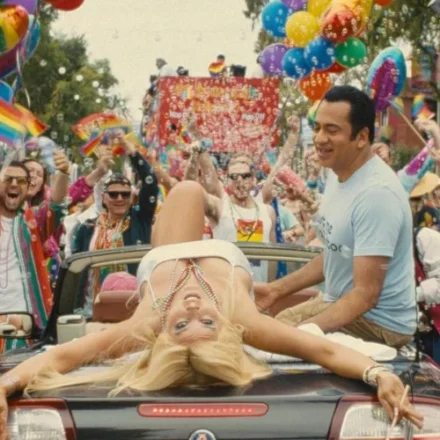
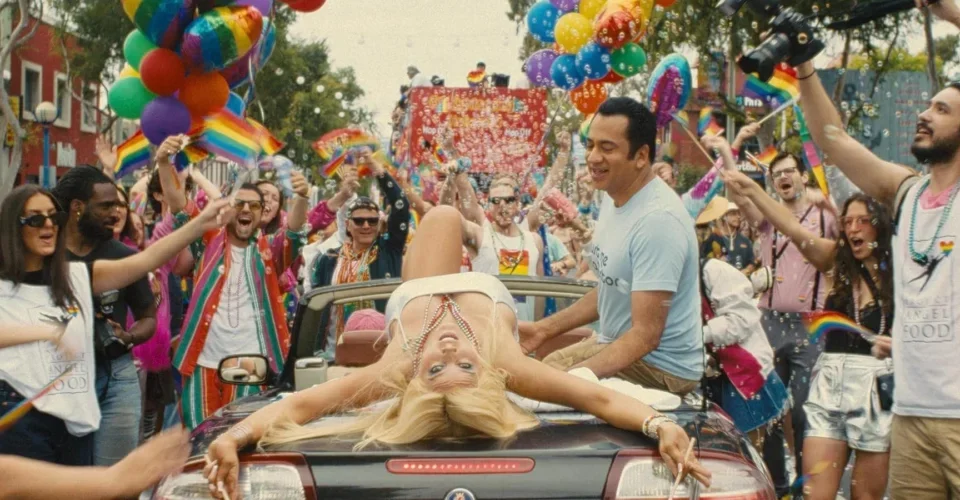
The boundaries further blur when Kapoor is invited into Smith’s social circle. A pivotal scene depicts Kapoor participating in a Los Angeles Pride parade alongside Smith. This moment of personal liberation for the closeted doctor later becomes a liability, as photos of him in a state of revelry (which he describes as an "orgy") are used by the media to paint him as an unprofessional sycophant rather than a disciplined medic.
The Descent (September 2006 – February 2007)
The timeline accelerates with the birth of Smith’s daughter, Dannielynn, in the Bahamas. Just three days after the birth, Smith’s 20-year-old son, Daniel, died of a drug overdose in her hospital room. The film portrays Kapoor’s mounting anxiety during this period. Before Smith left for the Bahamas, Kapoor had prescribed methadone to help her manage her addiction while pregnant—a decision he defended as a "harm reduction" strategy to protect the fetus.
On February 8, 2007, the news broke that Anna Nicole Smith had been found dead in a Florida hotel room. The film captures the immediate chaos in Kapoor’s office as he realizes the federal government will soon be knocking on his door. In a moment of panic, Kapoor is shown hiding Smith’s medical files in his underwear drawer—a detail that would eventually lead to his status as a primary suspect.
The Legal Reckoning (2009–2011)
The final act of the film focuses on the trial. Two years after Smith’s death, California Attorney General Jerry Brown filed charges against Kapoor, Stern, and Eroshevich. The film portrays this move as politically motivated, suggesting Brown used the high-profile case to bolster his gubernatorial campaign. Kapoor retains the services of Ellen Garofalo (Linda Hamilton), a no-nonsense defense attorney who attempts to humanize the doctor in the face of a relentless PR campaign by the state.
Supporting Data: The Media as Judge and Jury
One of the film’s most fascinating elements is its exploration of the role played by TMZ and its founder, Harvey Levin (played by Elon Gold). In the mid-2000s, the rise of digital tabloid journalism created a new ecosystem where "guilt" was often decided in the court of public opinion long before a jury was seated.
The film highlights several key data points regarding the case:
- The Prescription Count: Prosecutors alleged that the defendants prescribed over 1,500 pills to Smith in the weeks leading up to her death.
- The Role of TMZ: It was Levin’s publication that first released the "Pride parade" photos, which effectively stripped Kapoor of his professional credibility in the eyes of the public.
- The Legal Precedent: The case was one of the first major instances of the government attempting to hold medical professionals criminally liable for a celebrity’s overdose, a precursor to the legal battles involving the doctors of Michael Jackson and Prince.
The film utilizes actual footage of Kapoor’s interview with Harvey Levin during the closing credits, providing a stark contrast between the "dopey" persona Penn portrays and the more self-possessed, albeit embattled, reality of the actual Sandeep Kapoor.
Official Responses and Legal Outcomes
The real-world conclusion of the case provides the film’s emotional climax. In October 2010, after a trial that lasted over two months, a jury acquitted Sandeep Kapoor of all counts. The jury found that while the prescriptions were voluminous, there was no evidence of a "criminal conspiracy" to provide illegal substances. Howard K. Stern and Khristine Eroshevich were initially convicted of lesser charges, though those were later overturned or reduced.
The official response from the medical community at the time was divided. Some saw the acquittal as a victory for doctors treating difficult patients with chronic pain and addiction issues. Others, however, viewed the case as a cautionary tale about the dangers of "VIP Syndrome"—the tendency for medical professionals to abandon standard protocols when treating famous clients.
In the film, Linda Hamilton’s portrayal of Ellen Garofalo serves as the voice of reason. Her defense strategy was built on the premise that Smith was a "medical poly-user" who manipulated her doctors, rather than the doctors manipulating her. This defense successfully argued that Kapoor was acting in what he believed was the best interest of a patient who was notoriously difficult to manage.
Implications: Celebrity Worship and the Cost of Fame
The overarching message of Trust Me, I’m A Doctor—and perhaps the reason it struggles as a narrative feature—is the toxic intersection of celebrity and reality. The film concludes with a montage detailing the fates of the participants, suggesting that the cult of celebrity drives individuals to inflate the significance of their own roles in a tragedy.
For Sandeep Kapoor, the implication is one of a "ruined" reputation that took years to rebuild. Despite his acquittal, the "doctor to Anna Nicole Smith" label remains his primary identifier. The film suggests that Kapoor was a "nitwit" regarding his proximity to fame, failing to realize that the light of a star like Smith doesn’t just illuminate those around her—it can also incinerate them.
Critically, the film has been viewed as a missed opportunity to create a definitive documentary. Reviewers have noted that Abbie Cornish’s performance as Smith feels like a "Saturday Night Live" caricature, which undercuts the empathy the film tries to build for her. By contrast, the real-life footage of Kapoor shows a man who is much more complex and sympathetic than the version portrayed on screen.
In the end, Trust Me, I’m A Doctor serves as a grim reminder of the mid-2000s media landscape. It portrays a world where the legal system and the tabloid industry worked in tandem to create "villains" out of anyone standing near a falling star. While Kapoor eventually cleared his name in a court of law, the film illustrates that in the court of public opinion, the sentence is often life-long. As the credits roll, the viewer is left with the haunting realization that while Smith’s life was a tragedy, the circus that followed her death was a choice made by a society obsessed with the downfall of its icons.