Director’s Dilemma: Nani Reveals Srikanth Odela’s Surprising Dissatisfaction with Blockbuster ‘Dasara’ Ahead of ‘The Paradise’

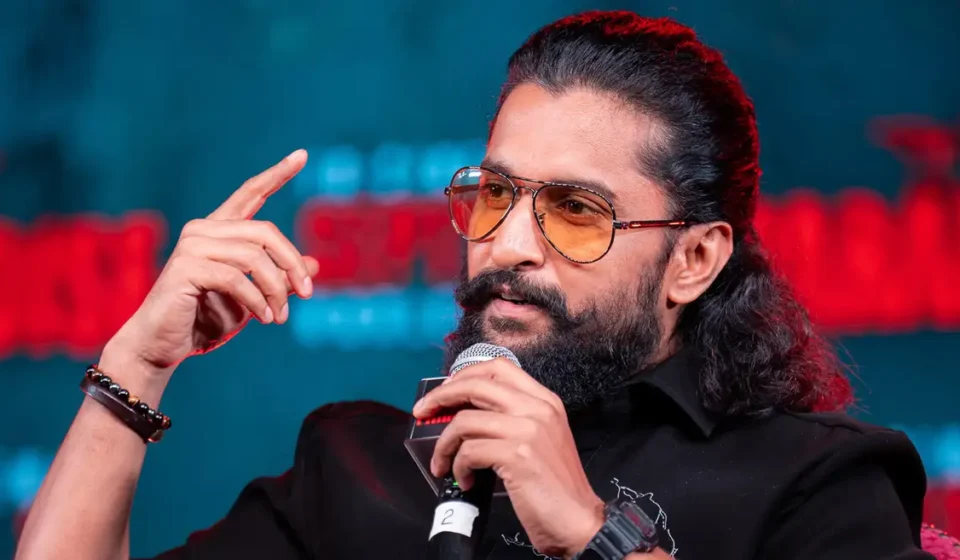
Hyderabad, India – In a candid revelation that has sent ripples through the Telugu film industry, ‘Natural Star’ Nani recently disclosed a startling detail about director Srikanth Odela’s debut blockbuster, Dasara. Despite the film’s overwhelming commercial success and critical acclaim, Odela, to Nani’s surprise, was not entirely satisfied with his maiden venture. This unexpected confession emerged during a special interview promoting their upcoming collaboration, The Paradise, featuring Nani alongside Raghav Juyal, Sonali Kulkarni, and host Pradeep Machiraju.
The disclosure offers a rare glimpse into the complex mind of a filmmaker and the perpetual pursuit of artistic perfection, even in the face of widespread commercial triumph. It also significantly heightens anticipation for The Paradise, framing it as Odela’s deliberate attempt to realize a vision he felt was partially unfulfilled in his debut.
The Core Revelation: A Director’s Unyielding Vision
The heart of the revelation came directly from Nani during the "Paradise’s special interview," where the team engaged in a wide-ranging discussion about their creative journeys and their latest project. Nani recounted the surprising aftermath of Dasara‘s monumental success. "We were very happy as Dasara became a huge hit," Nani began, setting the stage for the unexpected twist. "Srikanth came to me and said sorry, stating that he couldn’t achieve what he intended."
Nani openly admitted his astonishment at this apology. "I was surprised to see his apology despite the movie becoming successful. He wasn’t completely satisfied." This statement underscores a profound artistic integrity within Odela, suggesting a director who measures success not solely by box office numbers or audience applause, but by the alignment of the final product with his initial, intricate vision.
Nani further elaborated on Odela’s self-assessment: "Srikanth knows what to do; he wasn’t aware of how to achieve certain things during Dasara." This distinction is crucial. It implies that Odela possessed a clear artistic objective but encountered unforeseen challenges or limitations in execution during his debut, which prevented him from translating that vision onto the screen precisely as he had envisioned. The journey of a debut director is often fraught with learning curves, compromises, and the arduous task of navigating a large-scale production for the first time. Odela’s candid admission speaks volumes about his self-awareness and commitment to his craft.
Chronology: From ‘Dasara’s’ Triumph to ‘The Paradise’s’ Genesis
The narrative of Srikanth Odela’s journey from Dasara to The Paradise is now reframed by Nani’s insights, painting a picture of continuous artistic growth and a relentless pursuit of cinematic excellence.
The ‘Dasara’ Phenomenon: A Debut of Grandeur and Grit
Dasara, released in March 2023, marked Srikanth Odela’s directorial debut and was a game-changer for Nani, solidifying his ‘Natural Star’ image and extending his pan-India appeal. The film plunged audiences into the gritty, coal-mining landscape of Veerlapally in Telangana, portraying a raw, intense tale of friendship, love, and rebellion. Nani’s transformation into the rustic, rugged Dharani was widely lauded, showcasing a never-before-seen avatar that resonated deeply with viewers.
The film was a massive commercial success, reportedly grossing over ₹120 crores worldwide, a significant feat for a debut director and a substantial achievement for Nani’s career. Critics praised its immersive world-building, powerful performances, particularly Nani’s, the evocative cinematography, and Santhosh Narayanan’s pulsating score. It was celebrated for its authentic portrayal of a unique cultural setting and its bold narrative. For all intents and purposes, Dasara was hailed as a triumphant debut, positioning Odela as a promising new voice in Telugu cinema.
The Director’s Introspection: A Quest for Uncompromised Vision
However, behind the celebratory facade, Srikanth Odela was grappling with his own internal critique. Nani’s revelation indicates that despite the external validation, Odela perceived a gap between his initial blueprint and the final cinematic output. This period of introspection immediately following Dasara‘s success became the crucible for his next project.
Nani further detailed this crucial phase: "Srikanth wanted to level up the intensity for his second film. He asked me for some time, and after a few months he came up with The Paradise‘s core idea and setup." This statement highlights a deliberate, methodical approach. Instead of rushing into his next venture, spurred by the success of his debut, Odela chose to pause, reflect, and meticulously refine his craft. His desire to "level up the intensity" suggests an ambition not just to replicate past success, but to push creative boundaries and achieve a higher degree of artistic and technical precision. The time taken to develop The Paradise‘s "core idea and setup" indicates a foundational approach, ensuring that this time, his vision would be uncompromised from the very inception of the project.
This chronological progression reveals a filmmaker who views his work as an ongoing learning process, with each film serving as a stepping stone towards a more complete realization of his artistic potential.
Supporting Data: The Dynamics of Artistic Vision vs. Commercial Reality
Odela’s self-critique, despite Dasara‘s blockbuster status, is not an isolated phenomenon in the world of filmmaking. It sheds light on the inherent tension between a director’s singular artistic vision and the multifaceted demands of large-scale commercial production.
The Pressures of a Debut and Beyond
For any debut director, the journey from script to screen is an arduous one. It involves not only creative storytelling but also navigating complex logistical, financial, and collaborative challenges. First-time directors often face constraints in terms of budget, shooting schedules, and the availability of resources. They might also encounter a learning curve in managing a large crew, communicating their vision effectively, and making real-time compromises on set. While Dasara was a grand production, it’s plausible that Odela, being new to the helm of such a massive project, might have had to make concessions or adjust his original plans due to practical limitations.
Furthermore, the pressure on a director’s second film, especially after a successful debut, is immense. There’s an expectation to not only match but surpass the previous achievement. Odela’s decision to take time and rigorously develop The Paradise suggests he was acutely aware of these expectations, but more importantly, he prioritized his internal artistic standards over external pressures.
Nani’s Role as a Collaborator and Visionary
Nani’s continued association with Srikanth Odela, even after learning of the director’s self-professed "dissatisfaction" with Dasara, speaks volumes about the actor’s judgment and his commitment to nurturing directorial talent. Nani has a well-established reputation as an actor who champions unique stories and supports emerging filmmakers. His career trajectory is marked by collaborations with new directors, often leading to critically acclaimed and commercially successful ventures. His trust in Odela, despite the director’s candid admission, reinforces Nani’s image as a "Natural Star" who values artistic integrity and a director’s evolving vision. This partnership suggests a deep mutual respect and a shared commitment to pushing cinematic boundaries.
The Broader Industry Context
The film industry often celebrates box office success as the ultimate metric. However, many accomplished directors privately (or sometimes publicly) express a similar sentiment to Odela’s – a feeling that their film, while commercially viable, didn’t entirely capture the essence of their initial creative impulse. Factors such as studio interference, unforeseen production hurdles, post-production challenges, or even the sheer scale of the project can lead to deviations from the original vision. Odela’s transparency, conveyed through Nani, offers a refreshing perspective, emphasizing that true artistic fulfillment often transcends mere financial gains. It positions him as a director with a profound sense of self-awareness and an unwavering commitment to his craft.
Official Responses and Industry Reception
Nani’s statements in the "Paradise’s special interview" effectively serve as the official communication of Srikanth Odela’s artistic introspection. While Odela himself has not yet publicly elaborated on these specific details, Nani, as his leading man and collaborator, is acting as a credible voice conveying the director’s sentiments.
The immediate industry reaction, though not explicitly stated in the provided text, can be inferred. Such a revelation from a star like Nani about a successful debut director would likely generate a mixture of surprise, admiration, and heightened curiosity.
- Surprise: Given Dasara‘s widespread acclaim, many would find it surprising that the director harbored such reservations.
- Admiration: Filmmakers and critics often appreciate directors who exhibit such a high degree of self-awareness and artistic integrity. It positions Odela as a serious craftsman rather than merely a commercial hit-maker. This level of honesty is rare and commendable in an industry often focused on outward appearances of success.
- Heightened Curiosity: Most significantly, it exponentially increases interest in The Paradise. If Odela felt he hadn’t fully delivered on Dasara, audiences and critics will be eager to see what he brings to the screen when he feels he has truly achieved his intended vision. It creates a narrative of redemption and artistic refinement for his sophomore effort.
This candidness, conveyed through Nani, also contributes to a more nuanced understanding of the filmmaking process, moving beyond simplistic narratives of success or failure to explore the complexities of creative realization.
Implications: Setting the Stage for ‘The Paradise’ and Odela’s Future
Nani’s revelation carries significant implications, not only for The Paradise but also for Srikanth Odela’s burgeoning career and the broader discourse on artistic integrity in commercial cinema.
Elevated Expectations for ‘The Paradise’
The most immediate implication is the colossal increase in anticipation for The Paradise. Audiences now perceive this film not just as Odela’s second directorial venture, but as his definitive statement – an opportunity to fully realize the "intensity" and vision he felt constrained in expressing with Dasara. The narrative shifts from "can he replicate Dasara‘s success?" to "can he finally deliver his uncompromised vision?" This narrative adds a compelling layer to the film’s promotional campaign, promising a cinematic experience that is both ambitious and deeply personal to its director. The stakes are considerably higher, and the expectation is for a film that showcases a more refined, precise, and unbridled artistic expression from Odela.
Srikanth Odela: A Director Defined by Artistic Integrity
This episode profoundly shapes the public perception of Srikanth Odela. He is no longer just the director of a blockbuster debut; he is now a filmmaker with an unyielding commitment to his artistic vision, someone who prioritizes creative fulfillment over superficial success. This self-critical approach, far from being a weakness, positions him as a director with maturity, depth, and a relentless drive for perfection. It suggests that his future films will not merely chase commercial trends but will be driven by a strong, internal artistic compass. This could lead to a career trajectory marked by challenging, thought-provoking, and meticulously crafted cinema. His journey becomes a testament to continuous learning and self-improvement in the creative realm.
Nani’s Enduring Legacy as a Collaborator
Nani’s willingness to share this intimate detail about his director underscores his own commitment to the craft and his reputation as an actor who empowers his collaborators. By articulating Odela’s perspective, Nani reinforces his image as a supportive star who believes in the director’s vision, even when that vision involves self-critique. This strengthens Nani’s standing as a "Natural Star" who not only delivers compelling performances but also contributes significantly to the creative ecosystem of the films he stars in. His trust in Odela, post-Dasara’s self-evaluation, speaks volumes about the actor’s discerning eye for talent and his faith in the director’s evolving capabilities.
A Broader Message for the Film Industry
Finally, this revelation serves as a poignant reminder to the entire film industry that commercial success, while vital, is not the sole arbiter of artistic merit. It champions the importance of a director’s personal vision and the continuous striving for excellence. It encourages self-reflection and acknowledges the often-invisible struggles and compromises inherent in the filmmaking process. In an industry where outward appearances often dominate, Odela’s (via Nani) transparent self-assessment highlights the deeper, more profound pursuit of artistic authenticity, suggesting that true success lies in the successful realization of one’s creative intent.
As The Paradise moves towards its release, all eyes will be on Srikanth Odela, not just to see if he can deliver another blockbuster, but to witness the full, uncompromised realization of a director’s intense and evolving vision. The stage is set for a cinematic experience shaped by introspection, ambition, and a relentless pursuit of artistic perfection.