Stalling for Time: Why ‘MobLand’ Season 2 Struggles to Maintain Its Lethal Momentum

The promise of a “go-for-broke” action series lies in its relentless, kinetic energy—the kind of television that demands total surrender from the viewer. It is a genre defined by escalating stakes, characters who operate without a safety net, and a cast that doesn’t merely chew the scenery but devours it with a carnivorous hunger. When Paramount+’s MobLand debuted, it delivered exactly that: a high-octane, blood-soaked blitz that kept audiences on the edge of their seats.
However, as the series returns for its sophomore outing, the frantic pace that once defined the Harrigan family’s criminal saga appears to have hit a significant speed bump. While the show remains a masterclass in chaotic performance, the narrative engine that powered its debut is beginning to sputter.
The State of the Harrigan Empire: Main Facts
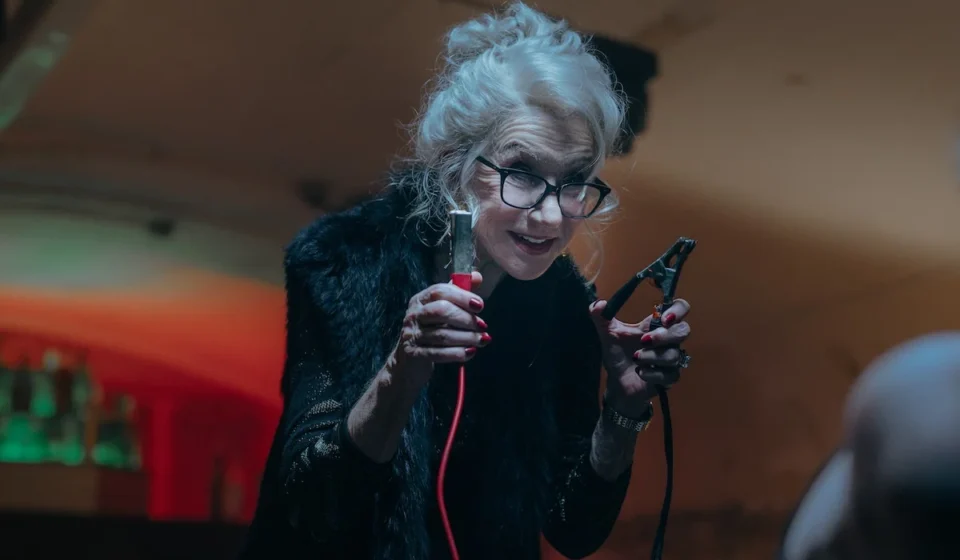
MobLand, created by showrunner Jez Butterworth, centers on the precarious power dynamics of the Harrigan crime family. At the heart of the series is a triad of characters who represent the show’s volatile core: the impetuous, brass-knuckled patriarch Conrad (Pierce Brosnan), his giddy, chaos-agent wife Maeve (Helen Mirren), and the family’s immovable object, the fixer Harry (Tom Hardy).
The series, which has already secured a renewal for a third season, is currently rolling out its second season on Paramount+. While the show continues to leverage the star power of its lead trio, critics are noting that the internal logic of the series is shifting away from external threats toward a more stagnant, introspective, and ultimately slower-paced family drama.
A Chronological Descent: From Bullets to Boredom
To understand the current malaise, one must look back at the trajectory of the first season. MobLand began as a tight, claustrophobic thriller. A missing child served as the catalyst for an all-out mob war, leading to a series of extravagant zeniths: a post-funeral car bomb, a cartel boss wielding a chainsaw, and a grand finale involving a high-stakes police raid and an exploding safe house.

By the end of the first season, however, the gears began to shift. The showrunners introduced new, high-level threats—such as the formidable Kat McAllister (Janet McTeer) and the corrupt ex-cop Colin Tattersall (Toby Jones)—that signaled a transition from immediate, visceral danger to long-term, serialized plotting.
As we enter the early episodes of Season 2, that momentum has vanished. The narrative has retreated from the battlefield to the boardroom, focusing on the internal power struggle between Conrad and his eldest son, Kevin (Paddy Considine). This shift has effectively neutralized the primary appeal of the show: the feeling that every episode could be the last. Instead of the Harrigans "going to the mattresses" against a rival syndicate, they are bickering amongst themselves, a choice that has noticeably deflated the show’s tension.
Supporting Data: The Anatomy of a Stall
The structural problems of MobLand Season 2 are most evident in the characterization of its antagonists. In Season 1, the stakes were personal and lethal. In Season 2, the production has attempted to fill the void left by Kat McAllister with Frankie, a character portrayed by Johnny Flynn.
Frankie is an exercise in "character quirk" over "actual menace." Defined by contradictory traits—a germophobic, scooter-riding foot fetishist—he lacks the genuine danger that Geoff Bell’s Season 1 crime lord brought to the screen. Because Frankie is introduced as a stopgap, his threats feel hollow. The audience is told he is a danger, but his actions lack the meaningful consequences that defined the early episodes of the show.
Furthermore, the performances of the lead cast, while technically impressive, have devolved into a form of "distraction-acting." Brosnan, playing a character whose medical diagnosis allows for erratic outbursts, is leaning heavily into the unhinged. Mirren, similarly, continues to portray Maeve as a woman who treats violence with the nonchalance of a birthday party planner. While these performances are entertaining in a vacuum, they function as a smokescreen for the lack of actual plot development.

The most egregious example of this inertia is the character of Harry. Tom Hardy’s fixer, once the show’s most compelling figure, has been sidelined. Where he previously solved problems with surgical precision, he is now relegated to a passive observer of the Harrigans’ self-destruction. His lack of agency mirrors the viewer’s experience: he is waiting for the plot to move, and the audience is waiting right alongside him.
Official Perspectives and Behind-the-Scenes Strategy
The industry-wide trend of "prolonging the hit" is clearly at play here. By setting up the second season to act as a bridge to a third, the writers have sacrificed the immediate satisfaction of a coherent, self-contained story.
Showrunner Jez Butterworth and the team at Paramount+ seem to be banking on the "Ozark model"—placing a rational, calm middleman in the center of an increasingly irrational, volatile environment. However, Ozark was anchored by deep character studies and a slow-burn tension that MobLand currently lacks. Without the genuine threat of death or total loss, the "action-delivery device" that is MobLand fails to justify its own existence during the quieter, exposition-heavy scenes.
The only bright spot in this period of stagnation is Emmett J. Scanlan’s Paul. As the family’s long-suffering bodyman, Paul exists in a constant state of black-comic exhaustion. Every scene that highlights his struggle to survive the whims of his bosses acts as a microcosm of what the show should be: funny, dangerous, and grounded in the absurdity of its own premise.
Implications: The Future of the Franchise
The implications for MobLand are clear: the series is currently a victim of its own success. Having been renewed for a third season, the writers seem to be caught in the trap of "padding." The show is no longer interested in the lean, mean, and hungry storytelling that defined its inception; it is now focused on longevity.

If the series is to survive, it must reconcile the dichotomy between its high-octane marketing and its current, sedentary reality. A show that relies on constant, over-the-top spectacle cannot afford to have a four-episode lull at the start of a season. When a series is built on the premise of "everything, everywhere, all at once," the absence of that intensity is not just a creative choice—it is a betrayal of the audience’s expectations.
For now, MobLand is a show waiting for its own fuse to relight. While there is every expectation that the latter half of Season 2 will ramp up the violence to set the stage for the third season, the current period of stagnation is a significant misstep. For the fans who signed up for the gnarled, scenery-chewing action, this season feels like a long, expensive waiting room.
Grade: C
MobLand Season 2 premiered Friday, September 18, on Paramount+. New episodes will be released weekly through the finale on November 20. The series has been renewed for a third season.