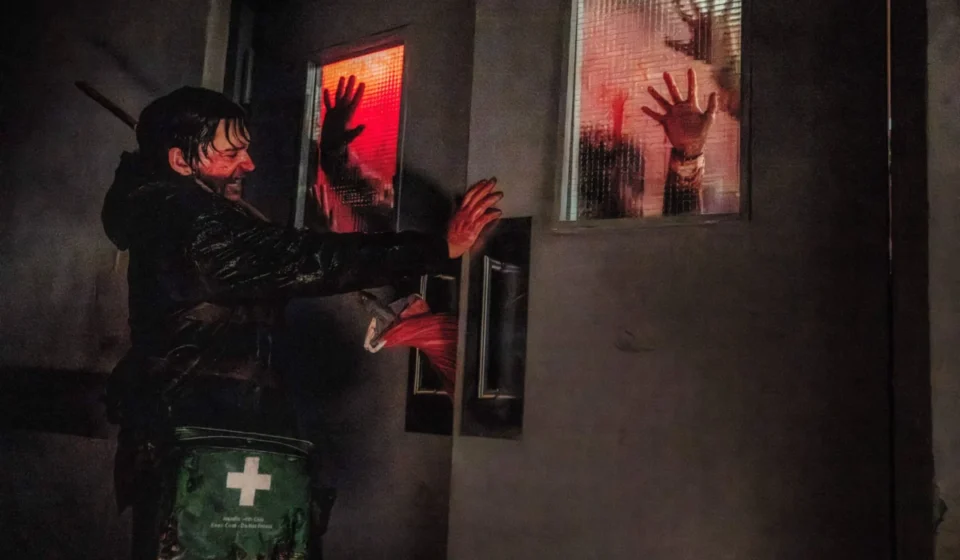
The Art of the Biohazard: Why Zach Cregger’s ‘Resident Evil’ Is a Radical Departure for Franchise Cinema

In an era where intellectual property (IP) is often treated with the fragile, stifling reverence of a holy relic, director Zach Cregger has opted for a different approach: the sledgehammer. His new film, Resident Evil, arriving in theaters on September 18, is a visceral, madcap, and unapologetically singular vision that functions less as a traditional adaptation and more as a sensory experience designed to replicate the specific anxieties of the survival-horror genre.
Cregger, coming off the critical success of his genre-bending Barbarian and the recent Weapons, has crafted a film that functions as a middle finger to the "Comic-Con-brained" consensus that video game adaptations must slavishly adhere to established lore to satisfy the base. Instead, he delivers a lean, 85-minute nightmare that captures the frantic, claustrophobic essence of the 1996 PlayStation classic without ever needing to name-drop its most famous characters.
The Main Facts: A New Kind of Survival Horror
At its core, Resident Evil is a story of mundane terror escalated to a global catastrophe. The film stars Austin Abrams as Bryan, a twenty-something courier caught in a personal tailspin. Petrified by the prospect of a domestic life—specifically, a conversation about a pregnancy test with his offscreen girlfriend—Bryan chooses to take a long-haul delivery job through a brutal Midwestern winter storm.
His route takes him through the outskirts of Raccoon City, where he finds himself in the wrong place at the worst possible time. The film is not a reboot of the Paul W.S. Anderson series, nor is it a retread of the 2021 Welcome to Raccoon City. It is a standalone, arcade-style riff that features only the barest essentials: a desolate landscape, the looming shadow of the Umbrella Corporation, and a relentless, ever-evolving threat that draws more from the visceral, fungal horror of The Last of Us than the slow-moving, campy zombies of the early 90s.

Chronology of the Chaos
The film’s structure is as tight as a coiled spring, favoring a "start-mid-sentence" approach that drops the viewer directly into the fray.
- The First Act: We are introduced to Bryan, whose internal dread of his own future is mirrored by the external, frozen wasteland of the Midwest. The inciting incident is as brutal as it is simple: Bryan strikes a pedestrian with his car. His subsequent attempts to "help" the woman—who displays a disturbing, rictus grin—set off a cascade of events that turn a simple delivery mission into a fight for survival.
- The Second Act: The film shifts into "hard mode." Here, the audience experiences the mechanical joys of the game: the real-time terror of loading a weapon with shaking hands, the tactical necessity of using a barn ladder to bypass a guard dog, and the constant, maddening struggle with locked doors. Cregger excels at spatial geography; the viewer is always aware of where Bryan is, where he needs to go, and the immediate obstacles blocking his path.
- The Third Act: As the scope widens and the film introduces peripheral characters, the tension shifts. The frantic, personal stakes of the first hour begin to give way to a broader, slightly more conventional narrative arc. While the pacing remains swift, the film occasionally loses the tight, suffocating grip that characterized its opening segments.
Supporting Data and Technical Mastery
One of the most striking aspects of Cregger’s Resident Evil is its commitment to practical effects. In a market saturated with "numb CGI spectacle," Cregger’s film stands out for its tactile, slimy, and genuinely grotesque creature designs. From ropelike tentacles bursting from neck wounds to animatronic monstrosities that defy biological logic, the film feels grounded in a way few modern blockbusters do.
The "gamer’s eye" for detail is evident throughout. While there are no lore-heavy journals to read, the presence of a typewriter—a staple save-point in the games—serves as a clever wink to the audience. The film relies on "environmental storytelling," where the layout of a room or the placement of an item informs the audience of the danger before it actually manifests. This is survival-horror on hard mode, where the triumph of solving a simple puzzle—like navigating a camper van or opening a padlock—is elevated to a moment of genuine audience catharsis.
Official Responses and Creative Intent
In interviews surrounding the release, Cregger has been clear about his motivations. He was not interested in "thematizing a clear lesson" or creating a piece of moralizing cinema. Instead, he wanted to explore the feeling of a world spiraling out of control.

"The film is about the anxieties of bringing a kid into a world that is evolving out of our control," Cregger noted. However, he emphasizes that this is not "Apatowian pronatalist propaganda." Rather, it is an exploration of how domesticity can be gruesomely perverted. By placing his everyman protagonist, Bryan, in a series of increasingly impossible situations, Cregger forces the audience to confront the absurdity of the genre.
The decision to focus on a "courier" narrative was, by his own admission, a way to keep the scale small and the stakes intensely personal. By stripping away the bloated mythology of the Resident Evil franchise, he has cleared a path to explore the core gameplay loop: the desperate, often irrational, attempt to survive the night.
Implications for IP-Driven Cinema
The success of Resident Evil (which has already garnered a B+ grade) suggests a potential pivot point for Hollywood. For years, the industry has operated under the assumption that "fans" want an exhaustive, encyclopedic recreation of the source material. Cregger’s film proves that the opposite is true: fans want the feeling of the game, not a recitation of its Wikipedia page.
By treating the Resident Evil IP as a skeleton rather than a cage, Cregger has managed to create a film that is stronger for its independence. It does not suffer from the absence of Leon Kennedy, Jill Valentine, or Albert Wesker. In fact, its refusal to lean on those crutches allows the film to stand on its own merits as a piece of high-octane, visceral horror.

However, the film also serves as a cautionary tale for the limitations of this approach. While it is a "fucking blast," there are moments where the lack of a broader, established context makes the film feel slightly untethered. When the narrative slows, the "jokey funhouse" tone occasionally threatens to undermine the seriousness of the biohazard at hand. It raises the question: can a film be too detached from its own lore? In this case, the answer is a qualified no, but it’s a trade-off that is felt in the final act.
Conclusion: A New Standard?
Ultimately, Resident Evil is a testament to the power of a singular vision in an age of committee-driven filmmaking. It is a blockbuster that uses its brand recognition to secure a budget, but refuses to be beholden to the expectations that usually come with such a massive title.
Whether or not the audience is ready for this version of the franchise remains to be seen. But for those who grew up in the dimly lit rooms of the 90s, clutching a controller while listening for the sound of approaching footsteps, Cregger’s film is the first to truly capture the heartbeat of the survival-horror genre. It is mean, it is funny, it is grotesque, and above all, it is a reminder of what happens when a filmmaker is given the keys to a kingdom and decides to have fun with the architecture.
Resident Evil releases in theaters nationwide on September 18. It is, by any metric, one of the most interesting, divisive, and purely entertaining genre films of the year. Whether it signals a new era for video game adaptations or remains a singular, glorious anomaly, it is a ride that demands to be experienced on the biggest screen possible.