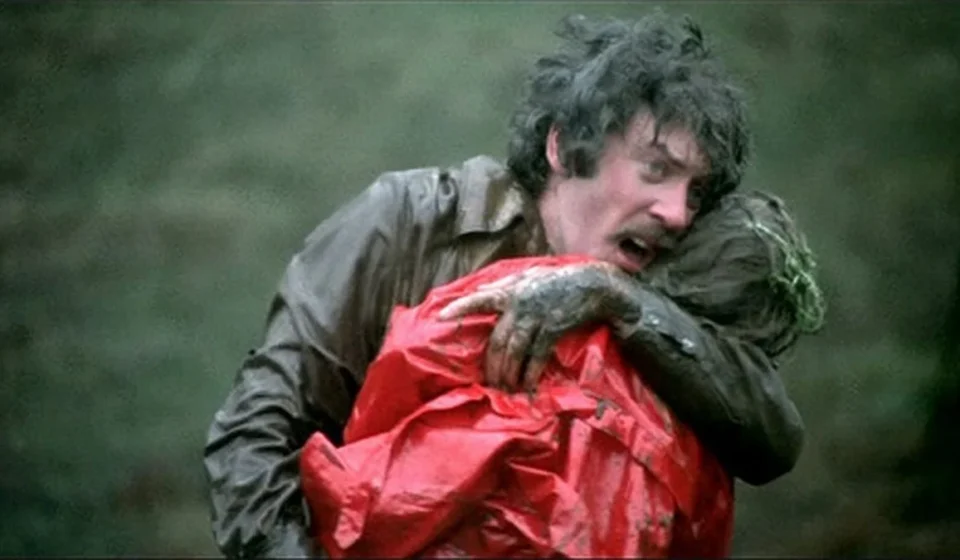
Echoes of the Red Coat: Why Nicolas Roeg’s ‘Don’t Look Now’ Remains the Blueprint for Modern Horror

In the landscape of contemporary genre cinema, few films possess the gravity of a black hole, pulling every subsequent project into their orbit. Nicolas Roeg’s 1973 masterpiece, Don’t Look Now, is precisely that kind of cinematic singularity. Its DNA is woven into the fabric of modern psychological horror, influencing visionaries from Ari Aster to Lynne Ramsay. Yet, despite its legendary status among cinephiles and directors—including recent collaborators Sophie Thatcher and Dave Boyle—the film remains an enigma to the broader mainstream audience.
As the horror genre enjoys a sophisticated renaissance, moving away from simple jump scares toward nuanced explorations of human fragility, the time is ripe to revisit the film that arguably perfected the marriage of grief and psychological dread.
The Convergence of Influence: Thatcher, Boyle, and the Roeg Legacy
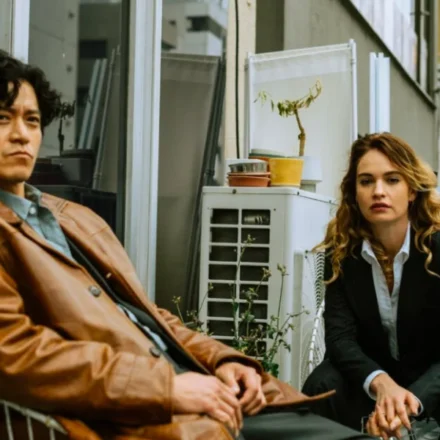
The genesis of this discussion lies in recent conversations with actress Sophie Thatcher (Her Private Hell) and director Dave Boyle (Never After Dark). Though their respective projects represent distinct corners of the genre—one a gritty, giallo-inflected neo-noir, the other an atmospheric ghost story reminiscent of early 2000s J-horror—both creators pointed to Don’t Look Now as a primary touchstone.
This is not a coincidence. Modern filmmakers are increasingly looking back to the 1970s not just for aesthetic cues, but for a template on how to handle the "grief-horror" subgenre without descending into cliché. While many contemporary films utilize trauma as a superficial plot device, Roeg’s work treats it as a structural foundation, indistinguishable from the plot itself. For Thatcher and Boyle, Don’t Look Now provided a masterclass in how to weaponize memory, atmosphere, and the fallibility of human perception.
A Chronology of Dread: From Daphne du Maurier to the Screen
To understand the film’s enduring power, one must look at its origins. Based on the 1971 short story by Daphne du Maurier, Don’t Look Now centers on John (Donald Sutherland) and Laura Baxter (Julie Christie), a grieving couple who relocate to Venice following the tragic drowning of their young daughter, Christine.
The chronology of their descent is precise and agonizing.

- The Catalyst: The film opens with the accidental death of Christine, establishing the theme of water as a harbinger of doom.
- The Displacement: The couple moves to a decaying, winter-chilled Venice—a city of mirrors and mazes—where John is tasked with the restoration of a historic church.
- The Encounter: The narrative pivot occurs when they meet two elderly sisters, one of whom is blind and claims to be in psychic contact with the deceased Christine.
- The Escalation: While Laura finds solace in the prospect of spiritual connection, the rationalist John descends into a state of denial, exacerbated by a series of gruesome murders plaguing the city.
The brilliance of the film’s structure lies in its editing. Roeg, a former cinematographer, famously utilized a fractured, non-linear editing style that forces the audience to experience time and memory just as the characters do: as a series of disjointed, recurring images.
The Anatomy of a Masterpiece: Visual Language and Color Theory
One cannot discuss Don’t Look Now without addressing its visual lexicon. The film acts as a sensory assault, where color—specifically the recurring, piercing shade of red—functions as a character in its own right.
The Strategic Use of Hue
The choice of a bright red coat for the deceased Christine is a stroke of visual genius. In the muted, murky greens and cold, stone greys of a winter-locked Venice, the red becomes an anchor for the viewer’s eye. It is a beacon of lost innocence that cuts through the fog of the city. Costume designer Marit Allen, who would later influence the visual aesthetics of Eyes Wide Shut and Brokeback Mountain, understood that color could evoke visceral emotional responses before a line of dialogue was even spoken.
Venice as a Labyrinth
Roeg’s lens turns Venice—typically a site of romance and light—into a claustrophobic trap. By focusing on the city’s narrow alleyways, crumbling facades, and reflection-heavy canals, the film transforms the environment into a physical representation of the characters’ internal confusion. John’s restoration of the church is a metaphor for his attempt to "fix" his broken life, a task that proves as futile as the city’s inevitable sinking into the sea.
Supporting Data: Why It Still Resonates
While some might argue that a 50-year-old film lacks the pacing required for modern audiences, the data suggests otherwise. When evaluated on platforms like Letterboxd and IMDb, Don’t Look Now maintains high critical scores, often ranking alongside films like The Shining or The Exorcist in "Best of" lists.
The film’s "controversial" sex scene remains a focal point in academic film studies. At the time of its release, the intimacy between Sutherland and Christie was criticized by some as gratuitous, but retrospective analysis highlights it as a rare, honest depiction of two people attempting to reconnect through the wreckage of shared trauma. It is a moment of raw, human desperation that grounds the film’s supernatural elements, making the eventual horror feel grounded and inevitable.

Official Responses and Cultural Implications
The impact of Don’t Look Now extends far beyond the horror section of a video store. It influenced the structural audacity of Lynne Ramsay’s We Need to Talk About Kevin, where the editing mimics the frantic, guilty mind of a mother. It echoes in the slow-burn dread of Ari Aster’s Hereditary, where the inevitability of fate is a central pillar. Even in mainstream cinema, such as the Bond franchise or the works of Martin McDonagh (In Bruges), the film’s shadow looms large.
The film essentially validated the idea that horror could be "prestige." It proved that a movie could be terrifying while simultaneously being a profound meditation on the nature of fate, the cruelty of coincidence, and the psychological weight of denial.
The Call to View: A Plea for Preservation
In an era where every film is analyzed, dissected, and explained by YouTube essayists before it even leaves theaters, Don’t Look Now offers a rare experience. It is a film that demands to be seen in the dark, without the crutch of spoilers or pre-conceived notions.
For new generations of horror fans who may have been introduced to the film through dated countdown specials or pop-culture references, the actual experience of watching the film in its entirety is transformative. It is not merely a horror movie; it is a film about the way we process the unthinkable.
Why You Should Watch It Now:
- The Pacing: It is a masterclass in slow-burn tension, rewarding the patient viewer.
- The Acting: Sutherland and Christie deliver career-defining performances that rely on subtlety and silent, internal devastation.
- The Mystery: The final ten minutes of the film remain among the most shocking, haunting, and logically sound conclusions in the history of cinema.
A Final Note to the Reader
Ignore the temptation to look up the ending. Ignore the summaries that promise to "explain" the plot. If you want to understand why films like Her Private Hell or Never After Dark feel the way they do, you must go to the source. Don’t Look Now is a testament to the fact that while we may spend our lives trying to look away from the things that frighten us, the truth is always waiting in the alleyway, wearing a red coat, ready to turn the corner.
It is time to look back.