A House of Mirrors: Casey Affleck’s ‘Company’ Struggles to Connect Its Nested Narratives

Casey Affleck’s latest directorial effort, Company, is an ambitious, structurally labyrinthine project that attempts to mirror the classic tradition of the "story-within-a-story." Premiering at the 2026 Venice International Film Festival, the film arrives with high expectations and a visually striking aesthetic. However, despite a concise 92-minute runtime, the film often feels like a series of beautiful, disconnected tableaus—a collection of rooms in a house that refuses to open its doors to the audience. While it offers moments of stellar acting and poetic dialogue, Company ultimately finds itself trapped by its own rigid, self-reflexive architecture, struggling to transform its sprawling, novelistic ambitions into a cohesive cinematic experience.
The Architecture of a Narrative Puzzle
At its core, Company is a structural experiment in recursive storytelling. It begins in the 1970s, establishing a tone of mysterious, rain-swept melancholy as Bob Dylan’s “Shelter From The Storm” plays against a backdrop of a tense dinner party. Into this gathering walks Evelyn (Emily Alyn Lind), a traveler claiming to be lost. Her presence serves as the catalyst for the film’s narrative engine; she acts as a modern-day Scheherazade, drawing on the tradition of Persian mystics to spin a tale attributed to a deceased relative.
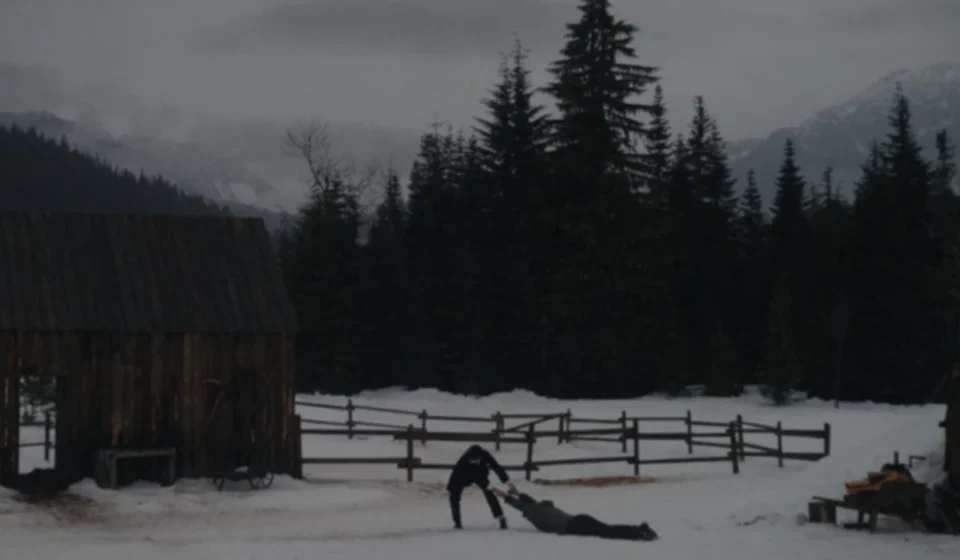
This initial layer serves as a frame for the second act, which shifts to an isolated cabin in the 1950s. Here, we meet Tom (Nick Nolte), an aging, weary man awaiting his estranged daughter. His solitude is interrupted by the arrival of Alice (Caylee Cowan), who is found unconscious in the snow. Once revived, Alice becomes the next narrator, launching into yet another tale—the third and final layer of the film’s nesting dolls. This third story takes us back to the turn of the 20th century, focusing on a drifter named Caleb (Atticus Affleck) who is discovered by a farm couple, Rebecca (Adelaide Clemens) and Emmett (Scoot McNairy).
By stacking these narratives, Affleck attempts to evoke a sense of Inception-like intrigue. However, while the mechanics of the puzzle are clearly defined, the emotional payoff remains elusive. The film’s obsession with its own form often feels "inflexible" rather than "self-reflexive," making the process of untangling the story feel like an academic exercise rather than an immersive experience.
A Production of Many Lenses
Perhaps the most curious aspect of Company is its production methodology. The film features an staggering eight different cinematographers: Masanobu Takayanagi, Lachlan Milne, Adam Arkapaw, Marcell Rév, Holger Jungnickel, Joaquin Baca Asay, Noah Fallis, and Affleck himself.
On paper, this choice suggests a desire to differentiate the shifting layers of reality and memory within the film. In practice, however, the results are inconsistent. While the film maintains a persistent, moody, and shadow-drenched visual identity—aided by the flickering, low-light atmosphere of fireside scenes—the sheer number of hands on the camera does little to heighten the narrative impact. The film spends a significant amount of time establishing its production mechanics, yet the viewer is left wondering if such a complex logistical approach was necessary for a story that, at its heart, remains largely static and dialogue-driven.

Character Dynamics and the Burden of Monologue
The film’s screenplay leans heavily on long, wordy monologues that grapple with heavy themes: nihilism, existentialism, death, and the weight of the past. When Caleb is introduced in the 1900s timeline, he becomes the vessel for the film’s most intense explorations of angst.
The performances, to their credit, are frequently stellar. Scoot McNairy brings a necessary wry humor to the role of Emmett, providing a grounded counterpoint to the more somber tones of the film. Ben Mendelsohn, appearing as a fierce and sarcastic Australian neighbor, injects a much-needed jolt of energy into the middle act. Nick Nolte is, as ever, a master of embodying weariness; his portrayal of Tom as a man drowning in nebulous remorse is arguably the film’s most sympathetic emotional anchor.
However, the dialogue often threatens to collapse under its own weight. The characters frequently speak in poetic, decadent prose that feels untethered from the imagery on screen. While the words are beautiful, the camera remains largely locked off, treating these monologues as theatrical stage plays rather than cinematic moments. The result is a disconnect where the visual language of the film fails to lure the audience into the emotional core of the characters’ confessions.
The Gendered Power Imbalance
A notable critique of Company lies in the disparity between its narrative structure and the agency of its characters. While the female characters—Evelyn, Alice, and Rebecca—are granted the "power of narration," they are effectively stripped of narrative power within the context of the story. They act as conduits for the men’s tales, becoming vestigial to the very stories they are reciting. This structural irony—where women hold the keys to the story but are denied the substance of the journey—leaves the film feeling hollow, particularly as the "mystery" of Caleb’s identity takes precedence over the perspectives of those telling his story.
Implications and Thematic Coherence
The film’s conclusion, which includes a cameo from the director’s other son, Indiana Affleck, cements Company as a deeply personal, almost familial, passion project. Dedicated to Affleck’s parents, the film is clearly a labor of love. Yet, as a piece of cinema intended for a broader audience, it struggles to cohere around a single, guiding idea.
By the time the final dots are connected, the film arrives at broad, somewhat platitudinous conclusions about mortality and the art of living well. These themes are never allowed to fully emerge from the oppressive wordiness of the script until the final minutes, by which point the audience’s patience for the film’s static imagery and dense exposition has largely evaporated.

Ultimately, Company is a film that functions best as a collection of snapshots rather than a cohesive narrative journey. It possesses an undeniable, brooding beauty—the interplay of light and shadow in the cabin scenes is technically proficient—but it lacks the "judicious directorial decisions" required to grant the camera a meaningful relationship with the characters.
Final Assessment: A Missed Connection
For all its talent, both in front of and behind the camera, Company is a film that keeps the viewer at arm’s length. It asks us to admire its construction, to note the cleverness of its nested tales, and to listen to the poetic musings of its troubled subjects. Yet, it fails to provide the emotional "company" its title promises. It is a work of artifice that, despite its best intentions, rarely manages to feel alive.
Grade: C+
Company premiered at the 2026 Venice International Film Festival and is currently seeking U.S. distribution. While it remains a testament to the Affleck family’s artistic collaborative spirit, it serves as a cautionary tale of what happens when a film’s form becomes more important than the heart beating within its frame.