The Architects of Reality: How Clear Angle Studios is Redefining the VFX Pipeline

In the high-stakes world of modern blockbuster filmmaking, the barrier between the physical set and the digital environment is thinning. As audiences demand increasingly photorealistic imagery, the visual effects (VFX) industry has turned toward a new breed of data-driven specialists. Among these, Clear Angle Studios has quietly ascended to become the industry’s "secret weapon," serving as the foundational bridge between real-world capture and the digital canvas.
From the precision of 24-camera full-body arrays at their Pinewood facility to the complex, neural-driven workflows of Gaussian splatting, Clear Angle is not merely scanning objects; they are digitizing reality itself. In a recent fxpodcast conversation, Jamie Hearing, Digital Effects Supervisor at Clear Angle, offered a deep dive into how the studio is navigating the frontier of machine learning, volumetric capture, and environmental digitizing.
The Core Mandate: From Traditional Meshes to Neural Landscapes
At its heart, Clear Angle Studios provides the raw material that fuels the modern VFX pipeline. However, the definition of "raw material" is undergoing a radical shift. Historically, the studio’s bread and butter involved creating clean, optimized meshes—the digital "skeletons" of actors and props. Today, that mission has evolved to include the complex, non-linear world of neural rendering.
The Shift to Radiance Fields
Jamie Hearing explains that the industry is moving away from purely mesh-based workflows. While traditional geometry is still vital, Clear Angle is heavily invested in Radiance Fields and Gaussian Splatting. Unlike traditional modeling, which attempts to approximate surfaces, neural rendering reproduces the light-field properties of the scene.
"We are moving toward reproducing what the cameras actually saw," Hearing notes. This approach is particularly transformative for elements that have historically been the "Achilles’ heel" of VFX: translucent surfaces, chaotic hair, and complex reflections. By leveraging neural networks to render these features, Clear Angle allows VFX artists to move beyond the limitations of traditional geometry, providing a more faithful, nuanced reproduction of the physical world.
Chronology of Innovation: The Evolution of Capture
To understand where Clear Angle is going, one must look at the technical pedigree that brought them here. The studio’s growth has been marked by a series of modular, highly specialized hardware developments.
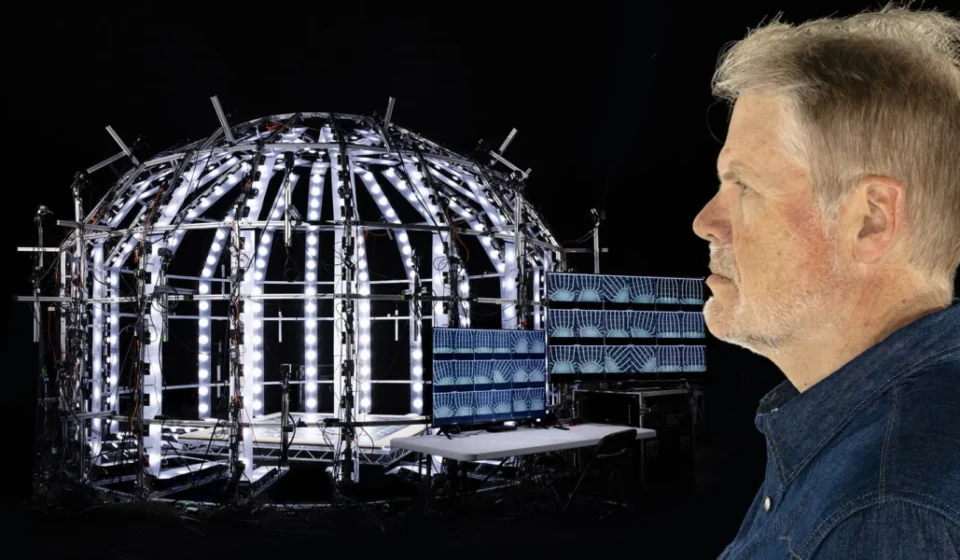
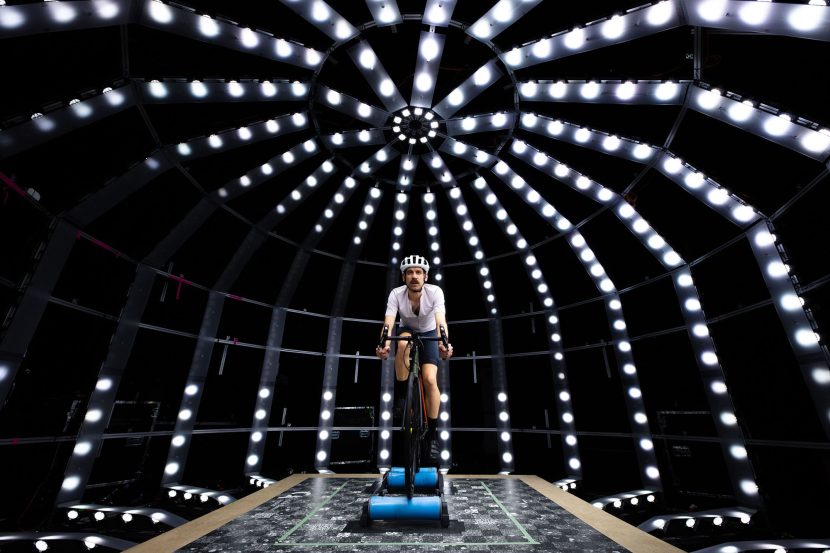
- The Foundational Rigs: Initially, the studio built its reputation on full-body systems—24-camera arrays that utilized precision LED lighting to capture static poses with millimeter-accurate geometry and texture. With 18 such rigs now operating globally, the company established a standardized baseline for high-fidelity character acquisition.
- The "Dorothy" Era: Evolution continued with the development of the "Dorothy" head-capture rig. Designed specifically for facial performance, it became the gold standard for FACS (Facial Action Coding System) poses and 4D facial performance.
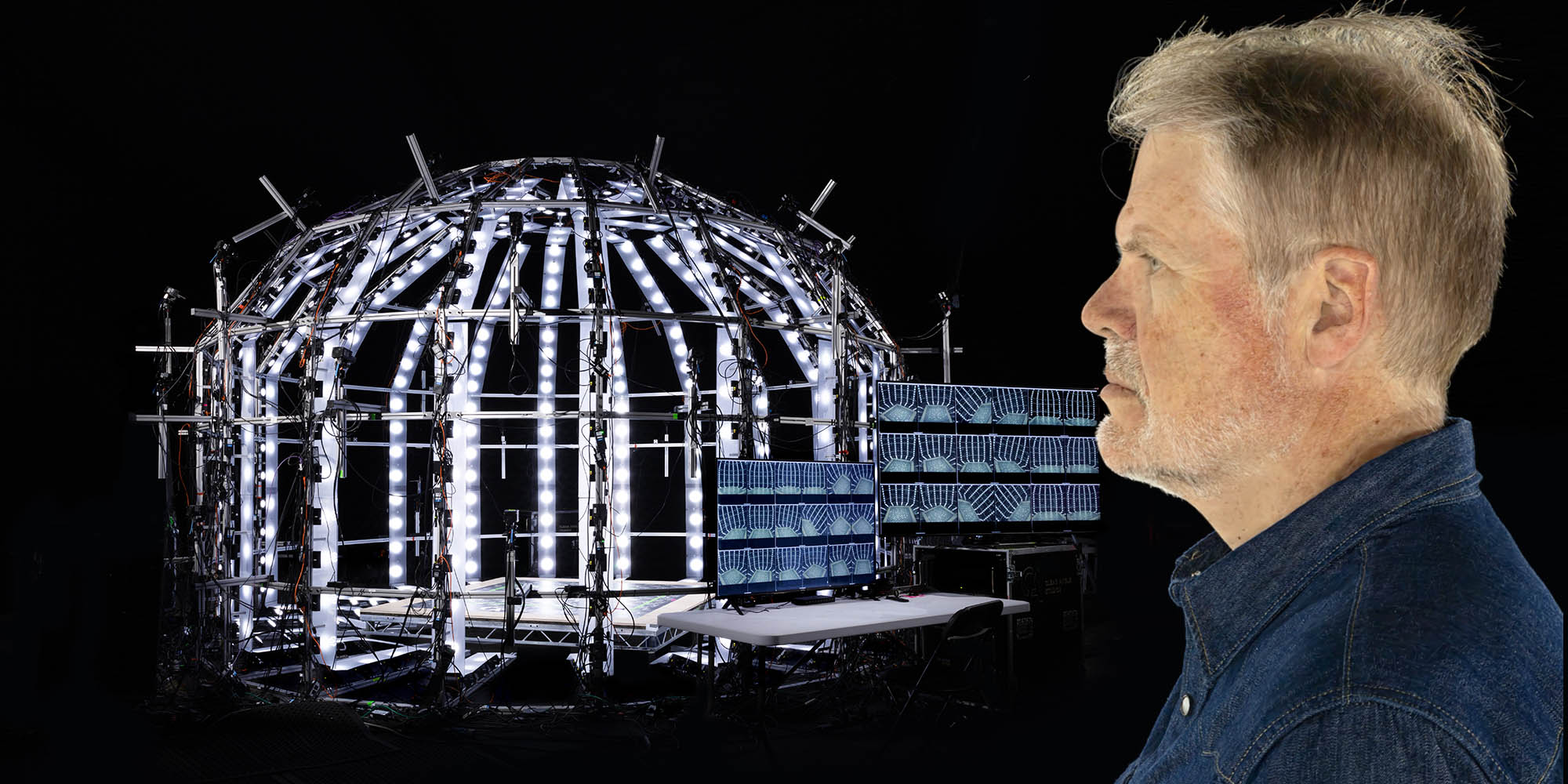
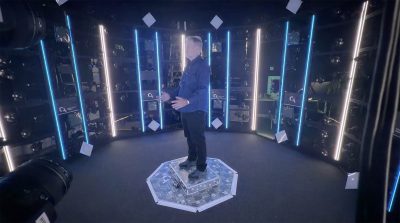
- The VCR (Volumetric Capture Rig): The current pinnacle of their hardware stack is the VCR, a modular system utilizing 40 high-end machine vision cameras with Sony sensors. This rig allows for the capture of groups of characters in high-frame-rate, synchronized environments, creating the volumetric data necessary for the latest machine-learning workflows.
- Integration of DI4D: The most recent chapter in this evolution is the integration of DI4D technology. By incorporating TopoTrack, Clear Angle can now maintain consistent topology and texture correspondence throughout an actor’s performance. This ensures that even the most subtle, non-linear skin movements are captured with a level of fidelity that manual animation could never replicate.
Supporting Data: The Logistics of Scale
While character work captures the headlines, Clear Angle’s environment work illustrates the staggering scale of their logistical capabilities. Their recent work in Iceland serves as a case study for modern location acquisition.
- Multimodal Acquisition: The studio does not rely on a single sensor type. Instead, they synthesize data from LiDAR scanners, aerial drone photogrammetry, and ground-level high-resolution photography.
- The Metadata Imperative: "The challenge is not simply to capture more data," Hearing emphasizes. "It is to capture the right data." For a VFX supervisor, a raw point cloud is useless without the accompanying metadata—lighting conditions, camera calibration, and sensor properties—that allow a computer to accurately reconstruct the scene in a post-production environment.
- Global Reach: With 18 global rigs and a mobile footprint that spans from Arctic landscapes to interior studio sets, the studio acts as a roving archive of the physical world, ensuring that when a film enters post-production, the environment is already "in the box."
Official Perspectives: The Human Element in Machine Learning
Jamie Hearing’s journey from Bournemouth University to DNEG, and finally to his current role at Clear Angle, mirrors the industry’s transition. He views the rise of AI not as a replacement for artistry, but as a sophisticated tool for "closing the gap."
"In many cases, scanning is no longer just about producing a final asset," Hearing states. Instead, Clear Angle is increasingly focused on providing training data. As studios experiment with machine-learning-driven pipelines, they encounter the "80/20 rule": the first 80% of a character model is relatively straightforward, but the final 20%—the micro-expressions, the skin pores, the subtle light scattering—is notoriously difficult to achieve.
By providing high-quality, controlled data, Clear Angle is enabling AI models to bridge that final 20%. They are providing the "ground truth" that allows machine learning algorithms to learn what human skin looks like in motion, effectively training the next generation of VFX tools to be more accurate, more efficient, and more responsive to the nuances of performance.
Implications: The Future of Production
The implications of Clear Angle’s work extend far beyond the visual output of a single film. We are witnessing a fundamental shift in the philosophy of filmmaking.
1. The Death of the "Static Asset"
The industry is moving toward a future where assets are dynamic, volumetric, and context-aware. If an actor is scanned using the VCR and processed via Gaussian splatting, that asset contains not just its shape, but its light-interaction properties. This means that "re-lighting" a character in post-production becomes a matter of physical simulation rather than artistic interpretation.
2. The Professionalization of Data Acquisition
Clear Angle is helping turn data acquisition into a distinct, professionalized department. No longer is "on-set scanning" an afterthought handled by a junior technician. It is now a critical, pre-planned component of the production pipeline, requiring deep knowledge of optics, sensor physics, and data architecture.
3. The Democratization of High-End Fidelity
By standardizing these workflows across global rigs, Clear Angle is enabling smaller, boutique VFX houses to access the same high-fidelity data as major studios. This levels the playing field, allowing for a higher baseline of quality across the entire industry.
Conclusion
Clear Angle Studios has successfully positioned itself as the essential interface between the physical and digital worlds. By blending the artistic rigors of traditional VFX with the emerging potential of neural rendering and machine learning, they have become an indispensable cog in the modern filmmaking machine.
As we look toward the future, the boundary between reality and digital reconstruction will only continue to blur. Whether through the 40-camera VCR or the meticulous mapping of an Icelandic landscape, Clear Angle is ensuring that when we watch the next great cinematic masterpiece, we are seeing a digital world built on the bedrock of genuine, high-fidelity physical data. They are not just scanning the world; they are writing the code for how we will experience it in the years to come.