
In the evolving landscape of high-end digital cinematography, the barrier between professional-grade "Cinema Line" performance and portable "run-and-gun" convenience has officially collapsed. With the launch of the new Sony FX5, the industry giant has introduced a full-frame powerhouse that promises to change the ergonomics of filmmaking. Featuring 5K Open Gate acquisition and internal 16-bit X-OCN recording, the FX5 is designed for the filmmaker who refuses to compromise on image fidelity while demanding the freedom to move at the speed of thought.
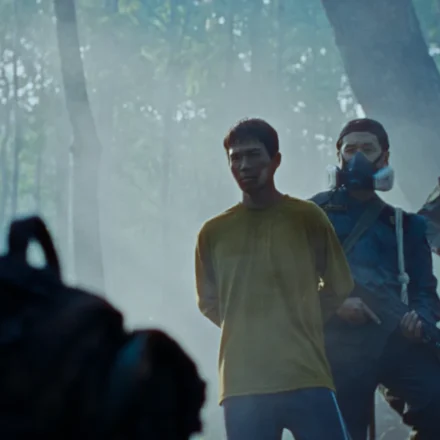
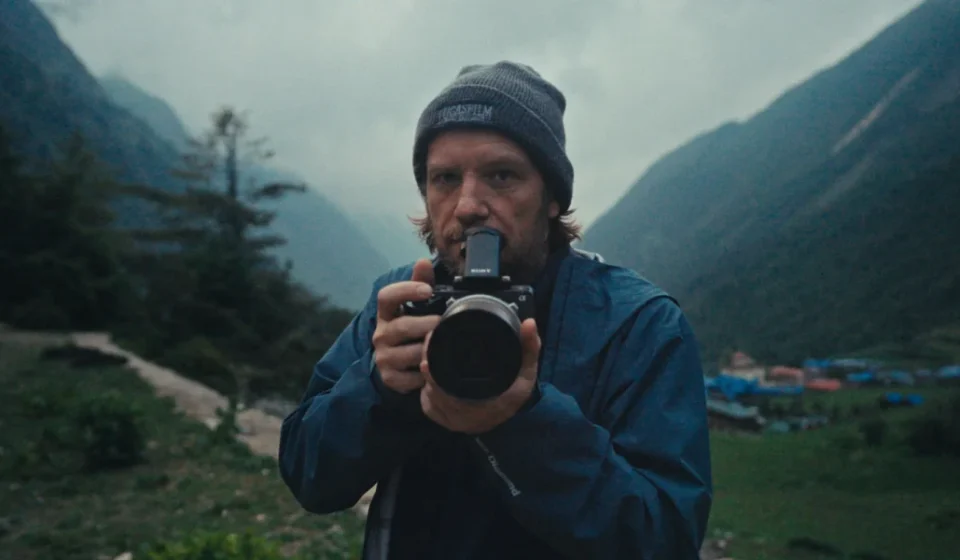
To demonstrate the capabilities of this new system, Sony tapped Gareth Edwards—the visionary director behind The Creator, Rogue One: A Star Wars Story, and the upcoming Jurassic World: Rebirth. Edwards, a filmmaker renowned for his ability to blend grand-scale world-building with an intimate, documentary-style aesthetic, took the FX5 on a grueling test run across Cambodia, Thailand, and Nepal. The resulting footage is a testament to a new era of production, one where the director is no longer tethered to a massive support crew or an intimidating rig.
The Evolution of the "Invisible" Set
The philosophy behind the FX5 is deeply rooted in the "guerrilla" methodology that Edwards pioneered during the production of The Creator. In 2022, Edwards famously utilized Sony’s FX3 to scout and shoot simultaneously across 80 Southeast Asian locations, working with cinematographers Greig Fraser and Oren Soffer to bypass the traditional, cumbersome production structure.
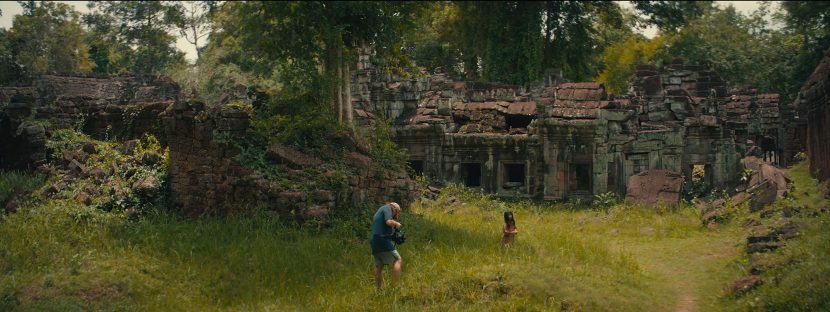
The FX5 takes this concept and streamlines it further. For his recent test, Edwards and a skeleton crew navigated diverse environments—ranging from the sweltering heat of modern Southeast Asian cities to the biting cold of Himalayan villages—with all of their equipment condensed into just three bags. One bag housed the FX5 body, the second held a compact dolly and slider, and the third contained essential accessories. Anything deemed non-essential was stripped away, reflecting a minimalist approach that prioritizes mobility and creative spontaneity.
"Guerrilla filmmaking just went to the next level," Edwards remarked during a discussion on the project. "The FX5 is the run-and-gun cinema camera to beat."
Chronology: From Concept to the Peaks of Nepal
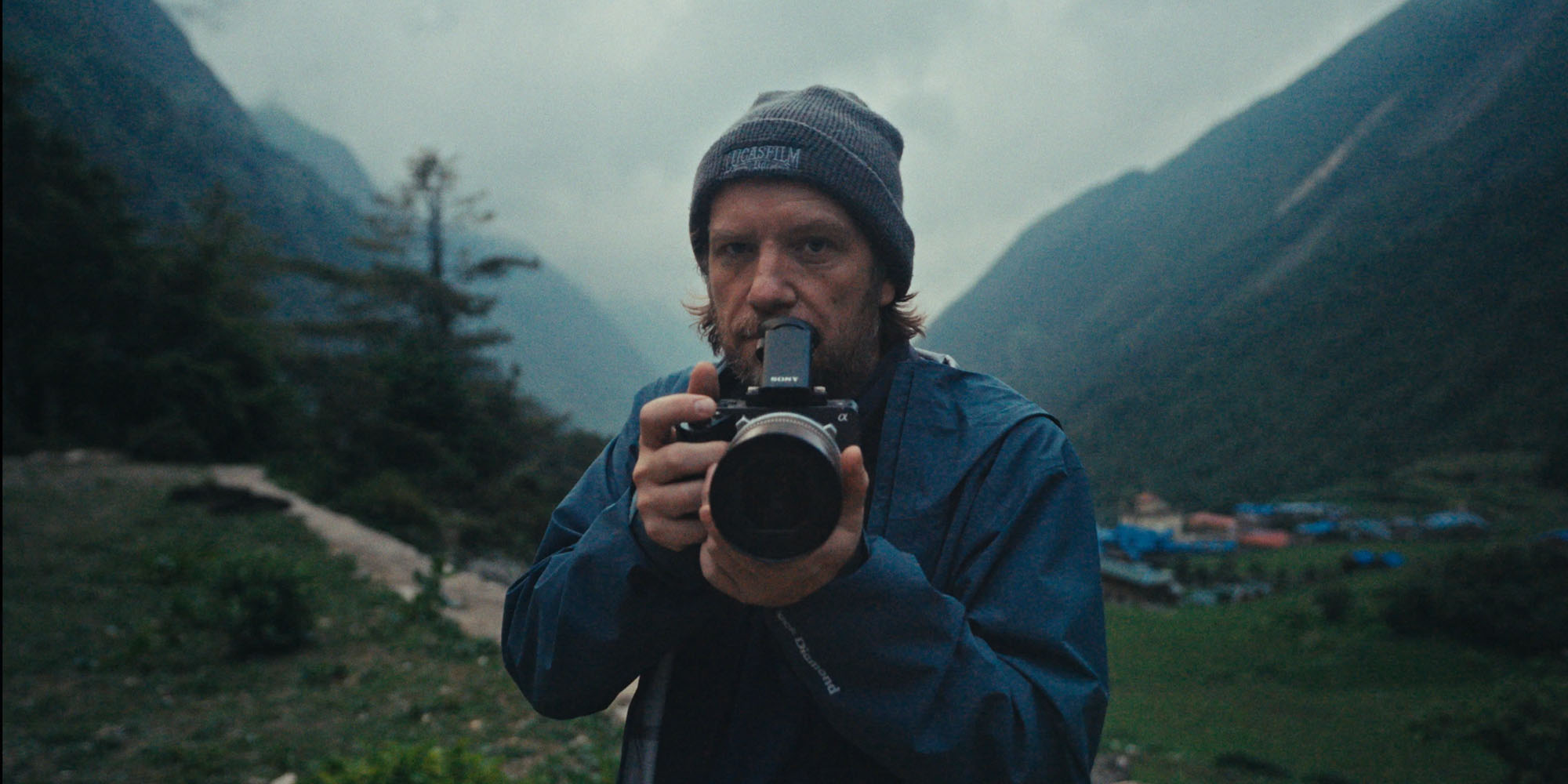
The development and field testing of the FX5 were characterized by a rapid, iterative process. Edwards received his test unit just one week before departing for his multi-country shoot. This tight window necessitated a "trial by fire" approach, where the camera’s reliability and ease of use were tested under extreme environmental conditions.
The week-long expedition saw temperatures fluctuate from 35°C to -5°C. In the Himalayan mountains, the team stumbled upon a local Buddhist ceremony. In a traditional production environment, capturing such a moment would have required hours of planning, permits, and the heavy presence of lights and rigging. Instead, because Edwards was operating with such a minimal footprint, he was able to walk into the monastery, remove his shoes, and capture the ceremony with total invisibility.
"Because we looked so non-intrusive, it didn’t cause a problem," Edwards noted. "I really don’t want to look like I’m making a movie. I want to look like I’m just passing through. That’s when you get the really naturalistic behavior."
The Technological Leap: Sensor, X-OCN, and AI
At the heart of the FX5 lies a newly engineered, fully stacked Exmor RS CMOS full-frame sensor. This hardware is powered by the BIONZ XR2 engine, which works in tandem with a dedicated AI processing unit to deliver unprecedented image quality.
Imaging Capabilities
The FX5 offers 5K recording at up to 60 fps, 4K at 120 fps, and Full HD at 240 fps. With S-Log3, the camera boasts over 15 stops of dynamic range, ensuring that highlights and shadows are rendered with a natural, filmic roll-off. Perhaps most significantly, it is the first camera in the FX series to record 16-bit scene-linear X-OCN internally. By introducing data-efficient variants like X-OCN C1 and C2, Sony has made the RAW workflow accessible for projects where high-speed storage and transfer are critical.
The Open Gate Advantage
The FX5 is the first FX-series camera to provide 3:2 full-sensor Open Gate recording. This feature allows creators to capture the entire sensor area, providing maximum flexibility for framing, cropping, or utilizing the extra surface area for anamorphic lenses. With in-camera de-squeeze for a wide array of optics—including 1.3x, 1.5x, 1.6x, 1.8x, and 2x—the camera is a versatile tool for directors who prioritize specific optical character.
The "iPhone Viewfinder" Revolution
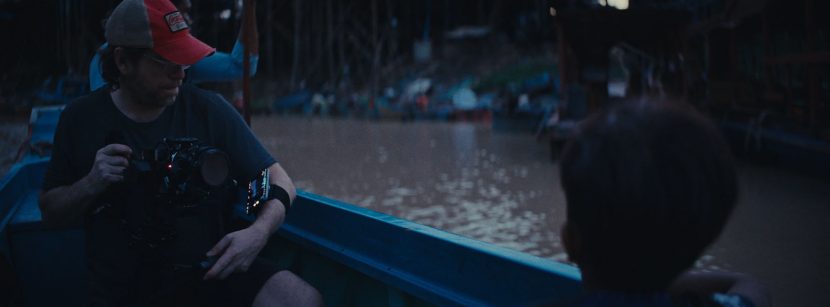
One of the most radical aspects of Edwards’ configuration was his departure from traditional, bulky monitors. By leveraging the camera’s wireless Wi-Fi monitoring, Edwards utilized an iPhone as his primary viewfinder. Using MagSafe, he was able to snap the phone onto his gimbal or even his wrist, allowing him to check framing while operating the camera in high or low-angle configurations without rebuilding his rig.
"The iPhone is so bright and the battery is so good, it’s better than any five-inch field monitor you could get," Edwards explained. This setup eliminated the need for external video transmitters and power-hungry monitors, further shrinking the camera’s silhouette. By powering the entire system directly from the gimbal’s handle, Edwards achieved a level of autonomy previously unheard of in high-end cinema.
Low-Light Performance and ISO Versatility
The FX5’s low-light sensitivity has set a new benchmark, thanks to its triple-base ISO of 800, 4000, and 12,800. Edwards relied heavily on the 4000 base for daytime shooting, using a variable ND filter to transition seamlessly between indoor and outdoor environments.
As "magic hour" approached, he switched to the 12,800 base. "Essentially, if I could see it with my eye, I knew the camera could see it," Edwards said. "I can’t go back from ISO 12,800. I’m just not interested in cameras that can’t do it now." This sensitivity allowed him to capture stunning imagery with minimal artificial lighting, often dimming his single, small LED light fixture to as low as 2% to preserve the natural mood of the scene.
Implications for the Industry
The release of the FX5 signals a paradigm shift. By placing top-tier Cinema Line features into a compact, AI-optimized, and highly connected body, Sony is effectively democratizing the "big movie" look.
For the industry, the implications are profound:
- Accessibility: Independent filmmakers can now achieve a quality level that once required a full studio support team.
- Authenticity: By removing the "theatrical" barrier of a large crew, directors can capture more honest, unscripted human behavior.
- Workflow Efficiency: Internal X-OCN and AI-assisted metadata management drastically reduce post-production friction.
As Edwards poignantly noted, holding a camera that is capable of producing a global theatrical release while feeling as light as a "TARDIS" provides a unique buzz. It blurs the line between the tourist and the auteur, allowing the filmmaker to hide in plain sight and, in doing so, witness the world with an unfiltered, cinematic eye.
The Sony FX5 is scheduled for release in early August 2026, with a body-only price point of A$7,849. With future firmware updates already on the horizon—including 240 fps X-OCN recording and expanded vertical shooting modes—the FX5 is not just a camera; it is a platform that will evolve alongside the next generation of visual storytellers.