
For a decade, the global horror community has existed in the long, dark shadow cast by Na Hong-jin’s The Wailing. That 2016 masterpiece—a suffocating, visceral blend of supernatural dread and existential agony—left audiences reeling, its final frames seared into the cultural consciousness. Since then, the silence from the director’s chair has been deafening. What could possibly follow a film that effectively dismantled the tropes of occult horror?
The answer, it turns out, is a thunderous, blood-soaked, and unabashedly fun return to the roots of the genre. Na Hong-jin has returned with Hope, a gargantuan creature feature that serves as a love letter to the golden era of 1990s blockbusters. While it trades the quiet, creeping malaise of his previous work for the high-octane kineticism of a disaster epic, Hope proves that the visionary director hasn’t lost his touch for spectacle—or his penchant for leaving audiences stunned by the closing credits.
Main Facts: A New Breed of Monster
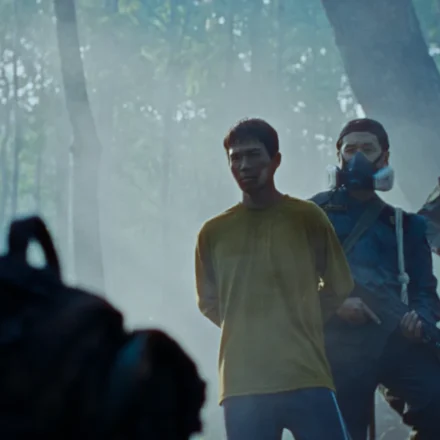
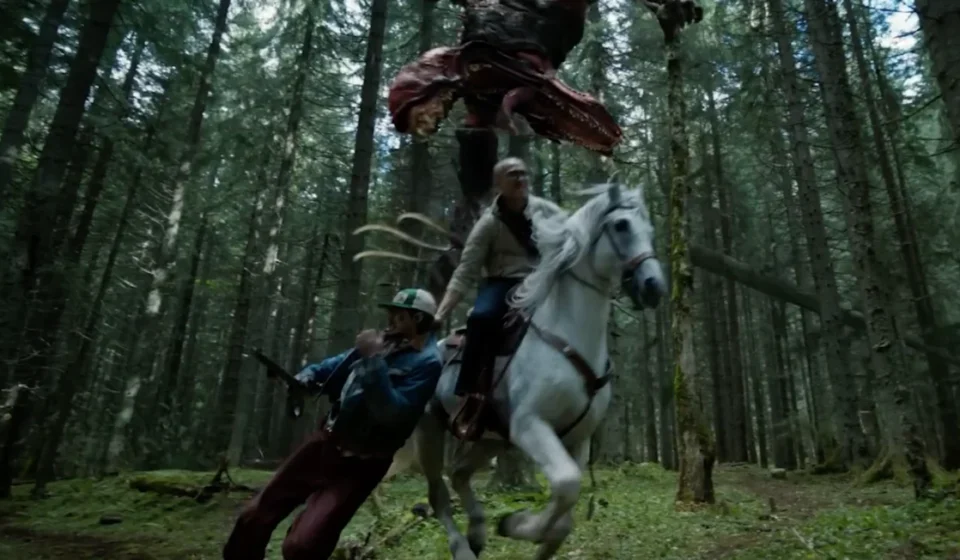
Hope is not merely a monster movie; it is a cinematic assault on the senses. Set in the isolated, fictional South Korean town of Hope Harbor, the narrative follows Sheriff Beom Seok, portrayed by the formidable Hwang Jung-min. The inciting incident is deceptively grounded: a routine investigation into a mutilated cow. However, the evidence—massive, impossible claw marks—signals the arrival of an apex predator the likes of which this quiet community is entirely unprepared to face.
The film is a three-hour marathon of tension. As the creatures begin their systematic dismantling of the town, the narrative transforms from a mystery into a desperate struggle for survival. It is, in every sense of the word, a "war zone" film, capturing the sheer scale of urban destruction and the absolute helplessness of humanity when pitted against a superior, predatory force.

Chronology: From Mystery to Mayhem
The pacing of Hope is relentless. The film is essentially structured around two massive, extended chase sequences that push the boundaries of action choreography.
- The Discovery: The first act functions as a classic creature-feature setup. We see the world through the eyes of Sheriff Seok, a man defined by his duty, yet increasingly paralyzed by the impossibility of the threat. The discovery of the first carcass serves as a harbinger of the chaos to come.
- The Escalation: Once the creatures reveal themselves, the film shifts into high gear. Na Hong-jin turns Hope Harbor into a claustrophobic battlefield. For nearly an hour, the audience is trapped alongside the protagonists, witnessing a level of destruction that feels both personal and cataclysmic.
- The Sustained Climax: The middle and latter portions of the film rarely offer the viewer a moment to breathe. The camerawork, helmed by Hong Kyung-pyo, is designed to induce vertigo and panic. By the time the first major chase concludes, the audience is left physically and emotionally exhausted, mirroring the state of the characters on screen.
- The Abrupt Conclusion: The final act presents perhaps the most controversial aspect of the film. It ends on a cliffhanger so jarring and unexpected that it has already become the subject of intense debate. It is not an ending in the traditional sense, but rather a bridge to a story yet to be told.
Supporting Data: The Craft of Chaos
To understand the success of Hope, one must look at the technical synthesis of its production.
Cinematography and Score
Hong Kyung-pyo’s cinematography is a triumph of movement. By keeping the lens low and tight during combat, the viewer is forced to feel the weight and size of the creatures. This is bolstered by a pulse-pounding, rhythmic score from Michael Abels, which dictates the heartbeat of the film. Every cut feels intentional, driving the viewer forward into the next encounter.
The Practical vs. Digital Divide
The production is a tale of two worlds. The practical effects, from the set design of the decimated town to the gore effects, are of the highest caliber. One can almost smell the smoke and ash through the screen. However, the film is not without its technical flaws. The creature designs, while unique and visually striking, are marred by inconsistent CGI. At times, the digital models fail to integrate seamlessly into the practical environments, creating a "Lego-like" dissonance that can momentarily pull the viewer out of the immersion.

Characterization
Unlike The Wailing, which spent significant time unpacking the moral decay of its characters, Hope opts for archetypal simplicity. Sheriff Seok is painted as a man of action—sometimes cowardly, sometimes brave, but always reactive. His supporting cast, including the standout Hoyeon as the tenacious cop Sung Ae, are defined by their immediate needs rather than deep backstories. This shift toward "big, dumb fun" is a deliberate departure from Na Hong-jin’s previous work, yet he manages to inject a surprising amount of situational humor into the carnage.
Official Responses and Thematic Depth
Despite the spectacle, Na Hong-jin’s DNA is still clearly visible beneath the surface. The film is rife with sociopolitical subtext, particularly regarding xenophobia and the "other." The town’s early obsession with reporting "spies" creates a microcosm of a society living in constant fear of the unknown.
The monsters themselves serve as a Rorschach test for the characters’ prejudices. By the film’s end, the initial interpretation of these creatures as simple invaders is challenged, forcing the audience to grapple with the possibility that the "monsters" are not as malicious as their human victims believe.
When asked about the film’s jarring, open-ended conclusion, insiders have noted that the director is already in the development phase for a sequel. The ending, while frustrating to some, is a calculated narrative maneuver meant to ensure that the story of Hope remains an ongoing event rather than a closed chapter.

Implications: The Future of the Creature Feature
Hope occupies a unique space in contemporary cinema. It is a film that demands to be seen on the largest screen possible, yet it is flawed enough to provoke critical scrutiny.
The implications for the genre are clear: Hope is a proof-of-concept for the return of the blockbuster monster movie. It proves that audiences are still hungry for large-scale, practical-effect-heavy cinema that doesn’t rely on the sanitized, risk-averse formulas of modern superhero franchises. It is a messy, bloody, loud, and occasionally baffling experience, but it is an experience nonetheless.
It sits comfortably alongside The Host and Godzilla Minus One as a pillar of South Korean genre filmmaking. While the CGI issues and the abrupt ending prevent it from reaching the perfection of The Wailing, Hope succeeds in its primary goal: it reminds us why we go to the movies in the first place—to be terrified, to be thrilled, and to be left waiting, with bated breath, for what happens next.
As of September 9th, audiences can decide for themselves if the wait for the next Na Hong-jin film was worth it. If the sheer energy of Hope is any indication, the director is just getting started. The monsters are here, the town is in ruins, and the hope for a sequel has already begun.