
The Archive as Resistance: Lana Daher’s Do You Love Me and the Mapping of Lebanese Memory

In the absence of a unified national archive, how does a nation remember itself? For Beirut-based multidisciplinary artist Lana Daher, the answer lies in the fragments—the discarded home movies, the grainy newsreels, the snippets of independent cinema, and the ghost-like echoes of a country defined by cycles of displacement and rebirth. Her debut feature, Do You Love Me (2026), is not merely a documentary; it is a kaleidoscopic, visceral act of reclamation. Clocking in at 76 minutes, the film serves as a sensory map of 70 years of Lebanese history, currently inviting audiences at New York’s Metrograph to step into a landscape where the past and present are in a state of permanent, haunting collision.
The Architecture of a Collective Memory
Do You Love Me is a structural marvel that defies traditional documentary constraints. By stitching together over 100 audiovisual sources—ranging from 1928 home footage to contemporary hip-hop music videos—Daher creates a tapestry of "cultural memory." The film eschews the standard voiceover or the singular, authoritative narrator. Instead, it relies on an emotional logic, a rhythmic editing style that mirrors the disorientation of living in a country where "disorientation is part of the journey."
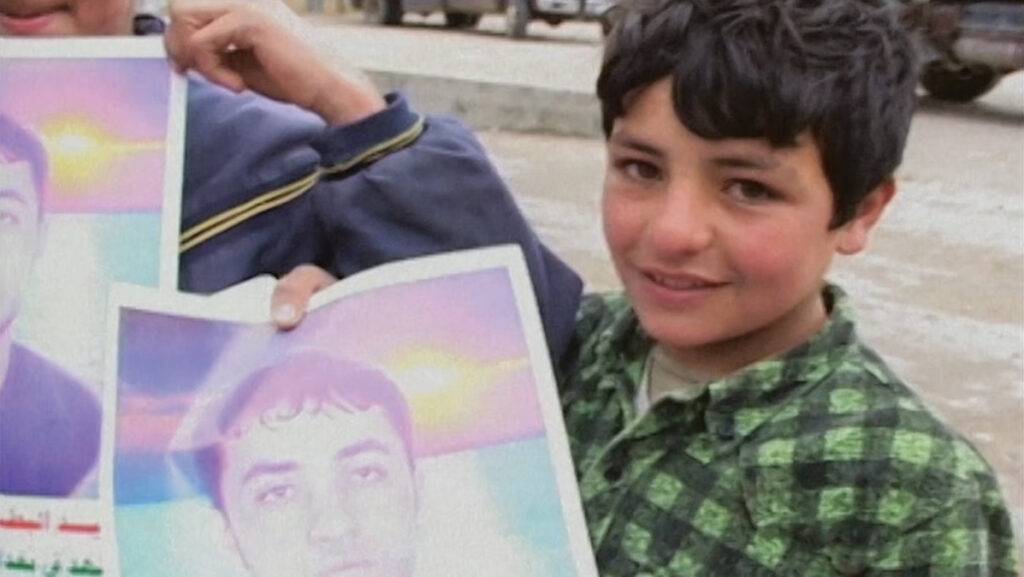
As the viewer moves through the film, the distinction between fiction and reality begins to dissolve. Clips from action movies are seamlessly spliced with visceral news footage of violence in the streets of Beirut. We see newlyweds dancing in one moment and families mourning the disappeared in the next. The soundtrack, a pulsating mix of traditional Middle Eastern instrumentation and contemporary, gritty hip-hop, acts as the heartbeat of the narrative, underscoring the resilience of a populace caught in a perpetual state of crisis.

Chronology of a "Hunt" for History
The genesis of Do You Love Me dates back to 2018, originating as a research project into the intersection of music and conflict. Daher was initially drawn to the story of the Bendaly Family, the iconic Lebanese band whose song provides the film with its evocative title. However, as the project evolved, it shed its academic skin, transforming into a deeply personal love letter to Beirut.
The Archival Odyssey
The production process was less of a research project and more of an arduous "hunt." Because Lebanon lacks a national archive or a cohesive historical record, Daher had to become a digital archaeologist. The scale of the task was staggering:
- Total Source Material: Over 20,000 audiovisual fragments were reviewed.
- Film Sources: The final cut utilizes footage from 106 separate fiction and documentary features spanning from 1958 to 2026.
- Legal Hurdles: The production navigated nearly 400 distinct rights contracts to secure the archival material.
- The Selection Process: Only about seven percent of the researched material made it into the final 76-minute runtime, ensuring that every frame serves a specific emotional or narrative purpose.
The Editing Room: A Collaboration of Outsider and Insider
The editing of Do You Love Me represents one of the film’s most significant creative choices. Daher spent five years working in isolation, building a four-hour rough cut that acted as the foundation for the project. Upon bringing on Paris-based Syrian editor Qutaiba Barhamji—celebrated for his work on Four Daughters (2023)—Daher made a radical decision: they would abandon the existing structure and start from scratch.

This collaboration was predicated on a specific tension: the contrast between Daher’s deep, lived-in attachment to Lebanese trauma and Barhamji’s perspective as an "outsider" to those specific images. By setting firm rules—such as the exclusion of all Lebanese politicians from the screen and the refusal to use full, uncut scenes—the duo was able to fragment and recombine the archives to create a new, universal language of grief and joy.
Women as the Custodians of History
A crucial pillar of Do You Love Me is its commitment to the female perspective. Daher emphasizes that throughout the history of Lebanon, women were the literal and figurative custodians of memory. While the state failed to archive the national narrative, women were the ones who kept the photographs, recorded the birthdays, and preserved the home movies that would eventually form the backbone of this film.
The film prominently features the work of the legendary filmmaker and journalist Jocelyne Saab, whose footage of the 1975 Lebanese civil unrest provides a piercing, prophetic lens through which the audience views the contemporary crisis. By centering the female gaze, Daher argues that the "official" history of Lebanon—often dominated by masculine, political, and militaristic narratives—is a hollow shell compared to the lived experience preserved by women.
Implications: The Reality of the Present
The release of Do You Love Me coincides with a volatile period in Lebanon’s history, with the country once again embroiled in conflict. During interviews, Daher has been quick to push back against simplistic, Western-centric narratives that frame the current situation merely as a "crossfire" between Israel and Hezbollah.
Challenging the Narrative
Daher’s perspective is grounded in a historical continuity that predates the existence of modern militant factions. She points out that the destruction of southern Lebanon and the displacement of its people are part of a 50-year cycle of invasion and occupation. Her film serves as a rebuttal to the "statistic-ification" of the Lebanese people. By presenting the humanity of those who live in the shadow of war, she forces the international audience to recognize that Lebanon is not a monolith of tragedy, but a place of profound complexity, humor, and, above all, an unyielding will to live.
The Role of the "Unofficial" Archive
When the film premiered in Beirut, the experience was profound. In one instance, the sound of an Israeli drone circling overhead during a screening merged with the film’s sound design, effectively collapsing the distance between the audience and the reality of the ongoing war.
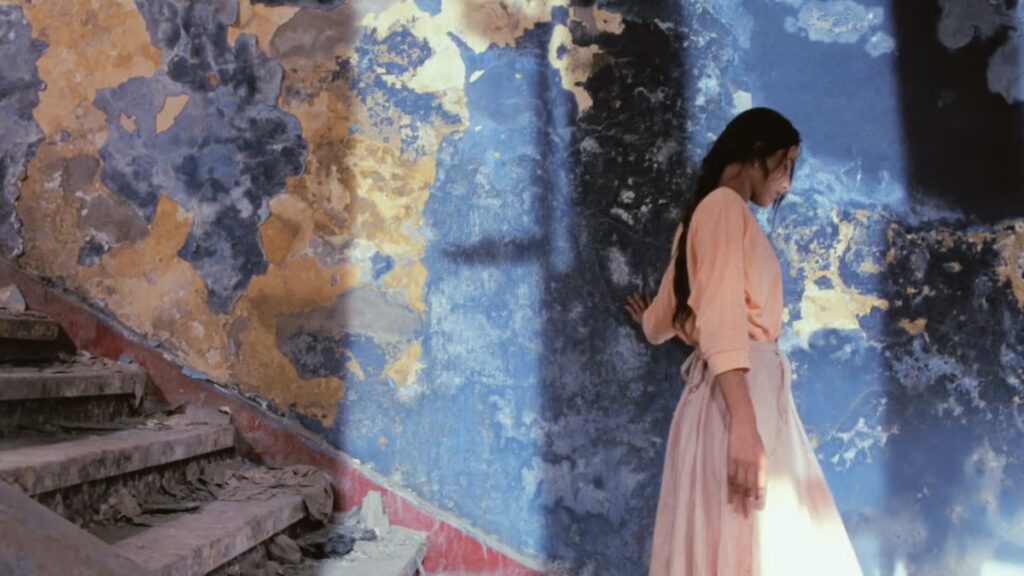
Daher posits that if her film can serve as a form of "national archive"—one that is living, felt, and fundamentally incomplete—then it has achieved its purpose. It is a space for the collective trauma that is passed down through generations in Lebanon, transmitted not only through official textbooks but through silence, music, and the flickering images of a past that refuses to be buried.
Conclusion: A Living Legacy
Do You Love Me is a testament to the power of the archive as a tool for resistance. By gathering the broken pieces of a country’s identity, Lana Daher has created a work that refuses to look away. She does not offer easy answers or a neat, linear resolution. Instead, she offers the viewer an opportunity to sit with the "unresolved complexity" of a nation that has been forced to constantly rewrite its own story in the wake of destruction.
As the film continues its run at Metrograph, it stands as a reminder that the act of remembering is, in itself, a revolutionary practice. Whether the audience leaves the theater feeling the weight of inherited trauma or the lightness of a life force that refuses to be extinguished, the film succeeds in its core mission: to hold space for a Lebanon that is seen, heard, and deeply, undeniably human. In a world that often prefers to view conflict through the lens of cold statistics, Daher’s work is a warm, defiant, and necessary embrace of the living history of a people who have survived it all.