The Moral Event Horizon: Paul Schrader Explores the Limits of Redemption in ‘The Basics of Philosophy’

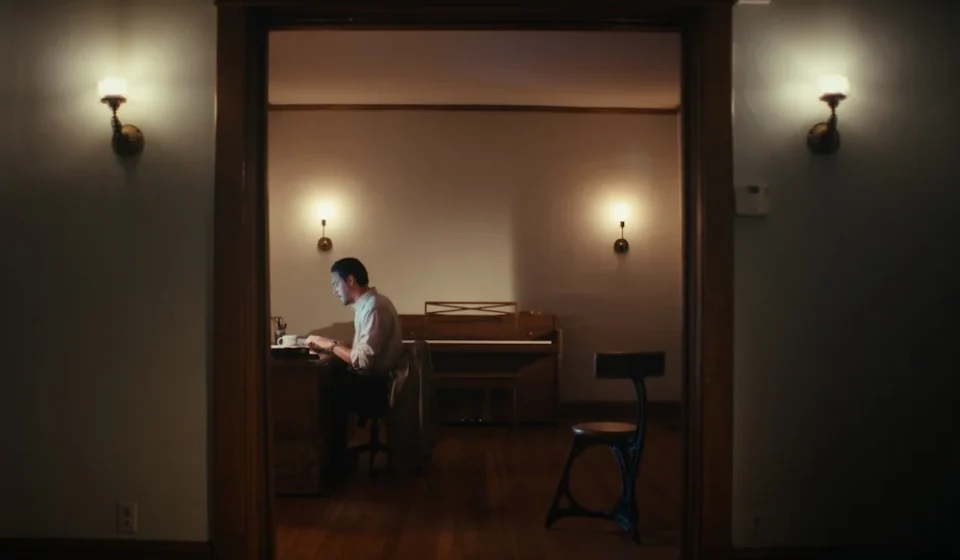
The cinematic landscape of the 21st century has seen few late-career renaissances as rigorous or as intellectually demanding as that of Paul Schrader. The legendary screenwriter of Taxi Driver and Raging Bull, and the director of First Reformed, has spent the last decade refining a specific sub-genre often referred to as his "Man in a Room" movies. With his latest feature, The Basics of Philosophy, Schrader returns to this familiar territory, presenting a narrative that is as ascetic as it is provocative. This film marks a significant, and perhaps final, escalation in his career-long obsession with guilt, transgression, and the grueling intellectual labor required for a sinner to seek expiation.
Main Facts: A Provocative Return to Form
The Basics of Philosophy stars Jack Huston as Professor John Jorrisen, a man whose polished exterior as an academic masks a history of profound moral failure. The film, which recently premiered to polarized reactions, follows Jorrisen as he navigates the sudden re-emergence of a victim from his past. Supported by a cast including Sofia Boutella, Bill Pullman, and Daniel Zovatto, the film utilizes a minimalist aesthetic to focus entirely on the internal architecture of its protagonist’s soul.
The central conceit of the film is a question that pushes Schrader’s thematic preoccupations to their absolute limit. Having previously explored whether a state-sanctioned torturer (The Card Counter) or a reformed white supremacist (Master Gardener) can find peace, Schrader now asks a far more uncomfortable question: Is it possible to "once have been" a pedophile? This inquiry places the film at a moral event horizon, challenging the audience to consider the possibility of redemption for a crime that society generally deems unforgivable.
Chronology: The Unraveling of a Rational Life
The narrative structure of The Basics of Philosophy is deceptive in its simplicity, moving from the sterile environment of a classroom to the messy, unresolved traumas of the past.
The Academic Facade
The film opens with Professor John Jorrisen standing before a blackboard. The words "The Basics of Philosophy" are written in stark white chalk. This scene establishes the film’s didactic tone; John is a man who believes in the power of rationalism, teaching his students about the foundational structures of thought while his own life is built on a foundation of suppressed secrets. He is currently dating Becca (Sofia Boutella), a psychology professor whose presence suggests a life of normalcy and intellectual peerage. John even maintains a healthy, paternal relationship with Becca’s young son, a detail that Schrader uses to create a simmering, quiet tension given what we later learn about John’s history.
The Catalyst of Death
The equilibrium of John’s life is shattered by the death of his father, Melvyn (Bill Pullman), a wealthy and influential industrialist. The relationship between father and son is depicted as strained and defined by an "unnamed burden." At the funeral, John delivers a eulogy that is uncomfortably brief, citing his father’s love for "precision and economy of language." However, John’s composure breaks when he spots a man in the pews: Miguel Vasque (Daniel Zovatto).
The Revelation of the Past
Through a series of high-contrast, black-and-white flashbacks—rendered with a "cheaply televisual" aesthetic that emphasizes the harshness of the memory—the film reveals the source of John’s guilt. Years earlier, a younger John had been giving piano lessons to the 14-year-old Miguel, the son of the family’s gardener. In a moment of catastrophic moral failure, John sexually abused the boy.
In a twist that highlights the themes of class and complicity, John immediately confessed the crime to his father, Melvyn. Rather than seeking legal justice, Melvyn chose to "atone" through financial leverage, providing Miguel’s family with a lifetime of support in exchange for their silence. This "bought" redemption has allowed John to live a life of prestige, but it has left the spiritual debt unpaid.
The Confrontation
The second half of the film follows John as he seeks out the adult Miguel, who is now a successful realtor. Unlike the typical Hollywood narrative of catharsis, these encounters are fraught with ambiguity. Miguel is a menacing presence, not because he is inherently evil, but because he represents the objective truth of John’s character. The narrative then takes a surreal turn, featuring imaginary dialogues between John and the philosopher Baruch Spinoza (played by Karl Glusman), as John attempts to use rationalist philosophy to justify his existence or find a way out of his psychological labyrinth.
Supporting Data: The Artistic Architecture
To understand the impact of The Basics of Philosophy, one must look at the technical and historical context of Schrader’s recent output.
The Visual and Auditory Shift
While Schrader’s previous two films, The Card Counter and Master Gardener, were noted for their somewhat bland, digital sheen, The Basics of Philosophy benefits from the involvement of cinematographer Sean Price Williams. Williams brings a grainier, more restless visual energy to the film, which contrasts with the static, "Man in a Room" compositions. This is further bolstered by Eli Kezsler’s score—a percussive, haunted soundscape that mirrors the protagonist’s internal agitation.
Performance and Characterization
Jack Huston’s performance is central to the film’s effectiveness. He portrays Jorrisen with a "too-smoothly-controlled" demeanor that suggests a man who is constantly performing his own sanity. His performance has been compared to the work of Ethan Hawke in First Reformed, though Huston’s character lacks the spiritual yearning of Hawke’s Father Toller, replacing it with a cold, rationalist desperation.
The Schrader "Man in a Room" Lineage
This film is the fourth entry in what critics are now calling Schrader’s "Expiation Tetralogy."
- First Reformed (2017): Focused on environmental despair and spiritual crisis.
- The Card Counter (2021): Explored the guilt of Abu Ghraib and the "debt" of torture.
- Master Gardener (2022): Dealt with the possibility of a former neo-Nazi finding grace.
- The Basics of Philosophy (2024): Confronts the ultimate social taboo—pedophilia.
Official Responses: A Polarized Reception
The response to The Basics of Philosophy has highlighted what some critics call the "Schrader Dividing Line." On one side are those who view the director as a master of the "transcendental style," a filmmaker brave enough to tackle the most hideous aspects of the human condition without flinching. On the other side are critics who find his work increasingly didactic, artificial, and out of touch with modern psychological plausibility.
Critical Praise
Supporters of the film argue that Schrader is one of the few remaining directors interested in "Grand Dilemmas." They point to the film’s refusal to provide easy answers as a sign of artistic integrity. The "Spinoza interludes," while mocked by some, are seen by fans as a daring attempt to dramatize the intellectual work of morality.
Industry Criticism
Conversely, some industry analysts have pointed out the "theatricality" of the dialogue, noting that characters often speak like philosophical treatises rather than human beings. There is also the matter of Schrader’s public persona; his often controversial social media presence has made some critics wary of his explorations of "unreconstructed" men. However, most agree that the film’s "self-aware intellectual vulnerability" is a sincere reflection of the artist’s own internal conflicts.
Implications: Can the Soul Be Cleansed?
The implications of The Basics of Philosophy extend far beyond the confines of a movie theater. The film forces a confrontation with the limits of the social contract and the concept of "cancel culture" in its most literal, spiritual sense.
The Persistence of the Past
The film’s conclusion is notably ambivalent. It suggests that while a man can change his behavior—John has not reoffended and lives a productive life—the "stain" on the soul may be permanent. Schrader posits that the danger of a man changing for the better is the "ever-present, looming possibility of him changing back." This suggests a view of human nature that is fundamentally unstable, where "redemption" is not a destination but a continuous, exhausting state of maintenance.
Philosophy as a Shield
By titling the film The Basics of Philosophy, Schrader implies that all the high-minded reasoning in the world may simply be a tool for self-delusion. John uses Spinoza’s rationalism to distance himself from the "beast" of his past impulses. The film implies that philosophy can be a shield against the truth just as easily as it can be a path toward it.
In the end, The Basics of Philosophy does not seek to forgive its protagonist. Instead, it seeks to observe him. It asks whether we, as a society, believe in the possibility of a "former" version of an individual, or if certain deeds are so profound that they collapse the timeline of a life into a single, eternal moment of transgression. As Schrader continues his late-career journey, he remains the cinema’s most dedicated chronicler of the man in the room, staring at the wall, waiting for a grace that may never come.