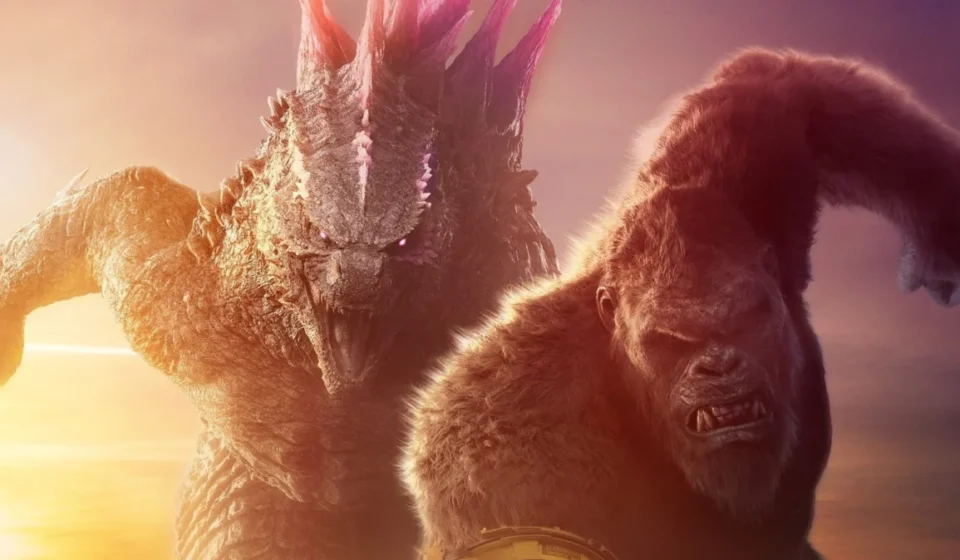

In the high-stakes ecosystem of Hollywood blockbusters, the director’s chair is often a seat of negotiation. For Adam Wingard, a filmmaker who rose to prominence through the gritty, synth-soaked aesthetic of independent horror, the leap into the "MonsterVerse" was a journey of massive financial success tempered by profound creative trade-offs. While Godzilla vs. Kong (2021) and Godzilla x Kong: The New Empire (2024) cemented his status as a commercial juggernaut—collecting nearly $1.05 billion in combined global box office receipts—Wingard reveals that the experience was defined by a constant tug-of-war between his auteur instincts and the rigid expectations of studio tentpole production.
In a recent exclusive interview, the director opened up about the "hardest part" of steering a multi-million-dollar franchise, highlighting a tension that resonates throughout modern cinema: the struggle to maintain a unique sonic and stylistic identity when the industry demands a homogenized, orchestral blockbuster sound.
From Indie Horror to Kaiju Titan: A Chronological Evolution
To understand the friction Wingard felt during his tenure with Warner Bros., one must look at his trajectory. Wingard began his career in the mid-2000s, operating on the fringes of the genre space. His early works—Home Sick (2007), Pop Skull (2007), and A Horrible Way to Die (2010)—were characterized by low budgets and experimental approaches to sound and visual mood.
His breakthrough came in 2011 with the visceral home invasion thriller You’re Next, followed by the 2014 cult classic The Guest. The latter, starring Dan Stevens, served as a calling card for Wingard’s signature style: neon-drenched cinematography matched with a driving, John Carpenter-esque synth score. These films were intimate, stylistically bold, and entirely his own.
Following a detour through the Blair Witch franchise and a live-action adaptation of Death Note for Netflix, Wingard was thrust into the arena of the $200 million blockbuster. Godzilla vs. Kong was a turning point. Wingard brought a "playful and unrealistic" tone to the franchise, distancing it from the grim, earth-toned realism of previous American Godzilla iterations. However, as he transitioned into this space, he discovered that the "creative freedom" he enjoyed in the indie world was now subject to the gravity of institutional expectation.

The Battle of the Score: Orchestral Norms vs. Synth Visions
Perhaps the most revealing insight from Wingard’s recent commentary concerns the musical identity of his Godzilla films. In contemporary Hollywood, film scores often fall victim to the "temp track" trap. During the editing process, directors and editors insert existing music to guide the tone of a scene. Often, these temp tracks are drawn from established blockbuster scores, leading to a feedback loop where composers are pressured to mimic the "big, orchestral" sound that studios have deemed safe and commercially viable.
Wingard, a devotee of electronic, synthesizer-heavy soundscapes, found himself pushing against this tide. He admitted that the desire to implement his preferred aesthetic was constantly curtailed by the prevailing belief that a "Godzilla movie" must sound like a traditional orchestral epic.
"The hardest part about doing Godzilla movies for me is that… we had electronic components in the score, but not much more than a Hollywood movie might utilize, really, at the end of the day," Wingard noted. "It just felt like we didn’t have the backing, the confidence, in that type of thing for a Godzilla movie because there’s sort of an expectation of big orchestral stuff. So I felt like I was a little out of my element on that one because I wasn’t able to do that, because ultimately I just like the way this [synth-heavy electronic music] sounds."
While composers Tom Holkenborg (Junkie XL) and Antonio Di Iorio delivered the massive, brass-heavy scores required for the films, Wingard’s admission highlights a subtle, ongoing suppression of the director’s personal artistic voice in favor of franchise "branding."
Institutional Constraints and the "Nostalgia" Trap
Wingard’s experience reflects a broader phenomenon within the industry’s reliance on Intellectual Property (IP). According to the director, the creative process for a massive franchise is fundamentally different from that of an independent feature. In the indie sphere, the film is an extension of the director’s psyche; in the IP sphere, the film is an extension of the audience’s memory.
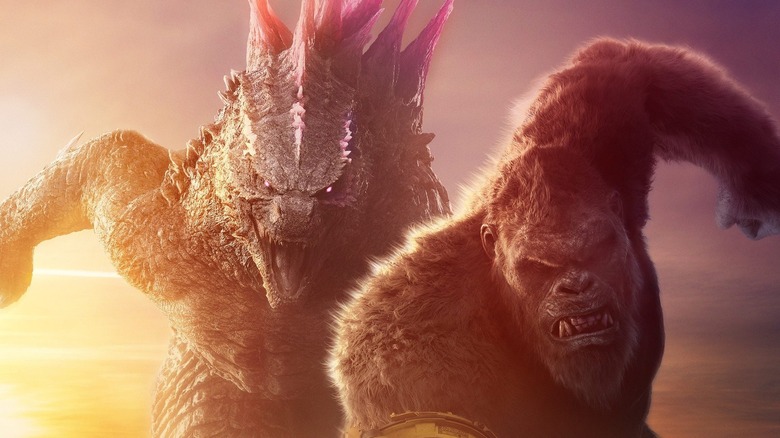
"When I was in the franchise IP world, all the decision-making was more or less based on nostalgia and just excitement for being able to put my stamp on something," Wingard explained. "And you can put yourself in that, but it’s not necessarily a personal story."
This reality introduces a mathematical approach to filmmaking. A director may want to push a narrative or stylistic idea to the "far left" of the spectrum, but the logistics of a massive production require that they settle in the "middle." This compromise—a necessity of managing risk on a project with a nine-figure budget—can inevitably lead to creative frustration.
Implications for Future Filmmaking
Wingard is quick to clarify that his reflections are not a condemnation of his work on the Godzilla series. He remains proud of the spectacle and the box office success he helped achieve. Instead, he views his time in the MonsterVerse as a masterclass in compromise—a reality check for any filmmaker who dreams of bringing their unique voice to a massive, studio-governed machine.
The implications for the industry are significant. As audiences become increasingly savvy about the "homogenized" nature of blockbuster cinema, directors like Wingard are highlighting the structural reasons why these films often feel uniform. When the studio’s primary concern is maintaining the "expectation" of the brand, the idiosyncratic choices that define a director’s career are often the first elements to be sanded down.
Returning to the Fringe: The Case of Onslaught
There is a silver lining for those who prefer Wingard’s unfiltered style. With his latest project, Onslaught, the director has returned to a more intimate scale. Set in the same universe as his cult-favorite The Guest, Onslaught represents a return to the director’s roots. Operating with a smaller budget, Wingard is once again the master of his own domain, free from the crushing weight of franchise IP expectations.
If his recent comments are any indication, Onslaught will likely feature the kind of daring, synth-forward, and unapologetically bold creative choices that the "Godzilla" machine could not accommodate. For Wingard, the transition from the blockbuster tentpole back to the independent sector is not a step down, but a reclamation of the artistic autonomy that defines his work.
As Hollywood continues to grapple with the tension between "content" and "cinema," Wingard’s experience serves as a reminder that the most compelling stories often arise when directors are allowed to be "all the way over here"—far from the middle, far from the norm, and entirely true to their own sound.