
The landscape of contemporary Balkan cinema has long been defined by its willingness to confront the ghosts of the past and the harsh realities of the present. However, few recent entries have managed to capture the intersection of personal trauma and systemic social failure with the raw, vibrating intensity found in "17," the debut feature from Macedonian director Kosara Mitić. Premiering in the prestigious Perspectives section of the Berlinale and subsequently securing the Best Actress award at the Sarajevo Film Festival for its lead, Eva Kostić, the film has emerged as a polarizing yet essential piece of modern European filmmaking.
Through an unflinching lens, "17" explores the harrowing journey of a young woman navigating the aftermath of sexual violence within a culture that demands her silence. As the film moves from the prestigious festival circuit to wider critical discussion, it serves as a stark reminder of the "don’t-ask-don’t-tell" policy that often governs the lives of teenagers in transition.
Main Facts: A Bold Entry into the Global Film Circuit
"17" is a psychological teen drama that marks a significant milestone for North Macedonian cinema. Directed by Kosara Mitić and co-written by the acclaimed Ognjen Sviličić, the film is a co-production that leverages the stark, atmospheric beauty of the Balkan landscape to tell a story that is both hyper-local and tragically universal.
The film’s primary focus is Sara (portrayed by newcomer Eva Kostić), a high school student whose life is irrevocably altered following a violent sexual assault by two of her peers. The narrative eschews the traditional "recovery" arc, choosing instead to dwell in the immediate, suffocating presence of the trauma as Sara embarks on a senior class trip to Greece.
Key Production Details:
- Director: Kosara Mitić
- Lead Actress: Eva Kostić (Winner: Heart of Sarajevo for Best Actress)
- Cinematography: Naum Doksevski
- Screenplay: Kosara Mitić and Ognjen Sviličić
- Setting: Bitola, North Macedonia, and the Greek border.
- Festival Pedigree: Berlinale (Perspectives), Sarajevo Film Festival.
The film has been noted for its "nervy" energy and a visual style that borders on the claustrophobic, utilizing dim, jaundiced lighting to reflect the internal state of its protagonist. While some critics have labeled its approach as "shock-value miserablism," others argue that its brutality is a necessary reflection of the environment it seeks to critique.
Chronology: From Trauma to the Crossroads
The narrative structure of "17" is designed to keep the audience in a state of perpetual unease, mirroring the hyper-vigilance of a trauma survivor.
The Inciting Incident
The film begins without preamble. From the first frame, Mitić plunges the viewer into a traumatic moment: a hookup between Sara and two boys that rapidly escalates into a violent assault. By starting at the "end" of Sara’s innocence, the film removes any sense of voyeuristic build-up, focusing instead on the weight of the act itself.
The Class Trip: A Pressure Cooker
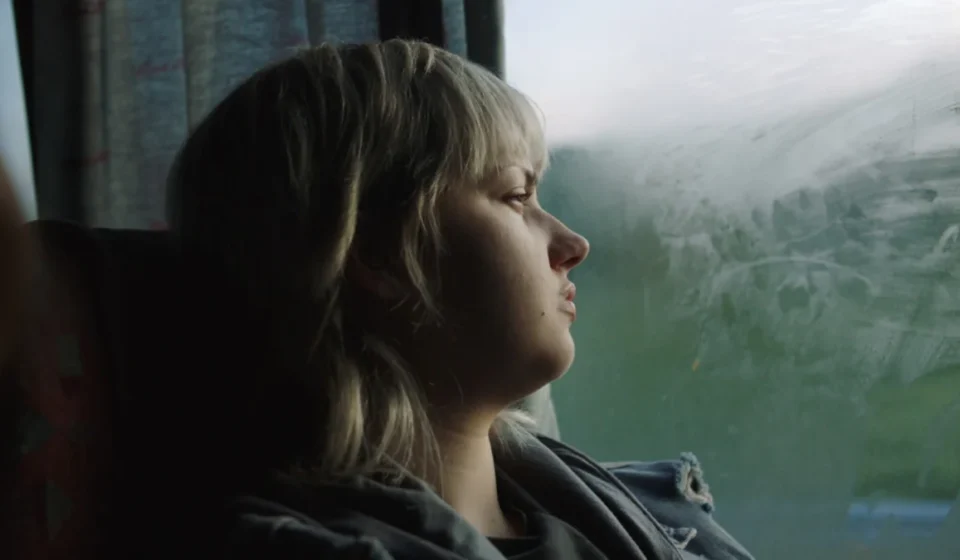
The story skips forward several months. Sara is now a withdrawn, ghost-like presence among her classmates. The occasion is a milestone for any teenager—the senior class trip to Greece. However, for Sara, the trip is a minefield. One of her assailants, Filip (Dame Joveski), is not only on the trip but is a central figure in the social hierarchy of the group.
The majority of the film’s first two acts takes place during a stopover at a hotel in Bitola. This setting is crucial; the hotel is depicted as a liminal space—dark, decaying, and poorly lit. Here, the "fun" of the class trip is revealed to be a facade for bullying, entitlement, and casual cruelty.
The Social Dynamics
In Bitola, the logistical failures of the trip force Sara into a shared room with her friend Lina (Martina Danilovska) and her former best friend Nina (Eva Stojcevska). The tension is heightened by the revelation that Nina is now dating Filip, Sara’s ex-boyfriend and one of her rapists. The irony is bitter: Sara is forced to share a living space with the girlfriend of her attacker, all while carrying the physical evidence of the assault—a pregnancy she has kept hidden.
The Climax and the Border
As the trip progresses toward the Greek border, the tension between Sara’s internal reality and the external "party" atmosphere reaches a breaking point. A seedy hotel party becomes the site of further violence, involving a sociopathic outburst from Filip and his "juiced-up" cronies. The film concludes at a border control checkpoint—a literal and metaphorical crossroads where Sara must decide whether to continue carrying her secret into a "civilized" new world or to break the silence that has defined her seventeenth year.
Supporting Data: Technical Execution and Critical Context
To understand the impact of "17," one must look at the technical choices that elevate it beyond a standard "issue-based" drama.
Visual Language
Cinematographer Naum Doksevski plays a pivotal role in establishing the film’s grim atmosphere. Unlike the "sunny" aesthetics often associated with youth-centric films (such as the French breakout La Gradiva, to which 17 is frequently compared), Doksevski utilizes:
- Jaundiced Lighting: The yellow-tinged, dim interiors of the Bitola hotel suggest a sense of sickness or rot.
- Restless Camerawork: The use of fluid, handheld cameras and extended close-ups forces the audience into Sara’s personal space, making her anxiety palpable.
- Symbolic Wardrobe: Sara’s baggy sweatshirts and dragging jeans serve as a physical shield, contrasting with the "cool-girl" aesthetic of her peers.
Performance and Casting
The casting of non-professional actors alongside Eva Kostić lends the film a documentary-like realism. Kostić’s performance, described by critics as "simmering" and "intrepid," relies heavily on her ability to convey complex emotions through silence. Her "knowing gaze" when interacting with Nina—a look that mixes pity with the weariness of a veteran soldier—provides the film’s emotional core.
Comparative Analysis
Critics have noted that while 17 shares DNA with other "youth on a trip" films, it distinguishes itself through its "Eastern European somberness." Where other films might focus on the awakening of sexuality or the joy of freedom, 17 focuses on the surrender of the body and the "cruel code of silence" that governs female existence in patriarchal structures.
Official Responses and Festival Reception
The reception of "17" within the film industry has been overwhelmingly positive regarding its craft, though tempered by discussions regarding its "unflinching gaze."
The Sarajevo Jury’s Verdict
In awarding Eva Kostić the Best Actress prize, the Sarajevo Film Festival jury highlighted the "raw honesty" and "devastating subtlety" of her performance. The award served as an official endorsement of the film’s importance in the Balkan cinematic landscape, signaling that Mitić’s "refusal to pull punches" was a valid and necessary artistic choice.
Institutional Critique
Within the film, Mitić offers a biting critique of institutional failure. The two teacher-chaperones are depicted as "grossly resigned" to their students’ insolence. One teacher’s comment—that the students should behave because Greece is a "civilized country with real rules"—suggests a deep-seated national inferiority complex and an admission that the domestic environment (Macedonia) is perceived as lawless. This "official" response within the narrative highlights the lack of adult protection available to victims like Sara.
Critical Consensus
Reviewers from major outlets like Variety have praised the film for its "bracing" approach. While some noted that the sadism of the male characters "pushes the limits of credulity," they ultimately conceded that Mitić is "thinking in metaphors," using individual cruelty to represent a broader "culture of shame and straight masculine privilege."
Implications: The "Don’t-Ask-Don’t-Tell" Culture of the Balkans
The implications of "17" extend far beyond the cinema screen. The film serves as a sociological document of a specific "Gen Z" experience in Eastern Europe, where globalized youth culture (partying, social media, "cool-girl" tropes) clashes with traditional, rigid patriarchal values.
The Culture of Shame
The script by Mitić and Sviličić highlights a world where "slut-shaming" is a more feared outcome than the trauma of assault itself. Sara’s decision to hide her pregnancy and her assault is not just a personal choice; it is a survival tactic in a world where "feminine camaraderie" is rare and "masculine privilege" is the default setting.
The Path to Solidarity
One of the film’s most significant implications is the transformative power of female solidarity. The "nugget of niceness" Sara finds in her friend Lina suggests that the only way to break the "cruel code of silence" is through shared vulnerability. This shift from isolation to connection is presented as the only viable path to healing.
A New Wave of Macedonian Cinema
Finally, "17" marks the arrival of Kosara Mitić as a major voice in European cinema. By tackling subjects that are often relegated to the shadows, Mitić joins a growing movement of female directors in the Balkans who are reclaiming the narrative of their own history and trauma. The film’s final, breath-held scene at the border checkpoint is a call to action: to embrace the truth, "haters be damned," and to step into a future where silence is no longer the price of admission.
In conclusion, "17" is more than a teen drama; it is a harrowing, beautifully executed examination of the cost of silence. Through Eva Kostić’s monumental performance and Kosara Mitić’s uncompromising direction, the film demands that we look—and keep looking—at the realities that society would rather ignore.