
The landscape of interactive horror has long flirted with the silver screen, but rarely does the transition from video game to feature film feel as visceral and seamless as it does with Dead Reset. Following the successful launch of the full-motion video (FMV) game by publisher Wales Interactive last year, the project has undergone a significant transformation. Director Stewart Sparke, the visionary behind Dark Rift Horror, has re-edited and re-mastered the game’s narrative footage into a standalone, feature-length cinematic experience. Premiering at the prestigious FrightFest, the film adaptation of Dead Reset proves that the intensity of player-driven horror can be just as potent when watched from the safety of a theater seat.
The Core Narrative: A Surgeon’s Infinite Nightmare
At the heart of Dead Reset is Cole Mason, a surgeon portrayed with harrowing desperation by Daniel Thrace. The premise is a masterclass in claustrophobic tension: Mason awakens within the sterile, cold confines of a high-tech research facility, possessing zero memory of his arrival or purpose. His confusion is short-lived, however, as he is immediately commanded by the facility’s ruthless manager, Magson—played with chilling detachment by Andrina Carroll—to perform a high-stakes emergency operation.
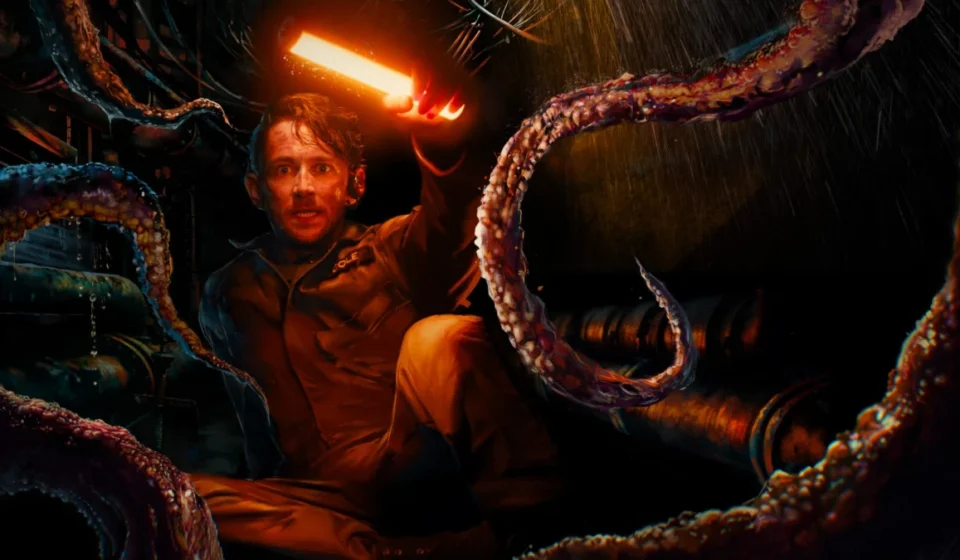
The narrative quickly pivots from a medical thriller to a sci-fi nightmare. Mason soon discovers he is trapped in an inescapable time loop, forced to relive the same harrowing hours within the facility. Complicating matters is the presence of an apex predator: a parasitic, bug-like creature that stalks the corridors, intent on eradicating the human population. For Mason, the goal is simple but seemingly impossible: break the loop, evade the monster, and escape the facility before his final, permanent death.
Chronology of a Production: From Gaming Roots to FrightFest
The journey of Dead Reset began with the ambition to marry the branching paths of modern gaming with the high-octane gore of classic practical-effect horror. Stewart Sparke, known for his work on The Creature Below, Book of Monsters, and the critically lauded How to Kill Monsters, collaborated once again with writer Paul Butler to craft a script that prioritized pace and visceral impact.
- Development: Sparke and Butler focused on a "non-stop urgency" model, ensuring that the transition from game to film would not suffer from the pacing lulls that often plague narrative-heavy games.
- The Gaming Launch: The FMV game served as the initial proving ground, gathering a loyal following among fans of interactive horror who appreciated its brutal, high-tech aesthetic.
- The Cinematic Re-edit: Recognizing the strength of the captured performances, Sparke undertook the monumental task of restructuring the footage into a feature-length narrative.
- The Festival Premiere: The film’s debut at FrightFest marked a significant milestone for Dark Rift Horror, cementing the studio’s reputation for delivering "bloody, over-the-top" genre experiences that satisfy the most demanding horror aficionados.
Supporting Data: Behind the Practical Effects and Design
One of the defining features of Dead Reset is its staunch commitment to physical, tangible horror. In an era dominated by digital visual effects, the production team at Dark Rift Horror opted for a return to tradition.
![‘Dead Reset’ Review: A Fast and Exhilarating Adventure [FrightFest]](https://www.dreadcentral.com/wp-content/uploads/2026/08/dead-reset-landscape-1200x675.jpg)
The Art of the Practical Gore
The film is noted for its "abundant" use of practical gore. Rather than relying on pixels to generate viscera, the team utilized prosthetics and mechanical effects to bring the creature’s carnage to life. This creates a tactile, sickeningly real experience where "human entrails are splashed across the screen at regular intervals." For fans of the genre, this focus on physical effects—where every kill feels weighty and earned—is a significant draw.
Production Design and Architectural Horror
The facility itself functions as a character. Designed to mirror a high-tech, clinical nightmare, the set design utilizes maze-like corridors and cold, industrial lighting to heighten the sense of isolation. The gradual revelation regarding the facility’s true geographical location provides a narrative punch that serves as one of the film’s most memorable "shock" moments, effectively expanding the world-building beyond the initial premise.
Character Dynamics and the Ensemble Cast
While the film is driven by Daniel Thrace’s panicked, high-energy performance, the supporting cast plays a pivotal role in grounding the absurdity of the time loop.
- Andrina Carroll (Magson): Carroll delivers a performance that borders on villainous, portraying a corporate manager who views her subordinates as purely "expendable" variables in her research. Her character provides the perfect antagonist to balance Mason’s frantic attempts at heroism.
- Lyndsey Craine (Fearne): Craine brings a layer of mystery to the facility. As a worker hiding dark, buried secrets, her presence adds a layer of distrust that complicates Mason’s search for an ally.
- Dennis Rasaq (Riz): Representing the pragmatic, military-adjacent security force, Riz is the character who eventually hits a breaking point. His transition from a gun-toting professional to a man pushed to the brink highlights the total systemic collapse occurring within the facility.
The isolation is compounded by the "minimal cast" approach, which ensures that viewers feel the same helplessness as Mason. Because the facility is located in such a remote, inaccessible region, the possibility of rescue is nonexistent, forcing the characters to confront their impending doom with no external hope.
The Creature: A New Icon in Biological Horror
The film’s antagonist, a parasitic, multi-tentacled organism, draws clear inspiration from the creature designs of the late 20th century, specifically the work found in Alien. The creature’s life cycle—starting as a burrowing parasite and eventually erupting into a fully realized, bug-like behemoth—is both original and deeply unsettling. Its ability to impale victims with whip-like tentacles makes it a formidable threat, transforming the facility from a place of work into an impenetrable, lethal trap.
![‘Dead Reset’ Review: A Fast and Exhilarating Adventure [FrightFest]](https://www.dreadcentral.com/cdn-cgi/image/width=788%2Cheight=444%2Cfit=crop%2Cquality=75%2Cgravity=auto%2Csharpen=1%2Cmetadata=none%2Cformat=auto%2Conerror=redirect/wp-content/uploads/2026/08/dead-reset-landscape.jpg)
Implications for the Future of Interactive Horror
The success of Dead Reset as a hybrid product—existing successfully as both a game and a film—raises interesting questions about the future of genre distribution. By utilizing the same high-quality production footage for two distinct mediums, Dark Rift Horror has established a template for low-budget, high-impact studios.
However, the film is not without its minor flaws. Critics have noted that the "relentlessly fast pace" of the script—while excellent for maintaining interest—often leaves little room for the film’s deeper, more complex revelations to breathe. The backstories regarding Mason’s past and the facility’s true purpose are occasionally rushed, which may leave viewers wanting more context. Despite this, the consensus remains that the film’s urgent, "breakneck speed" is a deliberate choice that mirrors the frantic nature of the time loop itself.
Final Verdict: A Thrilling Expedition
Dead Reset stands as a testament to the creative ingenuity of Stewart Sparke and his team. By focusing on practical effects, high-stakes pacing, and a commitment to keeping the audience in a state of constant, panicked motion, the film succeeds where many other adaptations fail.
Whether one is a veteran of the original video game or a newcomer seeking a high-octane, gore-filled horror experience, Dead Reset offers a unique, visceral journey. It is a bold, uncompromising, and deeply entertaining addition to the modern horror canon—a film where, as the title suggests, the resets only lead to more brutal, beautiful, and bloody outcomes. As the genre continues to evolve, Dead Reset serves as a benchmark for how to successfully bridge the gap between the controller and the screen, proving that some nightmares are best experienced in the dark of a theater.