The Existential Stage: How The Comeback and Hacks Define the Modern Hollywood Crisis

For two decades, The Comeback has served as the television industry’s most uncomfortable mirror. Created by Michael Patrick King and Lisa Kudrow, the HBO series first arrived in 2005, capturing the early, frantic transition of the medium as reality television began to erode the scripted sitcom’s traditional sanctity. When HBO revived the series in 2014, the industry was once again at a crossroads, teetering on the precipice of the streaming wars.
Now, twelve years after its last outing, the show has returned for a third and final season. As Hollywood grapples with the fallout of a global pandemic, historic labor strikes, and massive corporate consolidation, Valerie Cherish—Kudrow’s indelible, tragicomic creation—finds herself facing the ultimate existential threat: the rise of Artificial Intelligence.
A Chronology of Obsession: Valerie and Deborah’s Parallel Paths
To understand the current state of television satire, one must look at the lineage of the "aging diva" trope. The trajectory of The Comeback mirrors the industry’s own loss of innocence. In its first iteration, Valerie was a punchline—a washed-up sitcom star desperate for a second act in the exploitative world of reality TV. By the second season, she was a survivor navigating the “prestige” television boom.
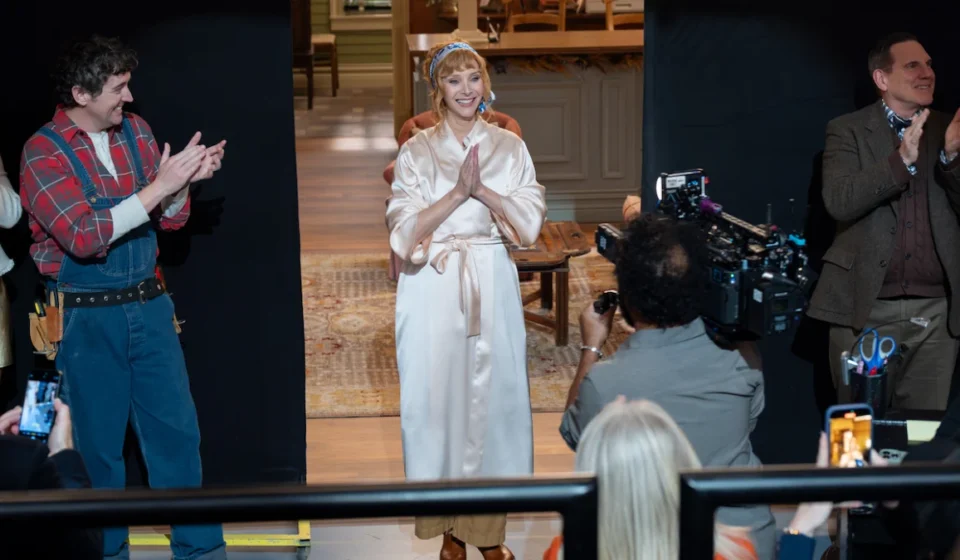
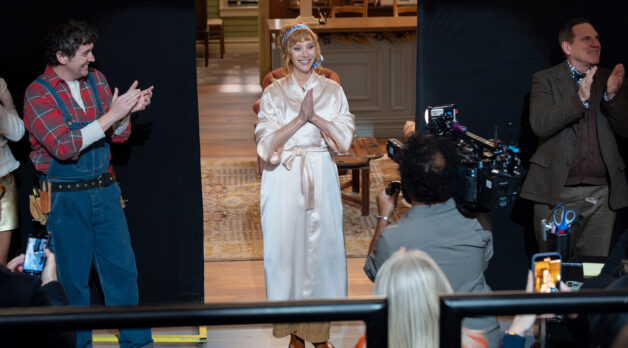
In the final season, the show breaks from its established mockumentary format to provide a more propulsive, direct narrative. Valerie is cast in How’s That?!, the first multi-cam sitcom written entirely by an AI engine named Allassist. As production budgets tighten and studio heads look to silicon to solve the "human problem" of rising costs, Valerie discovers that she is no longer just a performer; she is an unwilling participant in the obsolescence of her own craft.
Simultaneously, HBO’s Hacks—created by Lucia Aniello, Paul W. Downs, and Jen Statsky—has emerged as the thematic companion piece to The Comeback. Where Valerie is the eternal underdog, Jean Smart’s Deborah Vance is the titan of industry. Yet, both women occupy the same precarious space: that of the aging female icon whose relevance is constantly questioned by the male-dominated machinery of Hollywood. In Hacks, Deborah’s battle against a non-compete clause and corporate censorship reflects the same systemic sexism and ageism that have hounded Valerie Cherish for twenty years.
Supporting Data: The AI Bogeyman and the Cost of Efficiency
The threat of AI in these series is not merely a plot device; it is a commentary on the "inevitability" narrative currently peddled by Silicon Valley. In Hacks, the encroachment of technology is represented by "QuikScribbl," a large language model that attempts to commodify Deborah’s legacy. The show’s writers use the character of Ava Daniels (Hannah Einbinder) to voice the industry’s collective frustration, noting that AI is often sold as a solution to problems that didn’t exist until the tech industry created them.
In The Comeback, the satire is more granular. The AI-penned scripts for How’s That?! are functional but devoid of humanity. They are "stale," as the show posits, because they lack the friction of the writers’ room. A poignant scene featuring legendary director James Burrows—playing himself—serves as the season’s philosophical anchor. After watching a flat take, Burrows tells Valerie that "surprising" moments are not the product of algorithms; they are the result of human beings "beating themselves up" to find the truth in a joke.
The data, both in the show’s universe and in the real-world Hollywood labor climate, suggests that the "efficiency" promised by AI comes at the cost of the very thing that makes television endure: the emotional resonance of the human experience.
Official Industry Perspectives: The Human Element
While the characters in these shows represent fictional archetypes, the themes they explore are grounded in the real-world concerns of the Writers Guild of America (WGA) and the Screen Actors Guild (SAG-AFTRA). The recent strikes were, at their core, a defense of the "human corner" that Burrows references.
Industry analysts note that while AI can replicate syntax, it cannot replicate the lived, messy experience of a veteran performer like Kudrow or Smart. In the narrative arcs of both The Comeback and Hacks, the protagonists are forced to choose between the path of least resistance—letting the machine dictate their career—and the path of creative autonomy.
Valerie Cherish, long the butt of the joke, finds her strength in this final season by refusing to be a passive observer of her own replacement. Similarly, Deborah Vance’s arc in the fifth season of Hacks underscores that the "glass ceiling" for women in entertainment is not just about power, but about the right to evolve without being replaced by a cheaper, digital facsimile.
The Implications: A New Era of Showbiz Satire
As we approach the next Emmy cycle, the battle between Hacks and The Comeback carries symbolic weight. Hacks has already cemented its status as a critical darling, with multiple wins for Jean Smart and a Best Comedy Series trophy. The Comeback, historically overlooked by the Academy, arrives at this final season with the grit of a cult classic finally demanding to be seen.
The implication for the industry is clear: television as an institution is currently in a state of mourning for its own soul. The corporate contraction that has seen the shuttering of legacy networks and the rise of platform-exclusive content has left a vacuum that these two shows are filling with sharp, necessary satire.
Why This Matters for the Future of TV
- The Death of the "Prestige" Label: Both series dismantle the idea that a high-budget, streaming-first model equates to quality. They argue that the heart of television remains the actor-writer collaboration.
- Corporate Censorship: The parallels between Deborah Vance’s non-compete clause and the real-world cancellation of late-night staples like The Late Show with Stephen Colbert suggest that the industry is becoming increasingly hostile to the voices that built it.
- The Limits of Innovation: By framing AI as a "pathetic joke" (as in The Comeback) or a "vest-wearing tech-bro fantasy" (as in Hacks), the writers are actively resisting the narrative of technological inevitability.
Conclusion: The Optimism of Resistance
Despite the cynicism inherent in their premises, both The Comeback and Hacks possess a surprising undercurrent of optimism. They are, at their hearts, love letters to the grind of show business. They celebrate the resilience of women who have seen the highs and the lows of fame and have lived to tell the tale.
Whether Valerie Cherish ultimately finds her redemption or Deborah Vance manages to reclaim her voice, the success of these shows lies in their refusal to fade away quietly. They serve as a comedy-fueled resistance against the homogenization of culture. In a world where studios are looking for the next "content" stream, these shows remind us that what we truly need is not more material, but more humanity.
As the credits roll on the final season of The Comeback, the industry is left with a final, lingering question: when the machines are finished writing the jokes, who will be left to tell them with the kind of heartbreak and humor that only a human being can provide? For now, we have Valerie and Deborah—and that is, at least for one more season, enough.