The Archive Crisis: Why the Paramount-Warner Bros. Discovery Merger Has Documentarians on Edge

The landscape for documentary filmmaking, already strained by a tightening market for distribution and dwindling production budgets, is facing a new, existential threat. As media conglomerates continue to consolidate, the precious, finite resource of visual history—the raw footage that builds our collective memory—is increasingly falling under the control of fewer, more restrictive hands.
The impending $111 billion bid by Paramount-Skydance CEO David Ellison to acquire Warner Bros. Discovery (WBD) has sent a shockwave through the documentary community. Beyond the standard corporate concerns regarding market share and competition, the deal threatens to consolidate the two most significant television archives in American history: 85 years of CBS News footage and 45 years of CNN’s comprehensive global news library, encompassing approximately four million assets. For filmmakers who rely on these archives to document the truth, this merger represents not just a business transaction, but a potential turning point for historical record-keeping and freedom of expression.
The Architecture of the Merger
The proposed union would place an unprecedented amount of historical, political, and cultural documentation under a single corporate umbrella. If successful, the new entity would control the visual record of nearly a century of major political events, wars, elections, and social movements.

However, this consolidation occurs against a backdrop of intensifying political sensitivity. In October 2025, David Ellison appointed Bari Weiss as editor-in-chief of CBS News. Critics argue this leadership shift has ushered in a more conservative editorial stance at the network. Documentary filmmakers, who frequently utilize archival footage to provide critical context to modern political narratives, fear that this ideological alignment will translate into restrictive licensing policies—particularly for projects perceived as critical of President Donald Trump or his administration.
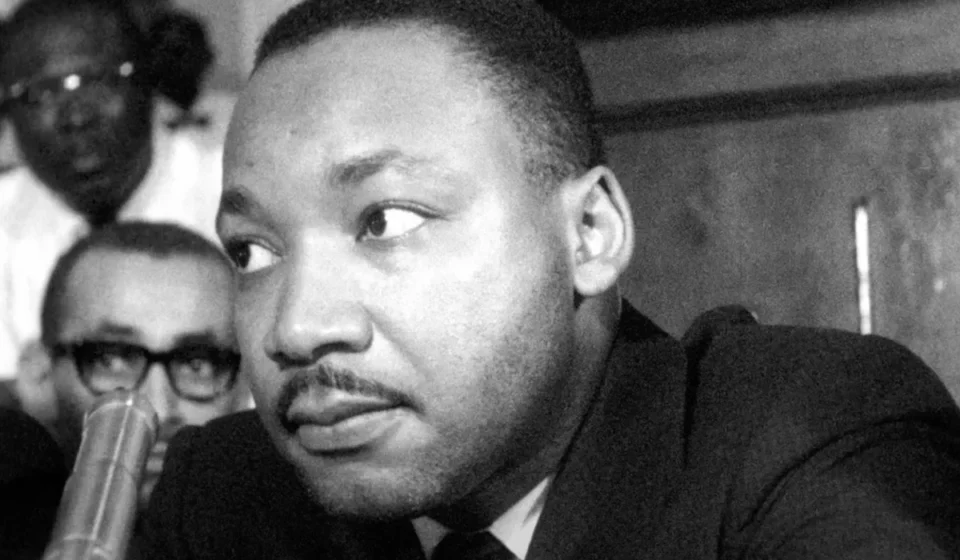
"Anytime an organization starts to put under their umbrella a bunch of organizations, it’s going to have an impact," noted veteran filmmaker Sam Pollard, director of MLK/FBI. "The fact that Paramount is going to have CNN and Warner Bros., which includes HBO, with whom I’ve done a lot of work, is going to have an impact both financially, socially, and politically, particularly with who David Ellison is."
A Chronology of Declining Access
The fear of a "closed" archive is not unfounded; it is a trend that has been accelerating for years.

- 2019: The Walt Disney Company, owner of ABC News, implemented a restrictive policy prohibiting the licensing of its aired stories and footage of its reporters to any outlets other than those owned by Disney. This effectively barred independent filmmakers from using footage of events like September 11, unless they secured distribution through Disney-owned platforms like Hulu or ABC.
- 2022: After intense pushback and changing internal strategies, the Disney policy saw some "wiggle room," though it left a permanent mark on the industry, as dozens of independent projects were effectively silenced or delayed during the restrictive period.
- April 2026: The Archival Producers Alliance (APA) reported that CNN Collection, the licensing arm of CNN Worldwide, laid off seven of its eight staff members. This reduction in staff has led to concerns regarding the accessibility and management of the network’s 4 million-asset library.
- July 2026: The APA urged UK Culture Secretary Lisa Nandy to intervene in the Paramount-WBD merger, citing public interest concerns.
- August 2026: Secretary Nandy declined to block the merger, leaving the fate of the archives largely to U.S. regulatory scrutiny.
- March 2027: A federal antitrust trial is slated to begin, triggered by a lawsuit from 12 state attorneys general, forcing Paramount to pause the deal’s finalization until at least June 1, 2027.
Supporting Data: The Cost of Control
Archival footage is rarely an "open repository." It is a commodity governed by commercial licensing systems that require hefty fees, editorial disclosures, and legal vetting.
The financial burden on independent filmmakers is disproportionate. Often, smaller, independent production teams are charged three to four times the licensing fees paid by high-volume, high-budget corporate licensees like Netflix or Apple. Media conglomerates such as Tegna have been cited by the APA for charging tens of thousands of dollars per minute for usage, a price point that renders many historical narratives financially impossible to tell.
Archival producer Christine Fall, who has worked on seminal works like Fahrenheit 9/11 and Lakota Nation vs. United States, notes that the trend toward consolidation has made these houses less of a resource and more of a gatekeeper. "I’m avoiding them as a source already, preemptively," Fall said of CNN. "If you are trying to do a story set in the 1980s, CNN is invaluable because they are the first 24-hour news channel. They have what no one else does. But that access is becoming a liability."

Official Responses and Corporate Stance
When confronted with the concerns of the documentary community, corporate representatives often point to the "evolution of the media landscape."
In an email obtained by IndieWire, CNN brass stated: "Bottom line is that CNN is fully committed to its comprehensive and historic collection of content… And as the media landscape continues to evolve, we are aligning our workflows to better serve our clients with CNN’s world-class rights-cleared clips archive."
A spokesperson later added that the licensing business remains a "strong part of our business" and that internal workflow alignments have not changed the fundamental operation of the service for clients. However, the reality on the ground—characterized by staff layoffs and increased vetting—suggests a different experience for the end-user: the filmmaker.

The Implications: Censorship vs. Fair Use
The ultimate concern is that private copyright ownership is being weaponized as a form of shadow censorship. While "Fair Use" laws exist to protect the unauthorized, free use of copyrighted material for educational or critical purposes, the legal costs to defend Fair Use in court are prohibitive for most independent creators.
The Archival Producers Alliance warns that the consequences of this merger are not merely temporary—they are potentially irreversible. If a media conglomerate decides that certain historical footage is "off-limits" for specific editorial purposes, or if they decide to digitize or preserve only select portions of an archive, the "dimming" of history becomes a reality.
"The four networks—ABC, CBS, NBC, and CNN—are typically where one would go if you want to tell stories about the last 50 to 75 years," said APA co-founder Rachel Antell. "This merger would put two of those four under one decision-making tree… it’s a significant diminishment of possibilities."

Furthermore, the implications extend beyond U.S. borders. Researcher and producer Juan Andrés Bello highlights that these archives are essential to the global understanding of history. "Any limitations of access will have an impact in terms of research and dissemination of knowledge, not just for American citizens… but also people around the world."
Conclusion: A Fading Record
As the industry awaits the federal antitrust trial in 2027, the documentary community remains in a state of high alert. The fear is that the "gatekeepers" are becoming more entrenched, viewing their archives not as a public service or a historical record, but as an exclusive asset to be used solely for the benefit of the parent company’s bottom line or ideological narrative.
"I’ve been doing this for many years, and the trend since I started is closing access, minimizing access, and adding gatekeepers," Christine Fall concluded. If the trend holds, the future of the documentary—and our ability to look back at the truth of our recent past—may be locked behind a paywall that few can afford and even fewer can challenge. The preservation of history, it seems, is no longer a matter of keeping the footage; it is a matter of who is allowed to show it.