Bridging the Dynamic Range Gap: Beeble’s SwitchHDR Redefines AI-Driven Post-Production

In the modern landscape of high-end filmmaking, the demand for High Dynamic Range (HDR) content has outpaced the available source material. While streaming platforms, cinema screens, and television sets have standardized HDR, a vast global library of content remains locked in the constraints of Standard Dynamic Range (SDR). For colorists, VFX artists, and restoration specialists, bridging this "dynamic range gap" has long been a frustrating exercise in signal stretching, often resulting in muddy shadows, clipped highlights, and artifact-heavy imagery.
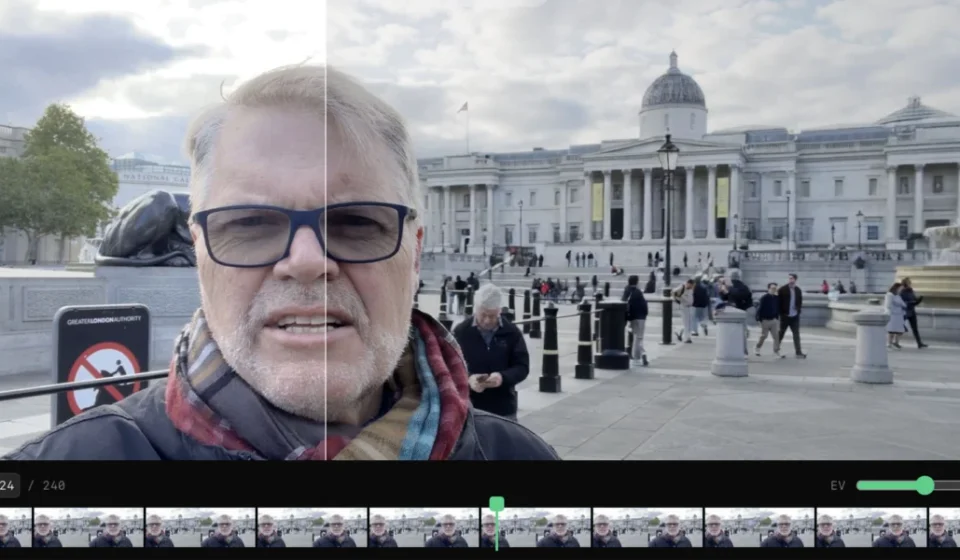
Enter Beeble, a Seoul-based AI firm that is challenging the status quo with its latest innovation: SwitchHDR. By moving away from traditional mathematical remapping and toward an intelligent, trained reconstruction model, Beeble aims to provide professional-grade, scene-linear HDR outputs that integrate seamlessly into the industry-standard ACES workflows.
The Core Innovation: Moving Beyond Simple Conversion
To understand the significance of SwitchHDR, one must first recognize the fundamental limitation of traditional SDR-to-HDR conversion. Conventional tools typically rely on global tone mapping or algorithmic expansion. If an SDR image has clipped highlights—where the data has been crushed to white—a traditional converter can only redistribute existing pixel values. It cannot "invent" the detail that was never encoded in the original 8-bit or 10-bit file.
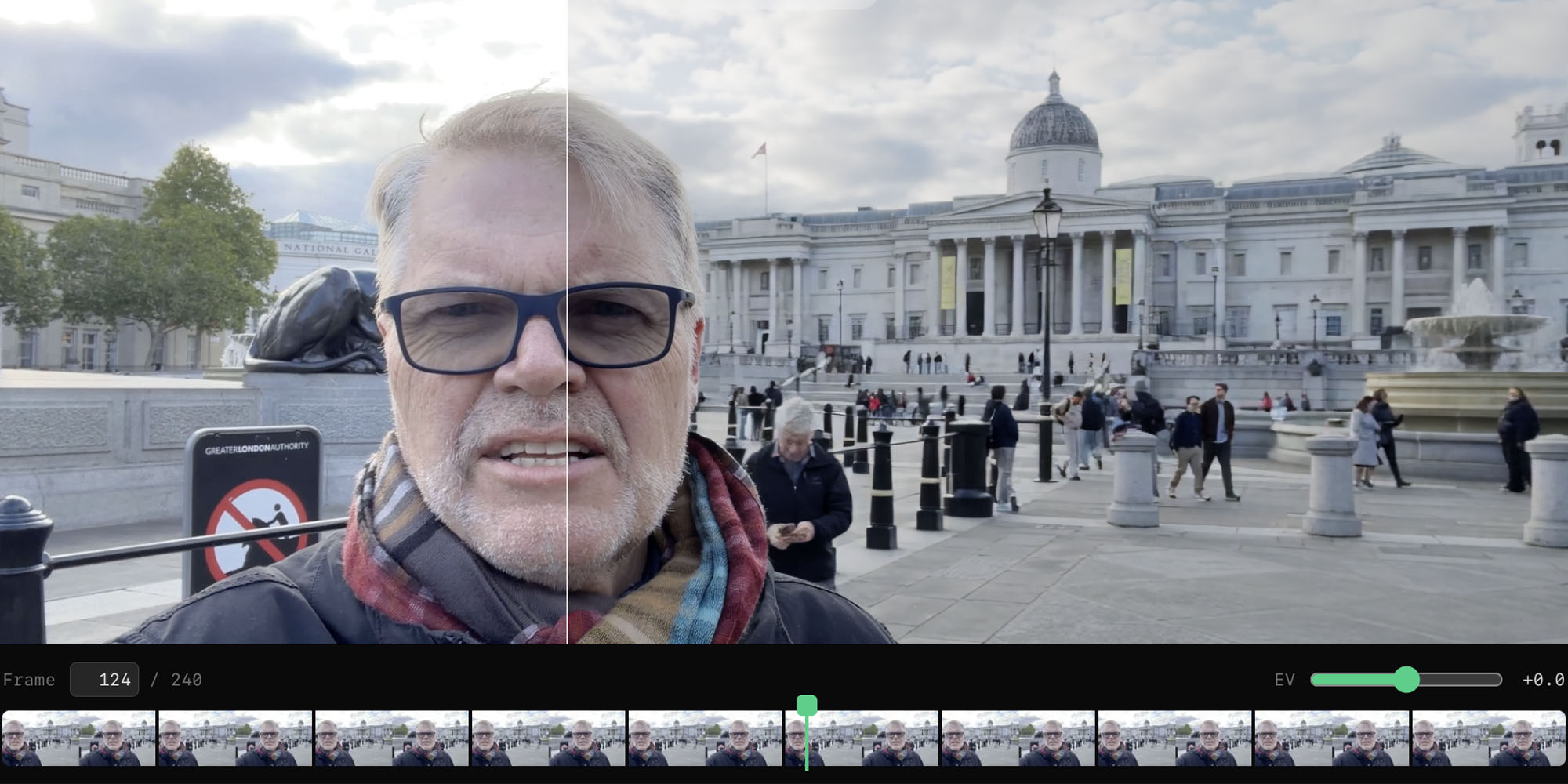
Beeble’s approach, according to Founder and CEO Hoon Kim, is distinct. Rather than treating the task as a mathematical scaling problem, Beeble has trained SwitchHDR on genuine HDR datasets. By exposing the model to the characteristics of high-radiance imagery, the AI learns to infer what a scene should look like in a high-dynamic environment.
"From day one, we built SwitchHDR around what post-production actually requires, not what makes a good demo," Kim explains. This distinction is the bedrock of the tool’s utility. It does not attempt to "hallucinate" information that isn’t there, but rather reconstructs a plausible, high-latitude version of the scene that allows colorists to recover shadow detail and highlight roll-off with a degree of grace previously thought impossible with legacy footage.
A Brief Chronology: From Relighting to Holistic AI Pipelines
The trajectory of Beeble since its inception in 2022 reflects the rapid maturation of AI in professional media workflows.
- June 2023: fxguide first profiled Beeble, focusing on their debut tool, "SwitchLight." At the time, it was an impressive, singular model designed to allow for the relighting of video assets—a daunting task that had traditionally required extensive 3D reconstruction.
- 2024–2025: The company began aggressive expansion of its research and development. Following the success of SwitchLight, Beeble pivoted toward a more comprehensive suite of tools, recognizing that VFX artists needed more than just relighting; they needed a unified, AI-assisted ecosystem.
- Late 2025: The development of the "Canvas" node-based editor began, aiming to unify Beeble’s proprietary models with industry-standard third-party AI solutions.
- Mid-2026: The official launch of SwitchHDR marks a significant milestone in this timeline. It represents the move from simple image manipulation to the complex, high-fidelity world of professional color science and HDR mastering.
This evolution highlights a clear company philosophy: shipping tools that are not just "cool tech," but are formatted for the grueling requirements of real-world production pipelines.
Technical Specifications and Workflow Integration
What separates a consumer "AI enhancer" from a professional VFX tool is the output format and the level of artist control. SwitchHDR is designed with the latter in mind, outputting 16-bit EXR sequences in the ACES2065-1 color space. By utilizing AP0 primaries, Beeble ensures that the output is not just "HDR-looking" for a monitor, but is ready for the deep color-bit-depth math required in a high-end compositing environment.
The Power of Targeted Control
A frequent complaint among VFX professionals is the "black-box" nature of AI. An algorithm might look great in a promotional video but fail when a director demands a specific highlight roll-off for a high-stakes scene. Beeble addresses this by incorporating:
- Luminance Masking: Users can define specific areas of an image—such as a window, a light source, or deep shadows—that require reconstruction, leaving the rest of the frame untouched.
- Prompt-Guided Reconstruction: Artists can guide the AI’s interpretation of a scene using text prompts, allowing for creative agency in how the "rebuilt" light behaves.
- Selective Application: The ability to pass through original pixels while only applying AI enhancements to specific regions is a game-changer for maintaining temporal stability and preventing the "plastic" look often associated with aggressive AI upscaling.
Implications for the Industry
The introduction of SwitchHDR carries significant implications for three major sectors of the entertainment industry:
1. Archival Restoration
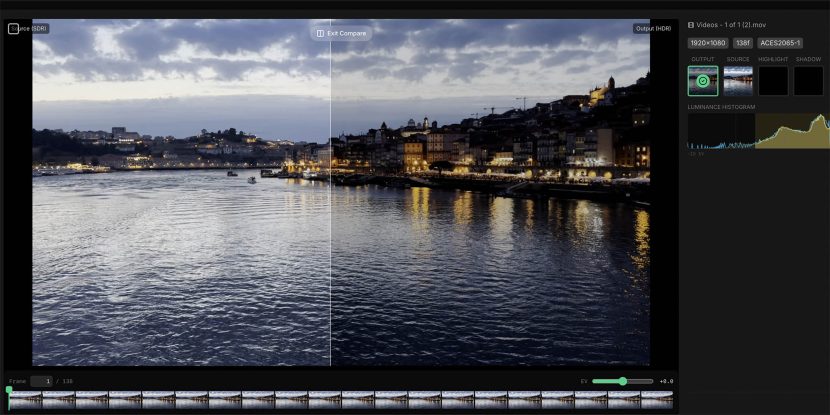
Libraries of film and television content captured on older sensors or film stocks that were mastered in SDR now have a path toward modern 4K HDR delivery. By using SwitchHDR, studios can revitalize their back catalogs, ensuring that legacy content remains competitive on modern screens without requiring a full, prohibitively expensive re-mastering from raw camera negatives.
2. VFX and Compositing
VFX pipelines are notoriously rigid. Integrating stock footage or archival plates into an HDR scene often creates a jarring contrast in dynamic range. By using SwitchHDR to bring these plates into a 16-bit EXR HDR space, artists can match black levels, highlight intensity, and overall radiance, creating a much more cohesive final image.
3. Documentary and Reality TV
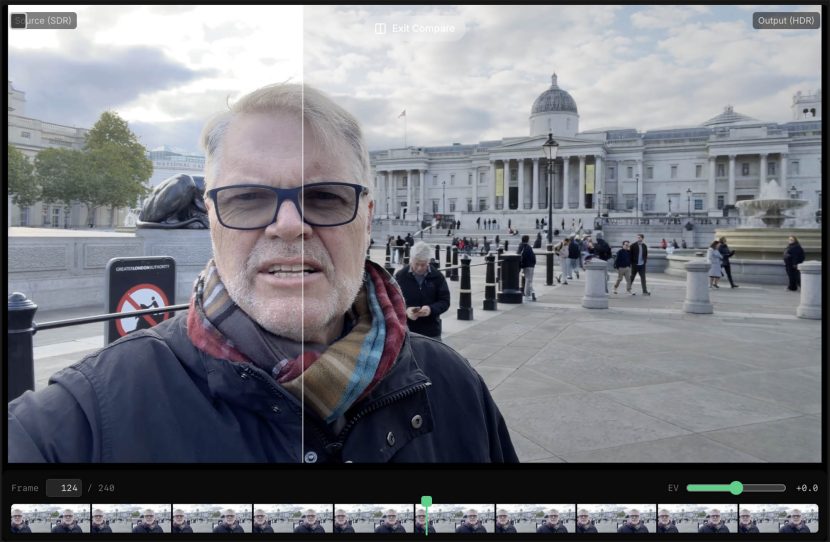
These genres are often shot in challenging, uncontrolled lighting conditions. The ability to "rescue" highlights in a bright sky or pull detail from a dark interview background gives editors and colorists a safety net, potentially saving hours of manual rotoscoping or complex grading.
The Human-in-the-Loop Philosophy
Despite the sophistication of the machine learning model, Beeble is adamant that the artist remains at the center of the creative process. The company’s trajectory—moving from the singular SwitchLight tool to the comprehensive Canvas environment—is a direct response to industry feedback.
"We’re also building Canvas, a node-based editor that brings our models together with the best third-party models for compositing and rotoscoping," says Kim. "The pace still surprises us, but the direction hasn’t changed: we build models that give filmmakers control, and we ship them in formats real pipelines can use."
This is a vital distinction in the current "AI gold rush." Many companies are building tools that seek to replace the human element. Beeble, by contrast, is building tools that assume the human is a master of their craft, providing them with higher-fidelity raw materials to work with.
Critical Analysis and Future Outlook
While SwitchHDR is arguably one of the most advanced tools currently available for this specific task, it is not immune to the challenges of AI-generated content. As noted in testing, temporal consistency—the bane of video-based AI—remains a minor hurdle when dealing with highly complex, moving textures.
However, in the context of professional post-production, this is a hurdle that can be managed. By allowing the artist to define the boundaries of the reconstruction, SwitchHDR provides enough stability to satisfy most production needs, especially when compared to the manual alternative of frame-by-frame painting or complex light-linking.
Looking forward, the integration of SwitchHDR into the Canvas ecosystem suggests that Beeble is positioning itself to be a permanent fixture in the modern post-production suite. As HDR becomes the default standard for global distribution, the ability to intelligently bridge the gap between old and new will become a necessity rather than a luxury.
Conclusion
Beeble’s SwitchHDR is more than just a tool; it is a bridge. It addresses a real-world pain point with a level of technical sophistication that respects the rigor of professional post-production. By providing high-bit-depth, production-ready EXR outputs and, more importantly, granting the artist the control to guide the reconstruction, Beeble has set a high bar for AI in the creative industries. As the industry continues to move toward more complex, high-dynamic-range workflows, tools that offer intelligent, controllable, and technically compliant solutions will be the ones that define the future of the moving image.