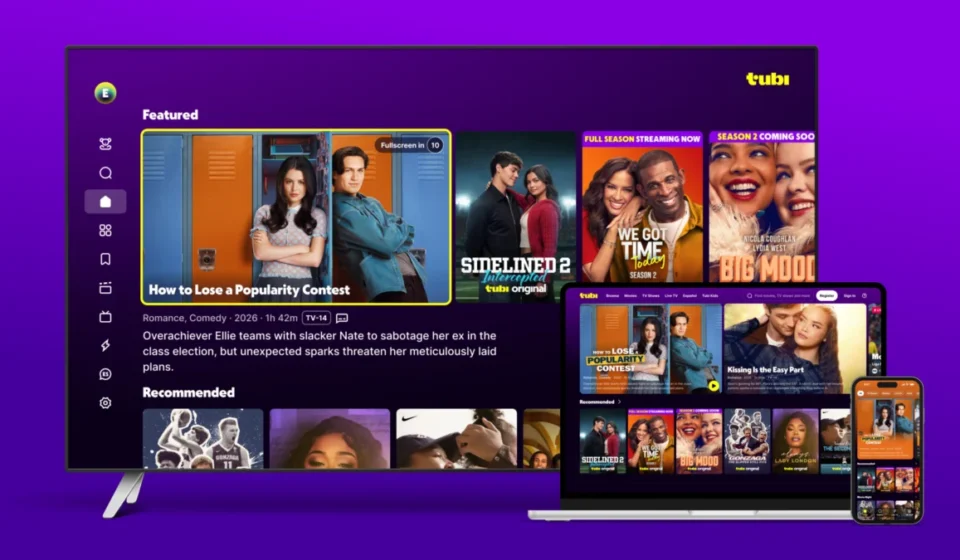

In the high-stakes arena of digital entertainment, where subscription fatigue is becoming a defining feature of the modern viewer’s experience, one platform is proving that the best price is often no price at all. Tubi, the Fox-owned ad-supported video-on-demand (AVOD) service, has officially cemented its status as a titan of the industry.
According to CEO Anjali Sud, Tubi has surpassed 110 million monthly active users (MAUs), a milestone that underscores a meteoric rise in popularity. Coupled with the announcement that the company’s most recent fiscal quarter was the most profitable in its history—and confirming it has crossed the $1 billion annual revenue threshold—Tubi is no longer just a digital experiment for Fox; it is a fundamental pillar of the media giant’s future strategy.
The Evolution of Tubi: A Chronological Surge
Tubi’s trajectory has been defined by steady, deliberate growth, contrasting sharply with the "growth at all costs" mentality that plagued many of its SVOD (subscription video-on-demand) rivals during the streaming wars.
- The Early Years (2014–2019): Launched as an independent platform, Tubi focused on licensing deep libraries of content that major streamers overlooked. It built a reputation for being the "go-to" destination for cult classics, B-movies, and niche genres, creating a loyal, albeit smaller, user base.
- The Fox Acquisition (2020): Recognizing the potential of the free, ad-supported model, Fox Corporation acquired Tubi for approximately $440 million. This move provided Tubi with the capital and corporate infrastructure to scale its operations, improve its recommendation engine, and pivot toward original content and live sports integration.
- The 100-Million Milestone (2023): Last year, Tubi reached a critical mass, crossing 100 million MAUs. This signaled to the market that consumers were not just dabbling in free streaming, but making it a primary destination for entertainment.
- The Current Peak (2024): Today, with over 110 million users, the platform has surpassed the $1 billion revenue mark. The company is now aggressively expanding into creator-led content, podcasts, and sports, moving from a secondary app to a primary entertainment hub.
Data-Driven Dominance: Engagement as the North Star
While user acquisition is a vanity metric in many circles, Tubi’s leadership emphasizes that their growth is grounded in deep, meaningful engagement. According to CEO Anjali Sud, the platform’s audience is growing by 14 percent, but the time spent watching is outpacing that growth, climbing by 17 percent.
This decoupling—where watch-time grows faster than the user base—is a "holy grail" metric in the streaming industry. It suggests that Tubi is not just drawing users in; it is successfully retaining them.
Key Performance Indicators
- Monthly Active Users (MAUs): Over 110 million.
- Annual Revenue: Exceeding $1 billion.
- Engagement Growth: 17% year-over-year increase in time spent.
- Audience Composition: Skewing toward younger demographics who are increasingly disillusioned by the rising costs of traditional cable and the fragmentation of the SVOD landscape.
The Strategy: "Leaning In" vs. "Leaning Back"
A central tenet of Tubi’s success is the philosophy that viewers want premium, on-demand entertainment without the psychological burden of a monthly bill. As major players like Disney and Netflix experiment with ad-supported tiers, they are essentially validating the strategy that Tubi has executed for over a decade.
"It really feels like we are seeing both in Tubi’s results and in the market a clear validation of a strategy that Tubi has believed in," Sud notes. "Consumers—especially this next generation—increasingly want premium entertainment, they want choice, they want it to be on-demand, and they don’t want to have to pay more and deal with rising prices and paywalls."
For advertisers, this shift is critical. Traditionally, television advertising was a "lean-back" experience—viewers would have the TV on as background noise while scrolling on their phones. Tubi’s data suggests that its users are "leaning in." They are actively choosing specific content, searching for titles, and engaging with the platform’s library, which makes the advertising inventory inherently more valuable.
Sports and the Creator Economy: The New Frontiers
Tubi’s strategic focus has shifted toward high-intent content categories: sports and creator-driven programming.
The Sports Pivot
Without the massive budget required to bid on primary NFL or NBA rights, Tubi has adopted a "guerilla" strategy for sports. By leveraging Fox’s existing sports infrastructure, Tubi creates "hubs" around major events like the World Cup, which drew 20 million viewers. These hubs aren’t just broadcasts; they are cultural entry points for fans who might not subscribe to expensive sports packages but want to participate in the collective cultural experience of a major event.
The platform’s foray into Formula 1 "altcasts"—creator-led broadcasts that provide a fresh, conversational take on the races—demonstrates Tubi’s ability to turn sports into entertainment-first programming.
Empowering the Creator Economy
Tubi is increasingly acting as a bridge between the "non-Hollywood" creator class and the traditional broadcast world. By licensing creator content, casting influencers in original productions, and leveraging the podcasting expertise of its Red Seat Ventures division, Tubi is building a content flywheel. This provides the platform with rich, granular data on what audiences want—data that is often more current and representative of youth trends than traditional focus groups.
Implications for the Future of Television
The success of Tubi carries profound implications for the broader media landscape. As the streaming market reaches a point of saturation, the "free" model is shifting from an afterthought to a core component of the business.
1. The Death of the "Subscription-Only" Mandate
The industry is moving toward a hybrid future. When even premium, high-cost platforms like Disney+ look to partners like TikTok to capture younger eyeballs, it is a tacit admission that the "pay-to-play" model has limitations. Tubi has proven that a high-quality, ad-supported experience can coexist with a prestige brand identity.
2. Advertising as the New Engine of Growth
For Fox, Tubi has evolved from a digital subsidiary into a vital advertising powerhouse. It allows Fox to offer brands a way to reach younger, cord-cutting audiences that are increasingly unreachable via linear television. By diversifying its inventory beyond broadcast networks into digital-first, on-demand streaming, Fox is insulating itself against the decline of traditional cable advertising.
3. The Democratization of Content
By focusing on creators and independent storytellers, Tubi is effectively decentralizing content production. If the next generation of viewers prefers content that feels authentic, raw, and creator-led, then Tubi’s ability to integrate that content into a long-form streaming interface gives it a significant competitive advantage over legacy studios that are often slower to pivot.
Conclusion: A Vision for What’s Next
As Anjali Sud looks toward the future, the questions surrounding Tubi are no longer about survival, but about innovation. The platform has cleared the hurdles of scale and profitability. The next phase will involve deeper integration of live sports, more original exclusives, and the ongoing conversion of "internet-native" creators into long-form storytellers.
"We’ve proven that we can deliver a free service that has great quality content and doesn’t have a terrible ad experience," Sud reflects. "So I think the question is, what’s the next version of that?"
For the consumer, the answer is simple: more choice, more accessibility, and a rejection of the paywalls that have defined the streaming wars for the better part of a decade. For Fox, Tubi is not just a platform; it is the laboratory where the future of television is being written—one stream at a time.