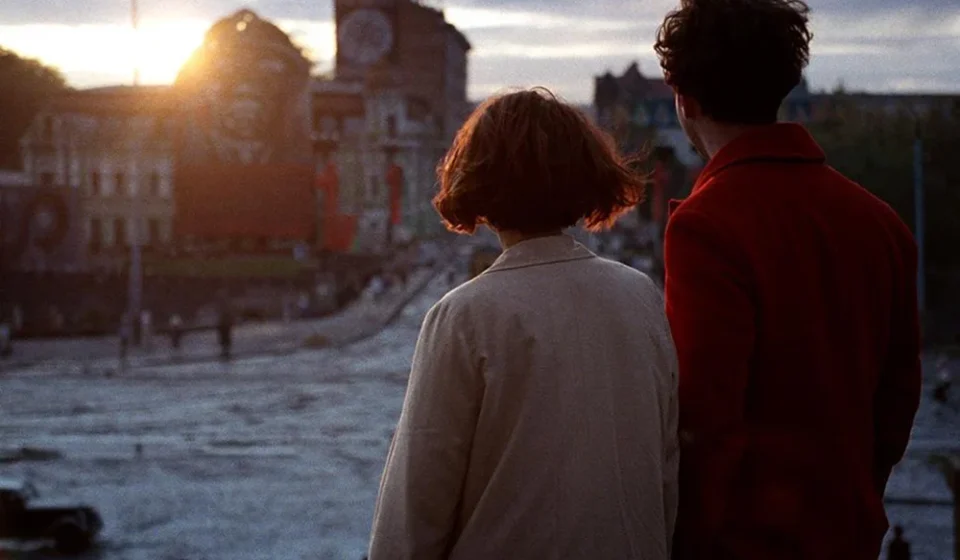

The Venice Film Festival, the world’s oldest and one of its most prestigious cinematic showcases, finds itself embroiled in a fierce geopolitical controversy. At the center of the storm is the inclusion of "DAU," an expansive, multi-part film project directed by Russian filmmaker Ilya Khrzhanovsky, in this year’s competition for the Golden Lion. As the festival prepares to open its doors, artistic director Alberto Barbera has mounted a robust defense of the project, characterizing the backlash as a "petty and unacceptable" smear campaign that misrepresents both the film’s origins and its intent.
The Diplomatic Firestorm: Accusations and Counter-Accusations
The controversy erupted in earnest earlier this week when the Ukrainian government issued a formal, joint statement signed by the Ministry of Foreign Affairs, the Ministry of Culture, and the Ukrainian Embassy in Italy. The statement took direct aim at the Venice Biennale, arguing that providing a platform to a project with deep-rooted Russian ties during an ongoing war of aggression constitutes a "deeply worrying signal."
Ukrainian officials highlighted what they perceive as problematic financial and personal connections within the project. Specifically, they pointed to lead actor Teodor Currentzis—a figure whose citizenship was conferred by Vladimir Putin—and the project’s primary financier, Sergei Adoniev. Adoniev, a Russian businessman, has been subject to international sanctions, including those imposed by the United States in 2023 and Ukraine in 2022. For the Ukrainian government, these links are inseparable from the Russian state’s broader "networks of influence," which they argue are being inadvertently legitimized by the festival’s prestigious stage.
Alberto Barbera, however, has dismissed these claims as a manipulation of reality. In a spirited Instagram post published on Wednesday, Barbera underscored that "DAU" is not a piece of pro-Putin propaganda. "It is a film that denounces totalitarian regimes and their intrusion into citizens’ lives to restrict their freedom," Barbera wrote. He further defended Khrzhanovsky as a "Russian dissident who ended up on the regime’s blacklist as a terrorist and enemy of the state."
Chronology of a Colossal Cinematic Experiment
To understand the complexity of the current debate, one must look at the unconventional history of the "DAU" project. Initially conceived as a traditional biopic about the Nobel Prize-winning Soviet physicist Lev Landau, the project morphed into one of the most ambitious and polarizing experiments in modern filmmaking.
The Formative Years (2008–2011)
The primary filming of "DAU" took place over three years in Kharkiv, Ukraine. The production team constructed a massive, closed set that functioned as a living, breathing laboratory. Hundreds of non-actors lived in near-total isolation from the outside world, adhering to the strict social hierarchies and psychological pressures of the Soviet era. This period predates the 2022 Russian invasion of Ukraine by more than a decade, and notably, the early development of the project received partial funding from the Ukrainian State Film Agency in 2012.
Public Emergence (2019–Present)
After years of secrecy, the project began to release material. "DAU. Natasha" (2020) and "DAU. Degeneration" (2019) were the first to reach international audiences. "DAU. Natasha" famously earned a Silver Bear at the Berlin International Film Festival in 2022, signaling the project’s critical appeal. The film currently slated for competition in Venice is the third installment in a projected 14-film cycle.
Methodologies and Ethical Quandaries
Beyond the political fallout, "DAU" has long been a lightning rod for ethical criticism. Critics have frequently pointed to the production’s "immersive" method, which many have compared to a real-life Truman Show or Charlie Kaufman’s Synecdoche, New York.
Reports from the set—and subsequent investigations by media outlets—raised alarms regarding the treatment of participants. Allegations of unprofessional and unsafe working conditions, the use of psychological manipulation, and the inclusion of unsimulated violence were central to the discourse during the project’s Berlin premiere.
When questioned by Variety last year about whether he held any regrets regarding these methods, Khrzhanovsky remained unrepentant. "I think the method was absolutely unique and perfect," he stated. "Methodologically, I think I did everything right. It is important to look at it without preconception and without using the rumors."
The Venice Context: A Festival Under Pressure
The tension surrounding "DAU" is not an isolated incident for the Venice Biennale this year. The festival has faced sustained criticism regarding its programming choices, including a perceived lack of female representation in the competition and a noticeable absence of major Hollywood studio projects.
However, the "DAU" controversy echoes the broader anxieties that have plagued the Biennale throughout 2024. Earlier this year, the art wing of the festival faced a massive public relations crisis when pavilions for Israel and Russia were permitted, leading to the mass resignation of jury members and widespread demonstrations.
Barbera, when asked if the festival is facing an unprecedented level of scrutiny, remained characteristically sanguine. He noted that while criticism is part of the territory for a high-profile cultural event, he believes the attacks on "DAU" are specifically "inexplicable" because the critics have not yet seen the film in its entirety.
Implications for the Future of Film Festivals
The situation in Venice raises profound questions about the role of international film festivals in the age of global conflict. Should cultural institutions serve as neutral ground, or are they obligated to act as moral gatekeepers, vetting the political and financial histories of every contributor?
For Barbera, the mission of the Venice Biennale is clear: it must remain a "bastion in the world defending freedom of expression, regardless of geographical origin or nationality." He argues that excluding a work because of the nationality or the past financial backing of its creators would set a dangerous precedent that threatens the autonomy of art itself.
Conversely, the Ukrainian government’s position highlights the growing intolerance for "business as usual" regarding Russian culture. They contend that the "networks of influence" that enabled such projects are inextricably tied to a regime that is actively destroying cultural heritage in Ukraine.
As the festival approaches, the debate serves as a microcosm of the larger global struggle to define where the line between art, artist, and political responsibility lies. Whether "DAU" ultimately triumphs on the Lido or becomes a symbol of a fractured cultural landscape, the controversy has already ensured that this year’s Venice Film Festival will be remembered for its political volatility as much as for its cinematic merits.
Official Statement from Alberto Barbera (Translated)
In his closing remarks on the matter, Barbera issued a final plea for artistic integrity:
"I know that in Ukraine, which has been invaded by the Russians, a bloody and cruel war is raging. I know that wars are fought not only on the front lines but also through propaganda. But to build a web of accusations based on false premises and the manipulation of reality in order to attack the Biennale and a film invited to compete is a petty and unacceptable act. DAU is not a Russian film; it is not pro-Putin propaganda. It is a film that denounces totalitarian regimes and their intrusion into citizens’ lives to restrict their freedom. It is the work of a Russian dissident who ended up on the regime’s blacklist as a terrorist and enemy of the state—a director who, from the very beginning, has taken a stand against the Russian invasion of Ukraine. Why, then, this inexplicable smear campaign against a film that its accusers have evidently not even seen yet? Why make the Biennale yet another target of a gratuitous and unjustified attack? Perhaps because the Venice Biennale remains one of the few bastions in the world defending freedom of expression, regardless of geographical origin or nationality. Let us defend the autonomy and freedom of the Venice Biennale."