
The closing curtains on the 2026 Cannes Film Festival were met with a familiar, if somewhat weary, refrain from the international press corps: a declaration that the edition was “ho-hum,” devoid of singular masterpieces, and ripe for an early departure. However, this cynical consensus obscured a far more profound reality. Beneath the surface of the red-carpet pageantry, a quiet revolution was taking place—a shift toward cinema that prioritizes the accumulative power of storytelling over the visceral, high-octane shocks that characterized the previous year’s entries.
While pundits sniffed at what they perceived as a lack of “star power,” the 2026 selection offered something far more valuable: a collection of films that functioned like dramatic muscle memory. These were movies that did not strike with a single, jarring blow but instead embedded themselves into the viewer’s consciousness through incremental, deeply felt emotional effects.
The Competition: A Study in Contrasts
The festival’s highest honors sparked significant debate, highlighting the ideological divide between the jury’s choice and the critical consensus. The Palme d’Or was awarded to Cristian Mungiu’s Fjord, a sprawling, multilingual drama that dissects the Norwegian child protective services with a clinical, almost prosecutorial eye. While technically proficient, the film felt to many like a “stacked deck,” presenting a reactionary view of the Scandinavian nanny state that drew sharp criticism for its button-pushing narrative.
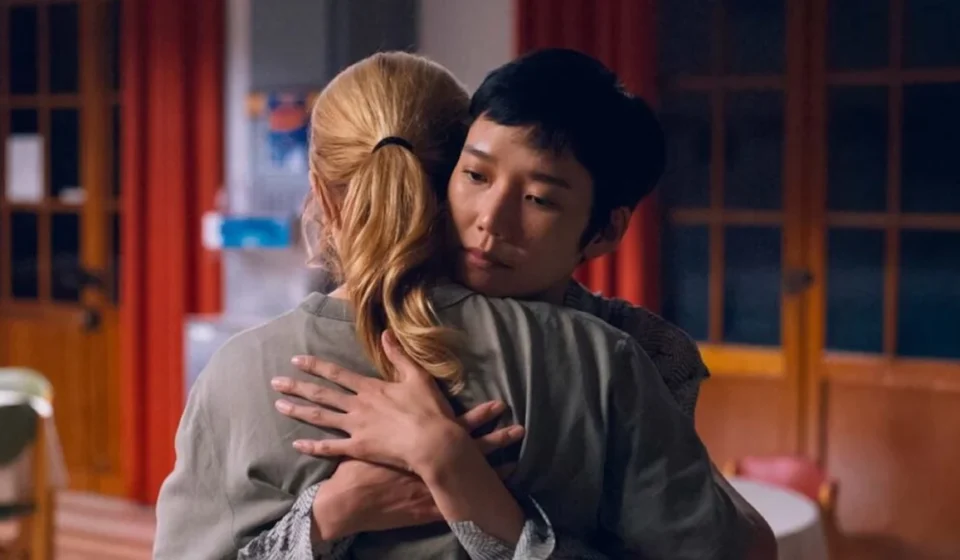
Conversely, the true heart of the festival resided in Ryusuke Hamaguchi’s All of a Sudden. A masterful study of human connection, the film tracks an evolving friendship between a Japanese playwright, Mari, and a French eldercare manager, Marie-Lou. Rather than relying on high-stakes plot twists, Hamaguchi invites the audience into a profound, extended heart-to-heart that mirrors our own modern, desperate need for dialogue in an age of global decline.
The emotional resonance of the film was so potent that it secured a joint Best Actress award for Virginie Efira and Tao Okamoto. Their on-screen bond served as a poignant reminder that, in our current reality, the distance between a simple “how are you?” and a macro-level existential analysis has effectively vanished. The presence of Japanese anthropologist Maho Isono at the premiere—whose correspondence with the late philosopher Makiko Miyano served as the film’s inspiration—only underscored the authentic, lifeline-like quality of Hamaguchi’s work.
Chronology of Discovery: From Borderlands to Pompeii
The festival’s scheduling was often a point of contention, yet the quality of the films remained undeniable. A week into the festivities, Valeska Grisebach’s The Dreamed Adventure emerged as a major, albeit late-stage, triumph. A three-hour-plus saga set in the Eastern European borderlands, the film follows an archaeologist, Veska, navigating a landscape dominated by post-Soviet machismo and decaying power structures.
Grisebach’s direction is as precise as her protagonist’s gaze. By centering the story on Yana Radeva’s rock-steady performance, the director successfully subverted the Western genre, opting instead to address the raw power dynamics of the region. As Grisebach noted during the festival, her interest lay not in the typical tropes of action, but in the brutal, frank examination of “who is strong and who is weak.”
Further expanding the festival’s reach into the historical and the psychological, the program featured a pair of period dramas that utilized the past to illuminate the anxieties of the present. Pawel Pawlikowski’s Fatherland offered an elegant, fleet-footed road movie following Thomas Mann and his daughter, Erika, on a 1949 speaking tour. The film serves as a chilling mirror to our own era, as Mann’s eloquent appeals to 19th-century humanism struggle to gain traction against a backdrop of resurgent authoritarianism.
Meanwhile, Emmanuel Marre’s A Man of His Time provided a stark, 16mm-infused look at the rise of a Vichy-era bureaucrat. Based on the director’s own family archives, the film is a masterclass in moral rot, tracking how administrative indifference can pave the road to systemic genocide.
Supporting Data: The Rising Tide of Debut Features
Perhaps the most exciting development in 2026 was the robust performance of debut features, proving that the future of auteur cinema remains bright. La Gradiva, the directorial debut of Marine Atlan, was arguably the most universally praised find of the festival. Filmed in the shadow of Pompeii, Atlan captures the volatile, beautiful, and often painful experience of adolescence with a sensitivity rarely seen on screen.
The film’s refusal to rely on winking irony or condescension allowed the audience to fully inhabit the crises of its young protagonists. By shifting the camera’s perspective to emphasize the fluidity of teenage social dynamics, Atlan created a work that feels both intimate and expansive. Its success—bolstered by a glowing New Yorker review and a deal with 1-2 Special—serves as a necessary rebuke to the festival’s historical tendency to over-prioritize the Competition section at the expense of sidebars like Critics’ Week.
The Camera d’Or, awarded to Arie and Chuko Esiri for Clarissa, further validated this trend. A lavish, colonial-critique-heavy reimagining of Mrs. Dalloway, the film demonstrated a sophisticated visual language that marked the Esiri brothers as directors to watch. Simultaneously, the Un Certain Regard section saw Sandra Wollner’s Everytime take home top honors, a film that used innovative sound design and an intimate visual palette to chart the mysterious, divergent paths of grief.
The Unclassifiable and the Political
Not every film fit neatly into a genre box. Arthur Harari’s The Unknown proved to be the festival’s most haunting and contentious experience. While critics rushed to label it a “body-swap” movie, the film defied such simple categorization. Starring Léa Seydoux in a role of profound vulnerability, the story uses the physical displacement of its characters as a floating signifier for the trauma of self-estrangement. It is the kind of uncompromising, singular work that Cannes was designed to foster.
On the political front, the festival concluded with an act of defiance that reverberated far beyond the Lumière Theater. Russian director Andrei Zvyagintsev, accepting the Grand Prix for his film Minotaur, used his platform to issue a scathing, direct address to Vladimir Putin. His film—a sharp, adaptation-based critique of the corruption inherent in modern Russian power structures—served as a stark reminder of the risks taken by artists operating under the shadow of authoritarianism.
Implications: A Lasting Legacy
Was Cannes 2026 truly a “meh” year? The evidence suggests otherwise. If the festival lacked the singular, consensus-shattering masterpiece of 2025, it compensated with a depth of vision and a commitment to the “gradualist” mode of filmmaking.
The films that defined this year—from the compassionate, conversational intimacy of Hamaguchi to the blistering, antiauthoritarian politics of Zvyagintsev—are works that demand to be revisited. They function as a collective record of our current global moment: a time defined by the need for connection, the weight of historical memory, and the persistent, if sometimes desperate, hope for a future that has not yet been lost.
As the distribution deals are signed and the films begin their journeys to theaters across the globe, it is clear that 2026 will be remembered not for its scandals or its red-carpet spectacles, but for the quiet, persistent power of its stories. The festival did not just show us what cinema looks like today; it showed us how it might help us survive tomorrow.