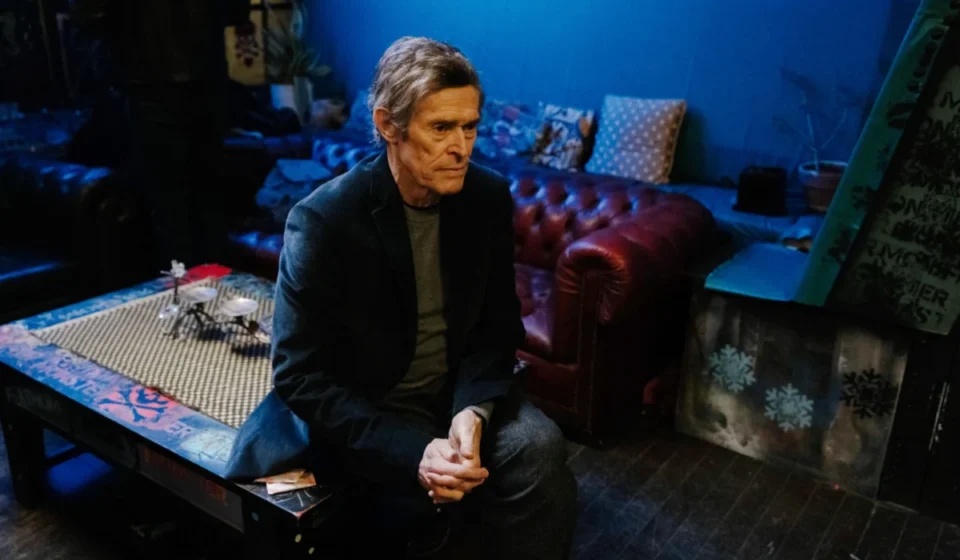
The Indelible Presence: Why Willem Dafoe Is Cinema’s Most Essential Shape-Shifter

When Willem Dafoe enters the frame, the temperature of a film changes. There is a serene, unsettling gravitas he brings to the screen that is almost gravitational—it pulls the viewer into his orbit, regardless of whether he is playing a painfully human Jesus in Martin Scorsese’s The Last Temptation of Christ, a delirious, salt-crusted lighthouse keeper in Robert Eggers’ The Lighthouse, or the iconic, green-screen-bound villainy of the Spider-Man franchise. He is an actor who occupies the space between the avant-garde and the blockbuster with such ease that one forgets he is, in fact, the same man.
As he turns 71, Dafoe’s career shows no signs of slowing down; if anything, it is accelerating. With six major film releases in the current calendar year—including the Greek bacchanal The Birthday Party, the anticipated Robert Eggers project Werwulf, the mountaineering drama Tenzing, and his latest collaboration with director Kent Jones, Late Fame—Dafoe remains the industry’s most reliable, and arguably most restless, performer.
The Genesis of Late Fame
The story of how Late Fame came to be is as serendipitous as the career of its leading man. Based on a posthumous novella by Arthur Schnitzler—the same literary mind behind the source material for Stanley Kubrick’s Eyes Wide Shut—the film follows Ed Saxberger, a one-hit-wonder poet of the 1970s who has long since retired from the literary spotlight to work as a humble mail clerk.

Dafoe, who had been hunting for a project to sink his teeth into, found himself on a cross-country flight to New York, sitting directly next to director Kent Jones. Unbeknownst to both, they were both carrying copies of the Late Fame manuscript. While Dafoe initially harbored doubts about transposing a deeply Viennese story into the contemporary New York landscape, the script by Samy Burch convinced him otherwise.
"It touched on a lot of things that are in my head," Dafoe noted in an interview with IndieWire. "I arrived in New York at the same time the character arrived. Now I’m longer in the tooth, and I look back on that time. It’s rich material because it’s something that really is happening even now."
A Career Built on Transformation, Not Dissolution
In an era where "method acting" and the total dissolution of the self are often touted as the ultimate metrics of success, Dafoe offers a refreshing, albeit unconventional, alternative. He does not seek to lose himself in a role; rather, he seeks to use the "frame" of the character as a vessel for exploration.

"I want to disappear into a role, but not to lose myself," Dafoe explains. "Every time you approach something, you’re inviting yourself to change the way you’re living or the way you see things. You’ve got permission to fuck around with your life, to abandon your life and take on the preoccupations of another person. I always know it’s my body that’s doing the thing. I approach things physically, not psychologically."
This physical approach has been the hallmark of his career since his days with the Wooster Group, the experimental theater collective he co-founded in 1975. His co-star in Late Fame, 35-year-old Edmund Donovan, views Dafoe’s approach as a form of "living, breathing avant-garde."
"He’s a livewire," Donovan notes. "He’ll just start improvising songs and singing on set. He’ll sort of dance in a moment on his own. He’s a truly free person."

Chronology of an Icon
Dafoe’s trajectory from the experimental downtown theater scenes of 1970s Manhattan to the center of the Hollywood establishment is a masterclass in artistic longevity.
- 1975: Co-founds the Wooster Group, establishing his reputation for raw, physical, and deconstructive performance art.
- 1980s: Breaks into cinema with roles in The Loveless and To Live and Die in L.A., signaling his ability to inhabit volatile, intense figures.
- 1988: Receives his first Academy Award nomination for Platoon, cementing his status as a dramatic powerhouse.
- 2000s: Reinvents himself for a new generation as the Green Goblin in Sam Raimi’s Spider-Man trilogy, bridging the gap between arthouse credibility and global pop-culture dominance.
- 2020s: Enters a period of hyper-productivity, balancing high-budget studio films with intimate auteur-driven projects like Inside and the current slate of 2026 releases.
The "Oldest Person in the Room"
A central theme in Dafoe’s recent work, particularly in Late Fame, is the transition from being the young, hungry "kid" in the industry to becoming the seasoned veteran—the figure whom younger actors look to for guidance, "war stories," and validation.
"It seems like forever I was the youngest person in every room," Dafoe reflects. "And then one day I woke up, and it wasn’t gradual. One day I woke up, and I was the oldest person in the room. Something shifted. People started seducing me into telling stories, talking about movies, telling stories about my experience. It becomes very seductive. You start to get puffed up, and you start to accommodate them."

This dynamic is mirrored in Late Fame through the "Enthusiasm Society," a group of young, trust-funded dilettantes who attempt to lure the reclusive Saxberger back into a world he has long since abandoned. Dafoe finds the experience of working with younger actors today "seductive" and "energizing," despite the occasional melancholy of knowing he is the one carrying the torch of an older era.
Behind the Scenes: Collaborations and Friendships
Dafoe’s commitment to "auteur" cinema remains unshakable. Whether working with Wes Anderson, Robert Eggers, or the legendary Lars von Trier, Dafoe prioritizes the director’s vision above all else.
His relationship with von Trier, with whom he has worked on Antichrist, Nymphomaniac, and The Kingdom, remains a point of deep personal significance. As the director battles Parkinson’s disease, Dafoe continues to check in, even when the lines of communication grow quiet.

"I loved working with him," Dafoe says, his voice tinged with a palpable sadness. "Not easy, of course, as you can imagine, but really inspiring and slippery. If you stay with him and you don’t fall off the horse, it’s really rewarding."
Implications for the Future of Film
Dafoe’s current output serves as a challenge to the industry. By maintaining a balance between the blockbuster and the intimate character study, he proves that an actor does not need to choose between commercial viability and artistic integrity. He is a "blood sucker" for new energy, as he jokingly describes his penchant for working with young, passionate filmmakers, and in doing so, he ensures his own work remains as vital as it was in the 1970s.
As film culture undergoes rapid changes in the age of streaming and shifting audience habits, Dafoe’s philosophy remains a lighthouse: focus on the work, engage with the director, and above all, stay "turned on."

"If you remain kind of turned on and engaged," Dafoe concludes, "then every sky that you see every morning when you wake up is a new sky. That’s the state I want to be in. I want to be eating up what’s happening."
With Late Fame hitting theaters this August, audiences are once again invited to watch a master at work—a man who has seen everything, yet remains perpetually hungry for the next frame.
Late Fame opens in select theaters via Magnolia Pictures on August 7, 2026. The Birthday Party follows on August 14, 2026.