The Mythic Lens: How Christopher Nolan Reimagined The Odyssey for the IMAX Age

In the history of cinema, few directors have pursued the "physical impossible" with the fervor of Christopher Nolan. With his 2026 adaptation of Homer’s The Odyssey, Nolan has not merely adapted an ancient epic; he has effectively attempted to manifest mythology into the tangible world. Backed by a staggering $250 million budget and shot entirely on IMAX 70mm film—a technical milestone never before achieved in a feature-length production—Nolan’s The Odyssey serves as a bridge between the archaic power of oral tradition and the bleeding edge of modern practical effects.
The film, which stars Matt Damon as the weary, war-torn Odysseus navigating a gauntlet of divine wrath and monstrous obstacles, is a masterclass in the philosophy of "invisible effects." By refusing to rely solely on computer-generated imagery (CGI), Nolan and visual effects supervisor Andrew Jackson have crafted a film that feels dangerously, palpably real.
The Technical Foundation: Filming the Impossible
The production of The Odyssey required a fundamental shift in how visual effects are perceived. Rather than using the "green screen" method that has dominated blockbusters for two decades, Nolan’s team at DNEG focused on "in-camera" integrity. Every frame was designed to be grounded in live-action photography.
For the production team, the core challenge was scale. How does one portray a sixty-foot Cyclops in a way that feels heavy, menacing, and present in the same space as the actors? The solution was not a digital render, but a hybrid performance. Veteran actor and theatrical clown Bill Irwin, known for his work on Interstellar, was tasked with embodying Polyphemus. Through a sophisticated combination of full-body prosthetics, high-precision puppetry, and forced-perspective cinematography, Irwin’s presence allowed the actors on set to interact with a physical entity.
"The goal was to give the cast something to fear," notes the production team. By filming Irwin separately and utilizing low-angle photography to exaggerate the scale of the frame, the VFX team merged the practical performance with the digital environment, resulting in a creature that feels like it possesses mass, skin, and intent.

Chronology of a Mythic Production
The development of The Odyssey was a multi-year odyssey of its own.
- Pre-Production (2023–2024): Nolan and his team began by deconstructing the Homeric text, looking for ways to interpret supernatural phenomena through the lens of naturalism. The design phase focused on period-accurate Greek environments, culminating in the selection of Nestor’s Cave in Greece as a primary shooting location.
- Principal Photography (2025): The production utilized IMAX 70mm cameras, which presented unique logistical hurdles. Given the weight and size of these cameras, the crew had to innovate new mounting systems to capture the chaotic, ship-tossed sequences of Odysseus’s journey.
- Post-Production (2025–2026): DNEG worked to integrate the "plates"—the raw footage captured on location—with invisible digital enhancements. This phase was characterized by a "subtractive" approach to VFX, where digital tools were used only to augment or refine the practical footage rather than replace it.
- Release (July 2026): The film premiered to immediate debate regarding its adherence to the source material versus its technical achievements, sparking the kind of critical discourse that has become a staple of Nolan’s filmography.
Supporting Data: The Craft of Scale
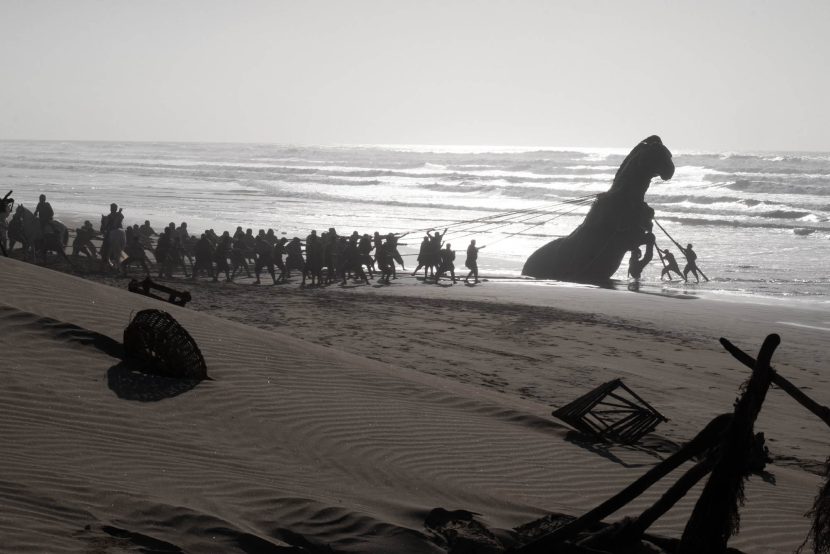
The production’s commitment to tactical realism extended far beyond the Cyclops. The Laestrygonian giants—cannibalistic beings of massive size—posed an even more complex challenge. To achieve the illusion of scale without falling back on animation, the crew utilized a combination of seven-foot-tall stunt performers, carefully measured undersized doubles, and sophisticated forced-perspective sets.
This "cinematic sleight of hand" is grounded in a deep understanding of perspective and light. By building the impossible in front of the camera, the production created a visual consistency that is often lost in fully digital environments. The VFX team at DNEG then acted as the final layer, "cleaning up" the seams of the forced perspective and blending the disparate elements of the scene into a singular, cohesive image. This is the definition of "invisible VFX": work that is so seamlessly integrated that the audience ceases to look for the artifice.
Official Responses and Creative Philosophy
Christopher Nolan has remained consistent in his defense of practical filmmaking. "If you can build it, you should build it," is the unofficial mantra of his sets. In interviews regarding The Odyssey, the director has emphasized that the gods and monsters of Homer’s world are not "magic" in the modern sense; they are manifestations of the natural forces that the ancient world struggled to comprehend.
Andrew Jackson, the film’s visual effects supervisor, has highlighted that the success of The Odyssey relies on the collaboration between the performance team and the digital artists. "We aren’t creating a character from scratch," Jackson explained in a recent behind-the-scenes briefing. "We are capturing the soul of a performance—Bill Irwin’s performance—and finding the technological way to amplify it to the scale of a titan."
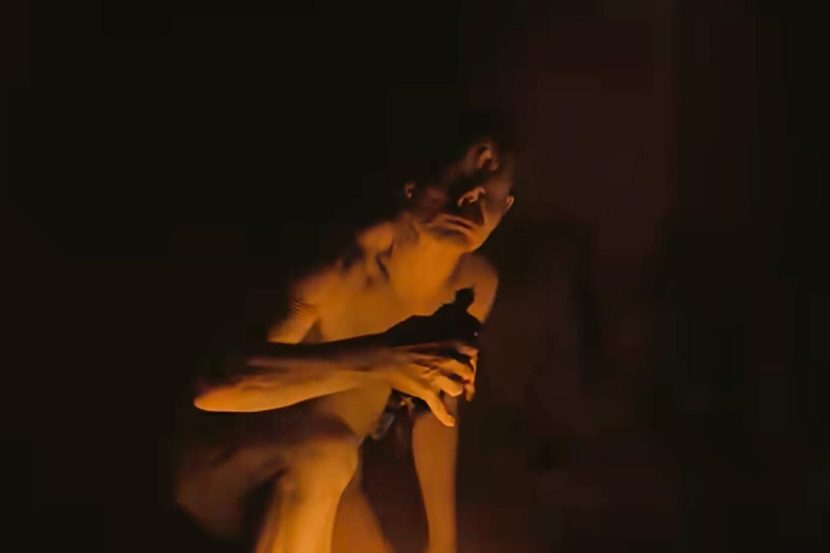
However, the film has not been without its detractors. Some critics argue that the reliance on practical effects sometimes limits the scope of the fantasy, making the gods feel too human, too grounded. Others, however, laud the film as the most significant achievement in practical-VFX integration since the Lord of the Rings trilogy.
Implications for the Future of Filmmaking
The success of The Odyssey carries profound implications for the film industry. In an era where AI-generated imagery and fully digital environments are becoming cheaper and more accessible, Nolan’s $250 million gamble suggests there is still a massive appetite for "authentic" spectacle.
- The Resurgence of Practicality: The film proves that high-budget tentpoles can thrive without relying on a "wall-to-wall" CGI aesthetic.
- The IMAX Standard: By shooting the entire film in 70mm, Nolan has forced the exhibition industry to maintain the highest standards of visual projection.
- The Debate on "Truth" in Cinema: The film raises an ongoing question for cinephiles: when does the pursuit of physical reality hinder the ability to depict the truly fantastic?
The "VFXShow" Debate: A Tradition of Disagreement
The ongoing discourse surrounding The Odyssey reached a fever pitch on the latest episode of the fxpodcast. The show, which has become a long-standing tradition for tracking the evolution of visual effects, featured a spirited, if somewhat chaotic, debate between hosts Matt Wallin, Jason Diamond, and Mike Seymour.
Much like the film itself, the podcast hosts found themselves divided. The "three suitors"—as they dubbed themselves—argued over whether the film’s grounded approach to the supernatural was a stroke of genius or a stylistic bottleneck. Does the film succeed in making the viewer believe in the divine, or does it merely make the divine look like a guy in a suit?
"We have yet to agree on a Christopher Nolan film," admitted host Mike Seymour. "And at this point, our disagreements are a feature, not a bug."
The episode serves as a microcosm of the wider critical reception. While some praise the "invisible" digital work for honoring the human performance, others argue that the film’s insistence on reality strips away some of the wonder inherent in Greek mythology. Whether one views the film as a masterpiece of craft or a misguided attempt at literalism, the conversation surrounding it is, in itself, a testament to its impact.
Conclusion: A Voyage Still in Progress
As The Odyssey continues its run in theaters, the debate regarding its place in the cinematic canon will likely continue for years. It is a film that demands to be seen on the largest screen possible, not just for the spectacle, but for the sheer audacity of its construction.
In a world increasingly dominated by digital artifice, Christopher Nolan has opted for the tactile. He has brought the giants of Homer’s world into the light, not through the cold calculation of pixels alone, but through the sweat, wood, rubber, and human ingenuity of traditional filmmaking. Whether or not he has successfully captured the "truth" of the epic poem may remain a matter of opinion—but there is no denying that he has, for better or worse, changed the way we look at the gods.
For those interested in diving deeper into the technical wizardry behind the film, the latest fxpodcast is available on all major platforms, providing a comprehensive, albeit contentious, look at the project that has become the definitive cinematic event of 2026.