A Triumph of Resilience: Aung Phyoe’s ‘Fruit Gathering’ Claims Top Honors at the Karlovy Vary Film Festival

The Karlovy Vary Film Festival (KVIFF), one of the oldest and most prestigious cinematic gatherings in the world, concluded its latest edition on Saturday with a powerful statement on the necessity of global storytelling. At the heart of the closing ceremony was a landmark victory for Burmese cinema: Aung Phyoe’s Fruit Gathering was awarded the coveted Crystal Globe, the festival’s highest honor.
The win marks a significant moment for contemporary Myanmar, a nation currently navigating immense political and creative challenges. Fruit Gathering, a film that balances the quietude of daily labor with the volatility of human desire, stood out among a competitive field of international features for its singular vision and emotional resonance.
The Narrative Power of ‘Fruit Gathering’
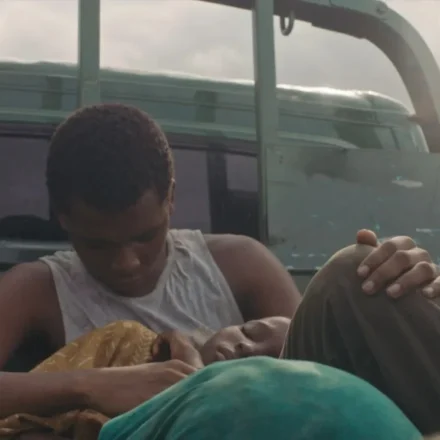
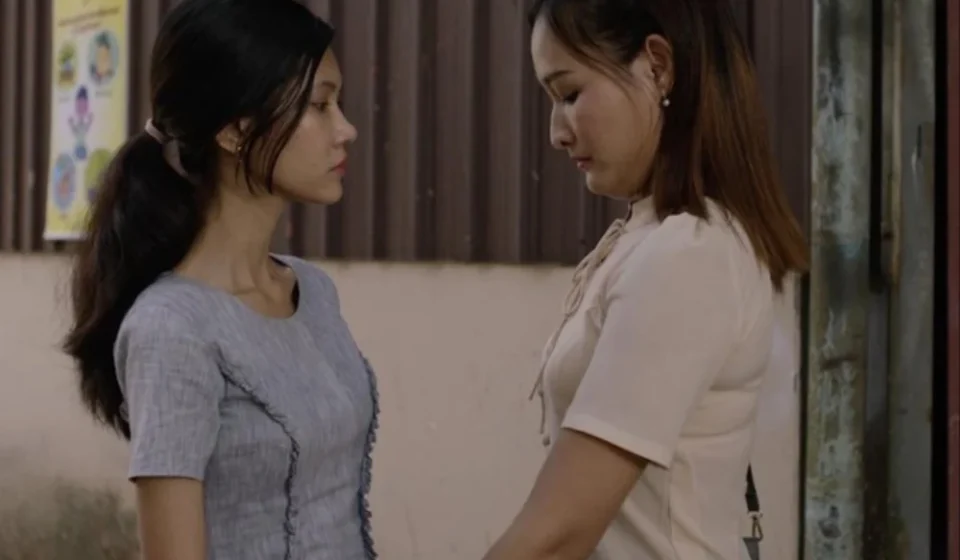
Set against the backdrop of a contemporary textile factory in Myanmar, Fruit Gathering is a nuanced exploration of the intersection between labor, friendship, and burgeoning queer identity. The jury, comprised of industry luminaries including Justin Chang, Amanda Nell Eu, and Eskil Vogt, lauded the film for its narrative trajectory.
"The film begins as a lush and meditative portrait of work and friendship before morphing, unexpectedly and organically, into a harrowing drama of obsession and queer desire," the jury stated in their official citation.
For director Aung Phyoe, the project was an exercise in extreme restraint and personal discovery. Speaking to Variety regarding his creative process, Phyoe noted that he sought to capture a "national language of cinema" while operating in an environment where support for the arts is nearly non-existent. "We are very behind, and for most of the things, we don’t have support; it’s very difficult to make films in this country," Phyoe admitted. "We also have to be very careful that political things have to be very subtle."
During his acceptance speech, a visibly moved Phyoe credited his production team for their unwavering belief in his vision—a belief he confessed he struggled to find in himself. He also paid a poignant tribute to his mother, whom he described as the enduring matriarch of a "long-suffering artist."
A Chronology of Excellence: The Awards Gala
The ceremony served as a celebration of both established legends and emerging voices. While Fruit Gathering took the top prize, the Danish drama The Guest, directed by Mads Mengel, proved to be a formidable contender throughout the evening.
The Crystal Globe Competition Highlights
The Guest, which features a powerhouse performance from Trine Dyrholm, was awarded the Special Jury Prize and $15,000. Additionally, Mads Mengel secured the Best Director award. The jury praised the film for being a "squirmingly funny yet precisely modulated drama that subtly raises questions about motherhood, filial duty and mental illness."
Mengel’s reflections on the film’s themes resonated deeply with the audience. "What fascinated me wasn’t telling my own story, but exploring something many people can recognize: how our understanding of our parents changes as we grow older," Mengel explained. "I was interested in that moment when certainty begins to crack."
Other major acting honors were distributed to Anna Schinz for her "hauntingly restrained" performance in Jan-Eric Mack’s A Happy Family, and Ghassan Saad, who took home the Best Actor award for his compelling work in Karim Kassem’s Pipes.
Proxima and Emerging Talent
In the Proxima Competition, designed to highlight innovative and boundary-pushing cinema, Martina Buchelová’s Lover, Not a Fighter captured the Grand Prix. The jury lauded the film for its "extraordinary lightness" and its ability to balance the absurdity of family life with the "delirium of young love." The Proxima Special Jury Prize was awarded to Shuntaro Uchida’s Incinerator, while Efthimis Kosemund-Sanidis received the Best Director award in the category for A Whole Person Almost.
Honoring the Architects of Cinema
The evening was punctuated by tributes to icons who have shaped the trajectory of world cinema. French acting legend Juliette Binoche was honored with the Crystal Globe for Outstanding Artistic Contribution to World Cinema.
In her address, Binoche shifted the focus from personal achievement to global responsibility. "I’m thinking about Palestine, Lebanon, Ukraine," she said. "We need artists to tell stories, to tell the truth. Passion is really the heart of what we do. Life goes by very quickly, so let’s give ourselves as much as possible. We need to unite."
Jeffrey Wright, recipient of the Festival President’s Award, delivered a speech that tied the history of cinema to the necessity of human connection. Recalling his past collaborations and his admiration for director Miloš Forman, Wright spoke of the "forces in this world, right now, that insist on disconnecting us." He emphasized that the power of the American artist—and indeed, artists everywhere—lies in creation rather than destruction. "I will take this award as an incentive to continue to create in an effort to bring us together," Wright remarked.
Supporting Data: A Full Roster of Winners
The breadth of the Karlovy Vary festival’s reach was evident in the diversity of the awards, which spanned from regional European co-productions to international collaborations.
Crystal Globe Competition Summary:
- Grand Prix: Fruit Gathering (Dir. Aung Phyoe)
- Special Jury Prize: The Guest (Dir. Mads Mengel)
- Best Director: Mads Mengel (The Guest)
- Best Actress: Anna Schinz (A Happy Family)
- Best Actor: Ghassan Saad (Pipes)
- Právo Audience Award: Bára – Diary of a Rockstar (Dir. Helena Třeštíková)
Proxima Competition Summary:
- Grand Prix: Lover, Not a Fighter (Dir. Martina Buchelová)
- Special Jury Prize: Incinerator (Dir. Shuntaro Uchida)
- Best Director: Efthimis Kosemund-Sanidis (A Whole Person Almost)
- Special Mention: 33 Steps (Dir. Anna Domäček, Šimon Domäček)
Official Responses and Industry Implications
The success of Fruit Gathering and the focus on socially conscious storytelling throughout the festival signal a shifting tide in international film circuits. There is an increasing demand for cinema that does not shy away from the complexities of political instability, while simultaneously maintaining the aesthetic rigor required for high-level artistic expression.
The festival’s decision to award films like 33 Steps, which tackles the non-linearity of trauma and the difficulty of closure in broken societies, underscores the role of KVIFF as a platform for challenging discourse. By providing both financial support—through prizes like the Eurimages Co-Production Development Award—and critical recognition, the festival acts as a vital incubator for filmmakers operating in regions with limited infrastructure.
The industry implications are clear: as the world becomes increasingly fragmented, the "national language of cinema" that Aung Phyoe aspires to build is becoming a universal dialect. The collaboration between Czech producers and international directors, seen across the winning entries, suggests that the future of film lies in cross-border partnerships that prioritize authentic, lived experiences over commercial homogenization.
Conclusion: Looking Ahead
As the curtains close on this year’s festival, the legacy of the 2026 edition will be defined by its commitment to humanism. Whether through the lens of a textile factory in Myanmar, a family drama in Denmark, or the reflective insights of veterans like Juliette Binoche and Jeffrey Wright, the message remained consistent: cinema is an essential tool for survival.
"Life rarely gives us perfect endings," Mads Mengel noted during his acceptance speech, "but it does occasionally give us the chance to begin again." For the winners of Karlovy Vary, that chance begins now, with the international audiences that will soon engage with these works, fostering the dialogue and unity that the festival so passionately championed.
As the industry looks toward the next year of production, the triumph of Fruit Gathering stands as a beacon of hope—a reminder that even in the most constrained environments, the human spirit, when filtered through the lens of a camera, has the power to transcend borders and connect us all.