The Scatological Surrealism of ‘Bowels of Hell’: A Deep Dive into Brazil’s Latest Genre Phenomenon

In the pantheon of cinematic horror, the genre has long held a morbid fascination with the "inanimate object turned killer." From the homicidal haute couture in In Fabric and the sentient, rolling rubber tire in Quentin Dupieux’s Rubber, to the cursed, parasitic hair extensions of Sion Sono’s Exte, filmmakers have consistently sought to weaponize the mundane. Yet, rarely has the industry dared to venture into the most private, fragile, and—frankly—filthy corners of human existence. Enter Bowels of Hell, a brazen, boundary-pushing Brazilian horror-comedy directed by the visionary duo Gustavo Vinagre and Gurcius Gewdner.
Premiering to a stunned audience at Fantasia 2026, the film is a masterclass in the absurd, transforming the porcelain throne into a literal portal to the underworld. While the premise may sound like a gag from a low-budget B-movie, Bowels of Hell is a sophisticated, albeit intentionally repulsive, meditation on the burdens of motherhood, the suffocating weight of grief, and the erosion of personal dignity in a modern, hyper-observed world.
The Genesis of a Fecal Fright: Main Facts
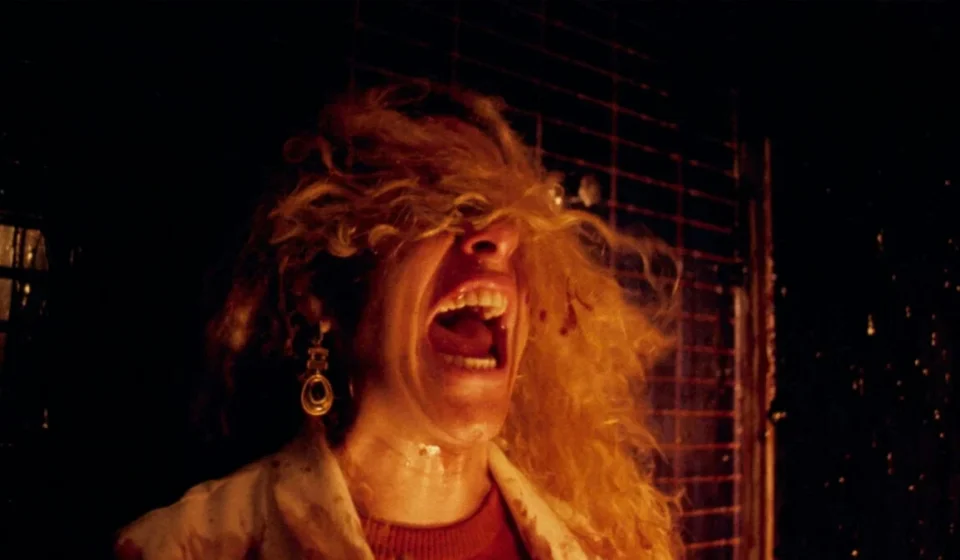
At its core, Bowels of Hell centers on Malu, played with frantic, high-wire intensity by Martha Nowill. Malu is a professional party planner whose life is unravelling, a situation exacerbated when a supernatural curse takes root in her apartment complex. The plumbing, typically a symbol of domestic reliability, begins to revolt. Bathrooms are no longer sanctuaries; they are slaughterhouses.
The film operates on a "gonzo" wavelength, reminiscent of the early, blood-soaked works of Peter Jackson. Fans of Bad Taste or Braindead will find themselves right at home, though the film manages to carve out its own niche. It feels less like a traditional narrative and more like an extended, feature-length iteration of a fake trailer found in the Grindhouse anthology—one that refuses to cut away, choosing instead to revel in its own madness.
A Chronology of Chaos: From Grief to the Abyss
The narrative arc of Bowels of Hell is deceptively simple, beginning with the personal unraveling of its protagonist.
![‘Bowels of Hell’: Gruesome, Gross Horror Where The Sh*t Literally Hits The Fan [Fantasia Review]](https://www.dreadcentral.com/wp-content/uploads/2026/07/Bowels-Of-Hell-Malu-Screams-While-Splashed-With-Blood-1200x675.jpg)
The Quiet Before the Flush
The film opens by establishing Malu’s life as a series of controlled, aesthetic performances. As a party planner, her world is one of forced joy and superficial perfection. However, the film quickly introduces the disruption: the haunting of the apartment complex. What begins as minor plumbing issues—gurgles, clogs, and unpleasant odors—escalates into a full-scale cosmic invasion.
The Escalation of the Ordeal
As the terror takes hold, the film shifts from psychological drama to full-blown body horror. The directors employ a variety of practical effects—slimy, visceral, and uncomfortably tactile—to depict the supernatural takeover. We see the emergence of "blood bubbles," the menacing point-of-view shots from the perspective of vermin, and a centerpiece sequence involving a gruesome umbilical cord tug-of-war that tests the fortitude of even the most seasoned horror fans.
The Climax: The Gender Reveal of the Damned
The final act is a masterstroke of satirical aggression. The characters converge at a vapid, influencer-driven gender reveal party. It is here that the film’s disparate threads—the supernatural terror, the critique of modern performative culture, and the crushing weight of family expectations—collide. The result is a chaotic, bloody spectacle that serves as a fittingly grotesque conclusion to the characters’ arcs.
Supporting Data: The Craft Behind the Carnage
What elevates Bowels of Hell from a mere exercise in gross-out humor to a noteworthy genre entry is the technical precision of its production.
Practical Effects vs. Digital Artifice
In an era dominated by CGI, Vinagre and Gewdner’s commitment to practical gore effects is a breath of fresh, albeit stagnant, air. The "carnivorous toilets" possess a physical presence that digital effects often lack, harkening back to the practical mastery of Stuart Gordon. The tactile nature of the blood, the slime, and the prosthetic work forces the audience to engage with the film’s visceral reality.
![‘Bowels of Hell’: Gruesome, Gross Horror Where The Sh*t Literally Hits The Fan [Fantasia Review]](https://www.dreadcentral.com/cdn-cgi/image/width=788%2Cheight=444%2Cfit=crop%2Cquality=75%2Cgravity=auto%2Csharpen=1%2Cmetadata=none%2Cformat=auto%2Conerror=redirect/wp-content/uploads/2026/07/Bowels-Of-Hell-Malu-Screams-While-Splashed-With-Blood.jpg)
Performance and Characterization
Martha Nowill’s performance as Malu is the glue that holds the film’s fractured narrative together. She is tasked with balancing the film’s most absurd, "infantile" comedic moments with a genuine sense of existential dread. Her portrayal of a woman losing her grip on reality, while literally being hunted by her own bathroom, provides the film with its much-needed emotional anchor.
Official Responses and Thematic Reception
The reception of Bowels of Hell has been, by design, polarized. Critics have lauded the film’s bravery, noting that it is an "original horror experience" that does not fear alienating its audience.
The Critique of Modernity
The film’s disdain for influencer culture is palpable. By framing the final act within the context of a gender reveal party—a pinnacle of performative modern life—the directors effectively contrast the artificiality of social media with the visceral, unavoidable reality of the "bowels" (both the literal toilets and the internal, emotional turmoil of the characters).
Disability and Identity
An often-overlooked aspect of the film is its exploration of characters living with disabilities. The directors use these characters to highlight how society often robs individuals of their privacy and dignity. The toilet, a place of extreme vulnerability, becomes a site of reclamation for these characters, even as it becomes a site of danger. This juxtaposition is at the heart of the film’s "insightful and infantile" dichotomy.
Implications: Why We Need ‘Bowels of Hell’
The existence of a film as uncompromising as Bowels of Hell is a vital sign for the horror genre. In a marketplace saturated with sequels, remakes, and safe, focus-grouped studio offerings, a film that dares to be "rude, ridiculous, and absolutely not for everyone" is a necessary disruption.
![‘Bowels of Hell’: Gruesome, Gross Horror Where The Sh*t Literally Hits The Fan [Fantasia Review]](https://www.dreadcentral.com/cdn-cgi/image/width=788%2Cheight=443%2Cfit=crop%2Cquality=75%2Cgravity=auto%2Csharpen=1%2Cmetadata=none%2Cformat=auto%2Conerror=redirect/wp-content/uploads/2026/07/Bowels-Of-Hell-Malu-Pulled-Into-Toilet.jpg)
The Future of Gonzo Horror
Bowels of Hell proves that horror does not need a massive budget to be effective; it requires a singular, coherent, and bold vision. By embracing the absurdity of its premise rather than trying to explain it away with pseudo-science or exposition, the film respects the intelligence of its audience. It challenges the viewer to find meaning in the scatological, to find empathy in the grotesque, and to laugh at the very things that make us most uncomfortable.
The Legacy of the "Fecal Fright"
Whether the film will be remembered as a cult classic remains to be seen, but its place in the history of contemporary Brazilian cinema is secured. It joins a growing movement of international horror films that are using genre tropes to dissect national anxieties. Bowels of Hell suggests that, in the face of insurmountable grief and a world that feels increasingly hollow, sometimes the only appropriate response is a scream—and perhaps a very, very long shower.
In conclusion, Bowels of Hell is not merely a film about haunted bathrooms. It is a bold, challenging piece of art that demands to be seen by those who are tired of the polished, sanitized offerings of the mainstream. It is a reminder that horror, at its best, is meant to unsettle, to provoke, and to remind us that even in our most private moments, we are never truly alone—especially when the pipes start to growl. For those willing to descend into the depths, Bowels of Hell offers a catharsis that is as repulsive as it is profound.