The Architecture of Intimacy: Gregg Araki Reinvents His Approach to Screen Sensuality

For over three decades, director Gregg Araki has occupied a singular space in independent cinema. From the gritty, nihilistic pulses of his "Teenage Apocalypse" trilogy to his later, more polished explorations of queer identity, Araki’s work has consistently utilized sex not as a mere garnish, but as a narrative engine. In an Araki film, a sex scene acts with the structural necessity of a Gene Kelly dance number or a suspense-laden Hitchcockian set piece; it is a vital movement in the symphony of the story, revealing the unspoken truths of his characters.
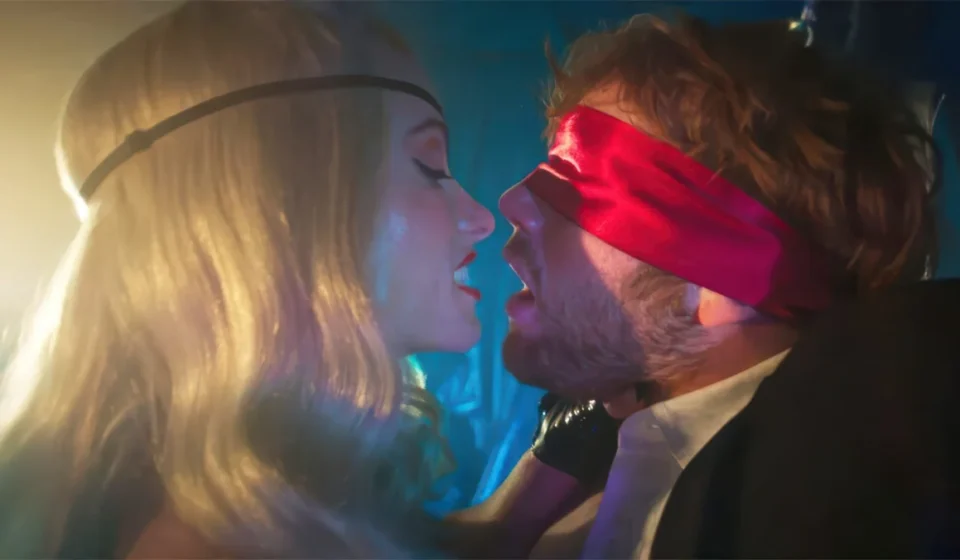
However, as the landscape of film production evolves, so too does the director’s relationship with the mechanics of on-screen intimacy. With his latest feature, I Want Your Sex—a provocative, dark comedy exploring the toxic power dynamics between an artist, Erika (Olivia Wilde), and her subordinate, Elliot (Cooper Hoffman)—Araki has officially integrated a new, modern standard into his process: the intimacy coordinator.
The Evolution of a Provocateur
To understand the significance of this shift, one must first appreciate the rugged, DIY ethos that defined Araki’s early career. Rising to prominence in the 1990s with seminal works like The Living End, Totally Fucked Up, and Nowhere, Araki operated in an environment where the luxury of a dedicated intimacy coordinator was not just unheard of—it was fiscally impossible.
In those early days, Araki was often working with bare-bones crews, functioning as a one-man band of vision and execution. The sex in these films was undeniably bold, raw, and explicitly queer, reflecting the urgency of a generation defined by the shadow of the AIDS crisis and the burgeoning riot-grrrl and grunge movements. The lack of a formal mediator on set did not diminish the emotional resonance of these scenes; rather, it fostered a "foxhole" mentality, where director and actor formed an intense, singular bond of trust out of necessity.
For years, Araki maintained that his experience allowed him to navigate these treacherous waters alone. He viewed the set as a sanctuary, believing that his long-standing rapport with performers was sufficient to capture the "physical and emotional nakedness" required by his scripts.
Bridging the Gap: The Introduction of the Intimacy Coordinator
The catalyst for change came unexpectedly during Araki’s tenure directing an episode of the Showtime series American Gigolo. It was there he encountered intimacy coordinator Yehuda Duenyas. The experience served as a revelation. While Araki remained confident in his ability to steer a set, he found that having a dedicated professional to handle the logistics of choreography and consent offered a layer of clarity that he hadn’t previously realized was missing.

"To me, it’s completely up to the actors," Araki explained in an upcoming episode of the Filmmaker Toolkit podcast. "I’m totally comfortable without [an intimacy coordinator], but I’m comfortable with a good one."
Recognizing the value Duenyas brought to the table, Araki invited him to join the production of I Want Your Sex. The film, which deals with an asymmetrical power dynamic between a boss and her employee, required a delicate touch. The scenes are characterized by what Araki calls "HBO-style nudity"—tactful, suggestive, and focused on the human form rather than gratuitous genitalia. The presence of an intimacy coordinator allowed for a level of technical precision that allowed the actors to focus on the performance rather than the logistics of the choreography.
Chronology of a Set: From Chaos to Choreography
In the traditional Hollywood model, sex scenes were often treated with a degree of "figure it out on the day" improvisation. Araki, however, has always approached these scenes as "dances."
"Sex scenes are not sexy. They’re not fun," Araki noted. "It is like a dance, and it is very choreographed and all figured out beforehand."
By formalizing this choreography through the lens of an intimacy coordinator, the process of shooting I Want Your Sex became a collaborative triangle between the director, the coordinator, and the performers. This was especially critical given the disparate experience levels on set.
Olivia Wilde, a seasoned veteran of the industry, brought a self-assuredness to her role as the kinky, powerful Erika. Conversely, Cooper Hoffman, fresh off his breakout role in Licorice Pizza, was entering uncharted waters. For an actor in his early 20s performing his first significant, explicit scenes, the support structure was paramount.

"Olivia had done a lot of sex scenes, a lot of nudity before. She was very comfortable in her body. Cooper was brand new," Araki observed.
The Philosophy of Safety and Support
At the core of the Araki set is a radical commitment to actor accessibility. Even with a crew of dozens, Araki insists on a policy of total availability. "I always tell my actors, ‘No matter how busy I am, even if a light fell over or someone just died on the set, I’m always here for you,’" he says.
This philosophy is not just altruistic; it is essential to the vulnerability required by his work. In I Want Your Sex, much of the comedy and pathos is derived from Hoffman’s performance as Elliot—a character caught in a web of fascination and terror. Araki praises Hoffman’s "fearlessness" in stepping into a role that demanded such physical and emotional exposure. The intimacy coordinator helped to "calibrate" the comfort levels, ensuring that while the scene on screen looked volatile and spontaneous, the environment behind the camera remained rigid in its safety and respect.
Implications for the Future of Independent Film
The adoption of an intimacy coordinator by a director as historically "independent" as Gregg Araki signals a broader industry shift. For decades, the independent sector prided itself on a lack of oversight, a "Wild West" mentality that encouraged artistic freedom but often left performers vulnerable to uncomfortable or coercive situations.
Araki’s embrace of the role suggests that the presence of an intimacy coordinator does not stifle the director’s vision—it enables it. By offloading the technical aspects of the "dance" to a specialist, the director is freed to focus on the emotional subtext and the psychological arc of the scene.
Furthermore, this shift highlights a maturation in the craft of filmmaking. The "starving artist" aesthetic that characterized the 90s indie scene is being replaced by a more sustainable, human-centric model of production. The success of I Want Your Sex demonstrates that one can retain the transgressive, provocative, and "typically Araki" edge while simultaneously providing a professional, supportive, and modern framework for the actors who bring that vision to life.

Conclusion: A New Chapter
As I Want Your Sex prepares for its theatrical release on July 31, it stands as a testament to Gregg Araki’s ability to evolve without compromising his artistic identity. He remains the same filmmaker who shocked audiences in the 90s, but he is now armed with a more nuanced understanding of how to protect the people who make his films possible.
The collaboration with Yehuda Duenyas is not merely a sign of the times; it is an evolution of a director who understands that true power—and true art—lies in the ability to adapt. For fans of the filmmaker, the upcoming Filmmaker Toolkit podcast episode will undoubtedly provide deeper insights into this transition, but the film itself speaks volumes. It is a work of high-stakes, high-tension, and—thanks to a new, rigorous approach to the craft of intimacy—a production built on a foundation of profound mutual trust.
For those interested in the full conversation regarding the production of I Want Your Sex and the evolving standards of intimacy on set, the upcoming episode of the Filmmaker Toolkit podcast will be available later this summer. You can subscribe to the series on Apple Podcasts, Spotify, or your preferred platform to ensure you don’t miss this in-depth look at one of cinema’s most enduring provocateurs.