The Resurrected Rage: Why Ngozi Onwurah’s ‘Welcome II the Terrordome’ Is 2026’s Most Essential Cinema Event

In the landscape of 1990s independent cinema, few films carried the sheer, unadulterated velocity of Ngozi Onwurah’s Welcome II the Terrordome. Released in 1995, it was a seismic entry in the history of British film—the first feature directed by a Black British woman to receive a theatrical release in the U.K. Yet, for decades, this scorching Afrofuturist dystopia existed only in the margins of film history, a "lost" artifact of a radical creative vision that was perhaps too volatile for the industry of its time.
Now, in 2026, the film is finally receiving its due. Following years of grassroots, digital-era advocacy—sparked largely by a renewed interest during the rise of the Black Lives Matter movement—Janus Films has spearheaded a meticulous restoration. This month, the film finally bows in U.S. theaters, marking a long-overdue introduction to a North American audience. For a generation of viewers accustomed to the polished aesthetic of modern genre-bending, Welcome II the Terrordome arrives not as a relic, but as a searing, contemporary revelation.
A Chronology of a Lost Masterpiece
To understand the trajectory of Welcome II the Terrordome is to understand the limitations placed upon Black filmmakers in the final decade of the 20th century. Conceived during Onwurah’s tenure at the prestigious National Film and Television School—the same hallowed halls that birthed luminaries like Lynne Ramsay and Joachim Trier—the project began as a twenty-minute student workshop.
"It started off as a workshop… I was a complete hip-hop babe at the time," Onwurah recalled in a recent interview. "I really saw the connection between hip-hop and the oral storytelling traditions of Africa. I wanted to use that as the starting point."
While the film reportedly had a screening at the Sundance Film Festival in its release year, the memories of the event remain hazy, even for the director. "I don’t think it was," Onwurah admitted. "We were so inept at that time. It went to festivals that I don’t even know. That wasn’t our frame of reference."

Following its quiet, limited U.K. run, the film slipped into the shadows of distribution, often miscategorized or ignored by a market that preferred the genteel period dramas of Merchant Ivory or the gritty, monochromatic social realism that dominated British cinema. It remained a cult curiosity for cinephiles until the mid-2010s, when internet film communities began to rediscover the work, citing its prophetic nature and aesthetic audacity.
The Anatomy of the Terrordome: Vision and Violence
Welcome II the Terrordome is not a film that asks for permission to be heard. It is a work of visceral, rhythmic, and uncompromising fury. The narrative bridges centuries, linking the trauma of a 17th-century Igbo family forced onto a slave ship in Georgia to a nightmarish, speculative "present" in 1995.
The film operates in a no-man’s-land: the titular "Terrordome," a demimonde populated by the displaced, the criminal, the law-enforcement apparatus, and those simply fighting for survival. The film’s opening sequence—depicting enslaved Africans choosing the depths of the Atlantic over the chains of colonial rule—sets the tone for a story that refuses to decouple historical genocide from contemporary systemic violence.
The characters are caught in the gears of this machine. We see Suzette Llewellyn as Angela McBride, a mother driven to a devastating, transformative act of vengeance, and Saffron Burrows as Jodie, a white woman whose interracial pregnancy with the character Spike (Valentine Nonyela) renders them both targets of extreme, state-sanctioned, and gang-related oppression.
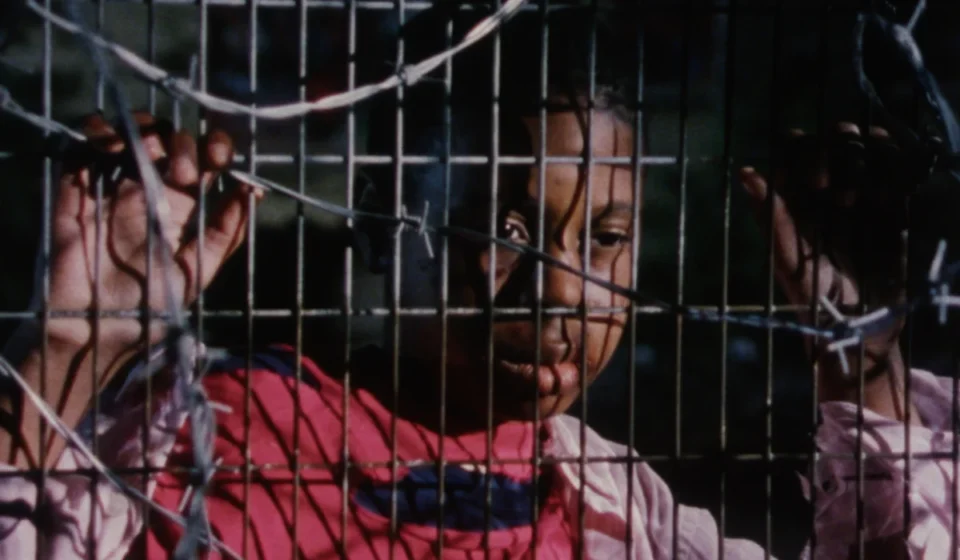
The aesthetic, captured by cinematographer Alwin H. Küchler, is deliberate in its rejection of "gritty docudrama." Onwurah, heavily influenced by the vibrant visual language of Spike Lee and the kinetic energy of music videos, refused to abide by the industry standard of the time: lighting for the white subjects in a scene while leaving Black skin tones relegated to "eyeballs and teeth."

Societal Suppression and the Burden of the "Angry Film"
Why did a film of such ambition fail to find a broader footing in 1995? According to Onwurah, the answer lies in the stifling cultural expectations of the British film establishment.
"When people were looking for British films, they were looking for Merchant Ivory. There was a very specific kind of British film, and then James Bonds and whatever," Onwurah explained. "It also didn’t fit into the sociorealism of Ken Loach. The main reason is because it was a Black film, and an angry Black film. In England, we suppress those kinds of things, like extreme anger. It’s just not how things are done."
Onwurah is open about the emotional wellspring of the project. She wrote the script during a weekend of intense physical and emotional pain, fueled by a local news report regarding a pregnant woman who had been beaten by an ex-partner. The report had dehumanized the incident, separating the beating from the resulting miscarriage.
"As a biracial person, I really identified with the baby/fetus that had been beaten out of her," she said. "So I went into the room just furious, and I still wanted to keep that raw fury with everything."
The Evolution of Representation
The implications of Welcome II the Terrordome are felt most acutely when looking at the career trajectory of its director and the state of the industry today. Onwurah has continued to work as a filmmaker, helming projects like Shoot the Messenger (2006) and the award-winning short Neighborhood Alert (2024). She is currently developing Biafra, a high-stakes BBC drama about the Nigerian civil war, with David Oyelowo serving as executive producer.

Onwurah reflects on the current landscape for Black creators with a measured optimism. "What I do think is great now… is that there’s a range," she noted. "You can watch Sinners, a complete blockbuster, and Black Panther. You can watch Moonlight, a beautiful arthouse, gorgeous movie. You can watch wacky films like Sorry to Bother You. There’s more of a range, whereas back then it was very much gritty on-the-shoulder, low-budget films."
However, she remains clear-eyed about the work that remains. "We have our role models now. We have people to look at, which is absolutely fantastic, but we don’t have nearly the critical mass that we need to have."
Legacy and Impact
The restoration of Welcome II the Terrordome is more than a technical achievement; it is a restorative act of cultural history. By bringing the film back to the screen, Janus Films provides a missing link in the development of Black British cinema.
While Onwurah admits that, in hindsight, there are technical elements she would refine, the film’s core remains potent. It was a project defined by its "naivety" and "rudimentary" construction, yet those very qualities serve to amplify its central thesis: that the pain of systemic oppression is not a puzzle to be solved in a "five-point, 10-year plan," but an experience to be witnessed and felt.
As audiences prepare for the July 31 opening at BAM in Brooklyn, followed by a national rollout and a prestigious Criterion Collection release, Welcome II the Terrordome stands as a testament to the endurance of artistic vision. It was a film that refused to play by the rules of its time, and in doing so, it secured its place as a timeless, urgent, and terrifyingly relevant work of art.

It is, quite simply, the most exciting "new" movie to watch this summer—a blistering reminder that true innovation often comes from those who are, as Onwurah puts it, unapologetically angry.