The Comedy Deficit: Assessing Netflix’s ‘72 Hours’ and the Struggle of the Modern Raunchy Ensemble

Introduction: The Search for the Next Great Comedy
In an era where high-concept blockbusters and prestige dramas dominate the streaming landscape, the "great American comedy" has become an increasingly rare commodity. The mid-to-late 2000s, defined by the works of Judd Apatow, Todd Phillips, and the writing duo of Jon Hurwitz and Hayden Schlossberg, offered a golden age of R-rated, theatrical humor. Today, that energy has largely migrated to streaming platforms, where the results are often mixed.
Netflix’s latest offering, 72 Hours, arrives with a pedigree that suggests a return to form. Directed by Tim Story—the filmmaker behind hits like Barbershop and Ride Along—and penned by Hurwitz and Schlossberg (the architects of the Harold & Kumar trilogy), the film attempts to recapture the lightning-in-a-bottle chaos of The Hangover. However, despite a cast anchored by comedy titan Kevin Hart and a roster of rising Saturday Night Live stars, the film serves as a cautionary tale. It illustrates how an over-reliance on crime subplots and "shock" humor can dilute a promising premise, leaving audiences with a cinematic experience that feels more like a frantic "throw everything at the wall" exercise than a cohesive narrative.
Main Facts: The Premise and Production Pedigree
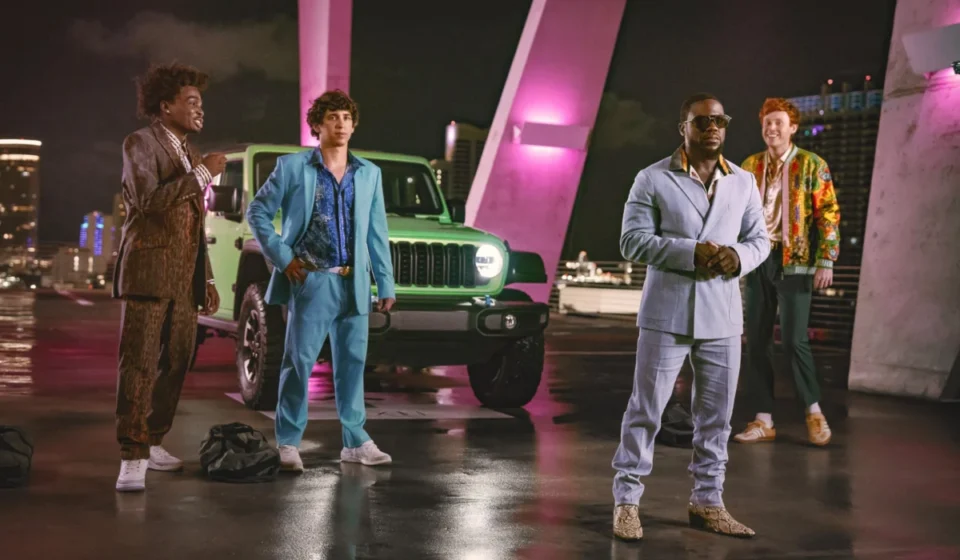
72 Hours centers on Joe (Kevin Hart), a 40-year-old advertising executive who finds himself at a professional and personal crossroads. After a younger colleague dismisses his latest vodka campaign as "cringe," Joe’s job security and a looming promotion are put in jeopardy. In a desperate bid to reclaim his relevance and gain "intimate knowledge" of the Gen Z and Millennial consumer base, Joe exploits a fortuitous mistake: he is accidentally added to a group text for a Miami bachelor party.
The party is for Mason (Mason Gooding), whose inner circle consists of three twentysomethings: Nick (Marcello Hernández), Hunter (Ben Marshall), and the appropriately named Freshman (Kam Patterson). Joe manages to talk his way into the festivities, hoping to prove that "40 is the new 20." What follows is a sun-drenched odyssey through South Beach that quickly devolves from standard partying into a high-stakes criminal entanglement.
The film’s production team represents a "who’s who" of 21st-century comedy:
- Director Tim Story: Known for his ability to balance ensemble dynamics and urban comedy.
- Writers Jon Hurwitz & Hayden Schlossberg: Specialists in the "raunchy road trip" subgenre.
- The Cast: A blend of established star power (Hart, Teyana Taylor) and fresh comedic voices from the Saturday Night Live and stand-up circuits.
Chronology: From Ad Agency Boredom to Miami Mayhem
The narrative arc of 72 Hours follows a traditional three-act structure typical of the "wild night" subgenre, though it frequently veers into thriller territory.
Act I: The Catalyst of Insecurity
The film opens by establishing Joe’s disconnect from the modern world. Despite his success, he is haunted by the fear of being "aged out" of his industry. His relationship with his girlfriend Jennifer (Teyana Taylor) is also at a tipping point; she expects a proposal, while he is focused on proving his "cool" factor. When the group text invite arrives, Joe sees it as a divine intervention. He rents a lavish Airbnb in Miami, attempting to buy the friendship of Mason and his skeptical friends, particularly the prickly Nick.
Act II: The "Ricardo Montana" Incident
The turning point occurs during a high-octane yacht party. In an effort to keep up with his younger counterparts, Joe is pressured into consuming a significant amount of cocaine. This triggers a dormant, flamboyant alter-ego known as "Ricardo Montana." Channeling a caricature of Scarface, Joe’s destructive behavior results in an accidental confrontation with a local drug kingpin. This subplot shifts the film’s tone from a generational comedy to a "wrong man" crime caper.
Act III: The Escalation
The final act involves the group navigating the fallout of Joe’s antics. They find themselves pursued by the drug lord, who believes Joe is a rival encroaching on his territory. The stakes escalate through a series of increasingly absurd set pieces, involving stolen valuables, a competing bachelorette party with hidden agendas, and a climax that prioritizes slapstick action over the character-driven humor established in the first half-hour.
Supporting Data: Critical Analysis and Generational Friction
While the premise of a 40-year-old trying to "infiltrate" a younger generation is a fertile ground for satire, critics and audiences have noted that 72 Hours often misses the mark.
The Failed Generational Divide
The core irony of the film is that it fails to capitalize on the age gap it purports to explore. Kevin Hart, who is 47 in real life, plays 40, while the "younger" characters are portrayed as being in their late 20s or early 30s. In reality, the cultural gap between a 40-year-old and a 29-year-old is often negligible. Aside from a few jokes about "unc" (uncle) energy and a scene involving Pepto-Bismol during "pre-gaming," the film ignores the nuanced differences in how these generations communicate, work, and socialize. Instead, Joe’s primary contribution to the group is his wealth, which acts as a "deus ex machina" for the plot’s logistical needs.
Performance Breakdown
The film’s saving grace is its ensemble, though they are often underserved by the script:
- Kevin Hart: Hart remains a charismatic lead, but his performance here feels like a retread of his "out-of-his-depth" persona seen in Ride Along and Central Intelligence.
- Marcello Hernández & Ben Marshall: The SNL stars bring a necessary energy, though Hernández’s character lacks the depth to make him more than a standard "skeptical friend."
- Kam Patterson: Patterson emerges as a standout, delivering a performance as the "resident idiot" that recalls the breakout turns of Zach Galifianakis in The Hangover.
- Teyana Taylor: Fresh off her acclaimed role in A Thousand and One, Taylor provides a grounded, emotional performance that, while excellent, feels like it belongs in a more serious film.
The "Crime Subplot" Pitfall
A recurring criticism of modern comedies is the perceived need to "raise the stakes" with a criminal element. 72 Hours falls into this trap. Where The Hangover used its crime subplot (the search for Doug and the run-in with Mr. Chow) to drive the mystery, 72 Hours uses it as a crutch. The inclusion of a drug lord and life-threatening danger often smothers the natural comedic chemistry between the five leads.
Official Responses and Industry Context
While Netflix does not typically release traditional "box office" data, the strategy behind 72 Hours is clear: it is a "star-vehicle" designed for high viewership in the Friday-night streaming window.
The Netflix Comedy Strategy
Industry analysts note that Netflix has become the primary home for mid-budget comedies that major studios (like Warner Bros. or Universal) are now hesitant to release theatrically. By pairing a global superstar like Hart with "trending" talent from SNL, Netflix ensures a high "click-through" rate. However, this "algorithmic" approach to filmmaking can sometimes lead to projects that feel manufactured rather than inspired.
The Tim Story-Kevin Hart Partnership
This film marks another collaboration in the long-standing professional relationship between Tim Story and Kevin Hart. Their previous work has grossed hundreds of millions of dollars globally. In interviews regarding similar projects, Story has emphasized the importance of "escapism" and "relatability," though 72 Hours arguably pushes the boundaries of the latter.
Supporting Cast Pedigree
The film also benefits from a deep bench of character actors:
- Michael Mando (Better Call Saul): Brings a level of intensity to the villainous elements.
- Zach Cherry (Severance): Provides his signature dry wit.
- Kevin Dunn (Veep): Offers a veteran presence in the corporate scenes.
Implications: The Future of the Ensemble Comedy
The release of 72 Hours prompts a broader discussion about the trajectory of the comedy genre.
The "Topping" Problem
There is a growing trend among filmmakers to feel the need to "top" previous classics. If The Hangover had a tiger, the next film needs a whale (or, in the case of 72 Hours, a joke involving whale sperm). This "shock-and-awe" approach to comedy often comes at the expense of wit and character development. The implication is that studios believe modern audiences have a shorter attention span and require constant, escalating absurdity to remain engaged.
The Streaming Lifecycle
As a "summertime confection," 72 Hours will likely achieve high viewership numbers in its first month, but its long-term cultural footprint remains in question. Unlike Old School or Bridesmaids, which are quoted decades later, the "straight-to-streaming" model often results in films that are consumed and quickly forgotten.
Final Verdict
Ultimately, 72 Hours is a reminder of the "specter of the past." It looks like the comedies of the 2000s and features the talent of that era, but it lacks the structural discipline that made those films classics. It is a movie that "strains to communicate how much fun the audience should be having instead of, well, just being fun." For Kevin Hart, it is another profitable entry in a wildly inconsistent filmography. For the audience, it is a reminder that while "40 might be the new 20," some comedy formulas are beginning to show their age.