The Evolution of ‘Hope’: Inside Na Hong-jin’s Decade-Long Quest for Sci-Fi Perfection

After a ten-year gestation period, director Na Hong-jin finally unveiled Hope—a gargantuan, high-concept sci-fi horror epic that stands as the most expensive production in the history of South Korean cinema. The film, which arrived with mountainous expectations, serves as a testament to the risks inherent in pushing the boundaries of motion capture and CGI creature design. However, as the film made its world premiere at the Cannes Film Festival, it became clear that ambition and execution do not always align in perfect harmony.
The reception in the hallowed halls of the Debussy Theatre was electric, if polarized. While the audience was undeniably held captive by the film’s sheer scale and intensity, the technical elements—specifically the rendered creatures—sparked a fierce critical debate. As the industry looks toward its North American release on September 10 via Neon, the story of Hope has transformed from a simple review cycle into an ongoing, real-time case study in post-premiere refinement and the persistence of a visionary filmmaker.
A Chronicle of Creation and Criticism
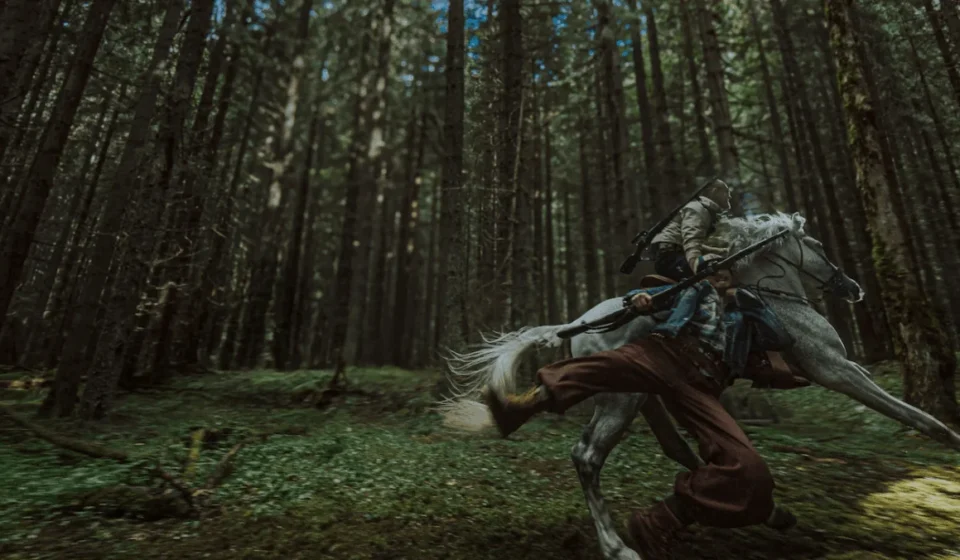
The journey of Hope began long before it reached the Croisette. Na Hong-jin, a filmmaker celebrated for his mastery of tension and atmospheric dread, spent nearly a decade meticulously crafting this vision. The film was designed to be a departure from the gritty realism of his earlier work, opting instead for a bold, daylight-drenched aesthetic that demands absolute perfection from its visual effects.
When the film debuted at Cannes, it was programmed alongside the restrained, meditative works of international auteurs like Paweł Pawlikowski and Ryusuke Hamaguchi. Hope acted as a visceral, 200-minute jolt to the festival’s lineup. For the first hour, the film was hailed as a "spellbinding and gleefully frenetic mega-setpiece." Yet, the transition into its second and third acts—where the central creatures are introduced—prompted a sharp divide.

Critics like IndieWire’s David Ehrlich were vocal about their disappointment, describing the CGI as possessing "all the credibility of a glitch in a computer game." Conversely, others, including The Hollywood Reporter’s David Rooney, championed the film as an "instant cult classic," praising the very same creatures as "strikingly original."
Data and Dissection: The Technical Hurdles
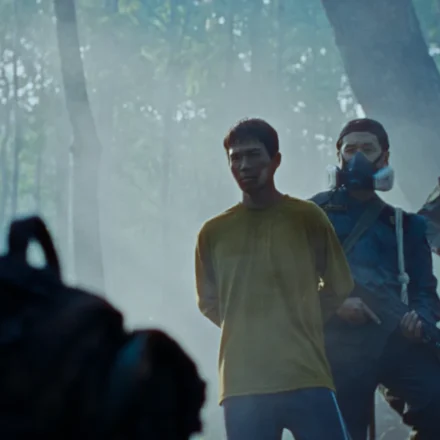
At the heart of the controversy is the film’s reliance on performance-capture technology. Featuring performances from an A-list ensemble—including Michael Fassbender, Alicia Vikander, and Taylor Russell—the characters are built upon a foundation of genuine human emotion and physical acting. Yet, the exterior shells are entirely computer-generated, moving with a jarring, ramped-up speed that contrasts sharply with the grounded physics of Western sci-fi action blockbusters.
Na’s decision to film almost exclusively in natural, bright daylight leaves the CGI with nowhere to hide. In traditional horror, darkness serves as a canvas for obscuring digital seams; here, the creatures are exposed to the unforgiving glare of the sun. While this choice contributes to the "stark originality" that supporters admire, it also made the rendering quality an immediate flashpoint for skepticism.
The Director’s Response: Tinkering Under Pressure
In the days leading up to the Cannes premiere, it was not uncommon to find Na Hong-jin still laboring over sound mixes and final edits. For a filmmaker of his caliber, the festival premiere was not a conclusion, but a focus group.

"I was hearing it for the first time [at the premiere], and I had so many things that I wanted to tinker with," Na revealed in a candid interview on IndieWire’s Filmmaker Toolkit podcast. Rather than dismissing the criticism as subjective or misinformed, Na treated it as a diagnostic tool. He acknowledged that the introduction of the central monster, Va’migere (played by Cameron Britton), required more finesse to blend into the surrounding environment.
Following his return from Cannes, Na undertook an intensive re-editing process. This was not a total overhaul, but rather a surgical refinement of pacing and tone. The result was a tighter, more cohesive cut that has already proven its commercial viability. Upon its release in South Korea last week, the updated version became the country’s fastest-grossing film ever, selling 2.6 million tickets in just five days.
Second Act Re-Edits and Structural Flow
The primary focus of the post-Cannes editing was the film’s complex second act. The original cut, while grand in scope, struggled to balance three concurrent narrative threads: the investigation led by a police chief (Hwang Jung-min), the tactical movements of officer Sung-ae (Hoyeon), and the perilous journey of local hunters guided by the character Sung-ki (Zo In-sung).
By removing roughly four to five minutes of footage, Na was able to smooth the friction between these threads. Notably, the director chose to cut scenes that felt redundant, such as a sequence featuring a crane removing the body of a dead alien. "I thought it was a bit redundant," Na explained, noting that he also removed a visual "red herring" involving a flickering object in the forest that served little purpose for the wider narrative.

To balance these subtractions, he added new footage of Yang Bae (Eum Moon-suk), the dim-witted taxidermist who serves as the film’s primary source of comic relief. By shifting the focus toward human interactions and tightening the investigative arc, the revised film plays with a rhythm that the Cannes cut lacked.
Implications for Global Distribution
The acquisition of Hope by Neon for the North American market signals a massive vote of confidence in the project, despite the initial technical pushback. The success in the South Korean market suggests that the "glitches" reported by Western critics were either mitigated by the final polish or were never as disruptive to a general audience as they were to a critical one.
The implications for international cinema are significant. Hope challenges the status quo of how CGI is utilized in non-Western markets. By refusing to conform to the "dark, muted" aesthetic of Hollywood sci-fi, Na is attempting to establish a new visual language. The fact that he was willing to re-edit the film based on his own post-premiere observations—and public reaction—demonstrates a rare, iterative approach to filmmaking that treats the final product as a living, breathing entity.
Conclusion: The Power of Perspective
Returning to the film after both the Cannes and the revised versions, one is struck by the shift in the viewing experience. While the individual changes—a few minutes removed, some sound levels adjusted, a bit of extra comic relief—might seem minor in isolation, the cumulative effect is a more immersive, seamless experience.

The question remains: was the "improved" version truly superior, or was the audience simply more attuned to Na’s vision on a second viewing? The truth likely lies in the middle. The sound design, which Na cited as the most significant area of his final work, plays an often-underestimated role in anchoring digital characters in a physical world.
If Hope is, at its core, a "good movie," the debate over its CGI and the specifics of its edit may eventually fade into the background, leaving behind the memory of a singular, ambitious, and deeply original piece of cinema. As it heads to U.S. theaters, Hope stands not just as a cautionary tale about the perils of high-budget CGI, but as a compelling argument for the value of a director’s persistence in the pursuit of their creative truth.