Beyond the Myth: Deconstructing Elliot Page’s Pivotal Role in Christopher Nolan’s ‘The Odyssey’

Following the gargantuan, culture-shifting success of Oppenheimer, director Christopher Nolan found himself in the enviable position of having total creative carte blanche in Hollywood. Rather than opting for a safe sequel or a smaller character study, Nolan turned his gaze toward antiquity, mounting an ambitious, revisionist adaptation of Homer’s The Odyssey.
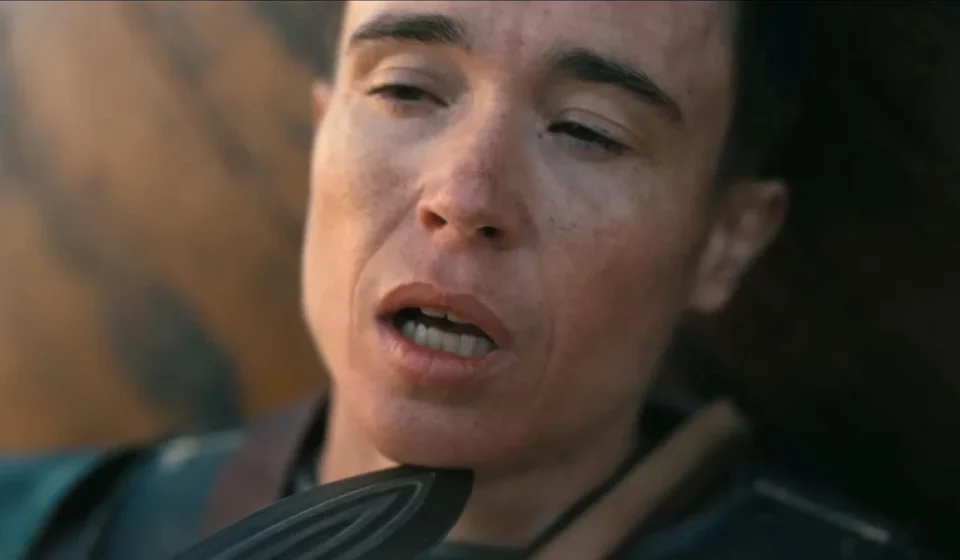
Among the film’s sprawling, star-studded ensemble, one casting choice sparked significant—and ultimately misplaced—digital chatter: Elliot Page. While social media speculation initially cast Page as the legendary warrior Achilles, the reality of the film is far more nuanced. Page portrays Sinon, a character whose inclusion redefines the moral trajectory of Nolan’s epic.
The Myth of the Casting Controversy
In the lead-up to the 2026 premiere, the internet was rife with speculative discourse regarding Nolan’s casting decisions. Much of this "manufactured hot air," as critics have since labeled it, centered on the assumption that Page would be stepping into the sandals of Achilles—the quintessential Greek hero known for his peerless martial prowess and physical stature.
The controversy, fueled by traditionalist gatekeepers and uninformed leaks, largely ignored the depth of the screenplay. When the film finally hit theaters, it became clear that the outrage was entirely disconnected from the narrative. Page’s role is not one of brawn, but of psychological weight. He is not the hero of the Trojan War; he is the conscience of a broken man.
Chronology: Sinon’s Narrative Arc
To understand the significance of Page’s performance, one must look at the structural placement of Sinon within the narrative.
The Opening Gambit
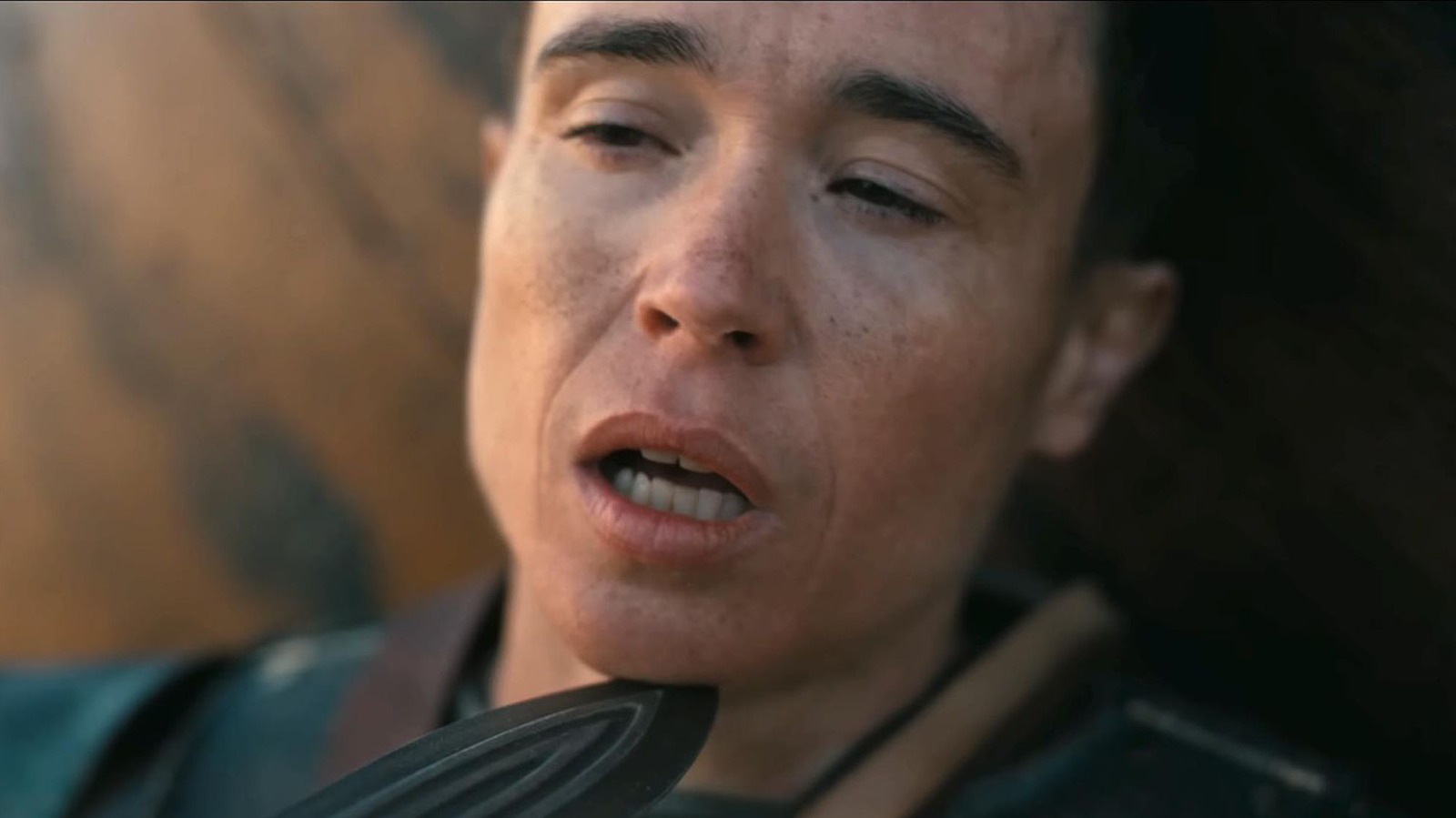
Sinon is the very first character the audience encounters in Nolan’s The Odyssey. He is presented not as a mythic figure, but as a young, wide-eyed recruit from Ithaca. This initial sequence serves as the film’s emotional anchor. By introducing the audience to the war through the eyes of a vulnerable, loyal soldier, Nolan establishes a human baseline before the film descends into the grand, often cold, political machinations of the Trojan conflict.
The Deception of Troy
As the plot advances, Sinon becomes the unwitting instrument of Odysseus’ (Matt Damon) moral decline. In this adaptation, Odysseus is not merely a clever strategist; he is a man willing to violate the sacred "Law of Zeus" to ensure victory. Sinon is tasked with the infiltration of Troy—the architect of the Trojan Horse ruse. Unlike the version found in Virgil’s Aeneid, where Sinon is a willing, duplicitous liar, Nolan’s Sinon is a pawn. He believes he is serving a noble cause, unaware that his leader has already sacrificed his honor for a swift conclusion to the war.
The Hades Confrontation
The film’s third act features a haunting reunion in the underworld. When Odysseus encounters the blind prophet Tiresias (James Remar), the veil between the living and the dead thins. It is here that Sinon confronts his former commander. This is the emotional climax of the film; the young soldier, now a shade of his former self, forces Odysseus to reckon with the betrayal that cost him his soul. It is a masterclass in understated acting, with Page holding his own against the gravitas of Damon.
Supporting Data: The Adaptation Shift
Nolan’s The Odyssey is a masterclass in subverting expectations through literary synthesis. While the film draws primarily from Homer, it borrows heavily from Virgil’s The Aeneid to flesh out the character of Sinon—yet it flips the character’s agency entirely.
| Feature | Homeric/Virgilian Tradition | Nolan’s The Odyssey (2026) |
|---|---|---|
| Sinon’s Motivation | Intentional deception/Lies | Unwitting loyalty |
| Relationship to Odysseus | Rival/Enemy combatant | Trusted subordinate |
| Role in the Fall of Troy | Orchestrator of the Horse | Pawn of the Greek High Command |
| Outcome | Celebratory victory | Somber realization of moral decay |
By shifting Sinon from a willing liar to a betrayed believer, Nolan transforms the fall of Troy from a military triumph into a tragedy of innocence lost. This change allows the audience to view the "People of the Sea"—the terrifying, vengeful force haunting the protagonist—as a direct consequence of the lies told to men like Sinon.
Implications: A New Cinematic Language for Myth
The success of this film, which currently stands as the best-reviewed project of Christopher Nolan’s storied career, signals a shift in how blockbuster epics handle classical source material.
The "People of the Sea" and Moral Ambiguity
The revelation that Odysseus and his men are, in fact, the "People of the Sea" is the film’s most chilling twist. By centering the story on the moral bankruptcy required to win the Trojan War, Nolan effectively critiques the "hero’s journey." The inclusion of Sinon is vital to this critique; he represents the human cost of empire-building. Without Page’s character, the audience would have no proxy through which to measure the extent of Odysseus’ fall from grace.

Official Responses and Box Office Dominance
While Universal Pictures remained tight-lipped during the pre-release "controversy," the studio has since touted the film’s critical reception as a vindication of their casting process. Industry analysts note that The Odyssey has outperformed expectations, not by relying on traditional action tropes, but by embracing the philosophical complexity inherent in the source material.
Nolan’s decision to reunite with Elliot Page—a collaborator from the 2010 hit Inception—was clearly a deliberate choice. Page brings a grounded, contemporary vulnerability to the ancient setting, helping to bridge the gap between a 3,000-year-old epic and a modern audience’s expectations for character-driven drama.
Conclusion: A Legacy Defined
Elliot Page’s turn as Sinon is a reminder that the size of a role is irrelevant when compared to its narrative utility. By refusing to cast Page as the expected warrior-archetype, Nolan freed the actor to explore themes of betrayal, disillusionment, and the fragility of the human spirit.
As The Odyssey continues to dominate the global box office, the legacy of this performance seems secure. It is a testament to the fact that even in a film filled with A-list talent, the most "pivotal" role is often the one that challenges the audience to look past the surface of the myth and into the dark, complicated heart of the hero. Christopher Nolan has not just adapted a classic; he has reinvented it for a new generation, with Page serving as the moral compass for a story that would otherwise be entirely lost at sea.