From YouTube to the Multiplex: How the Horror Short Became Hollywood’s Greatest Incubator

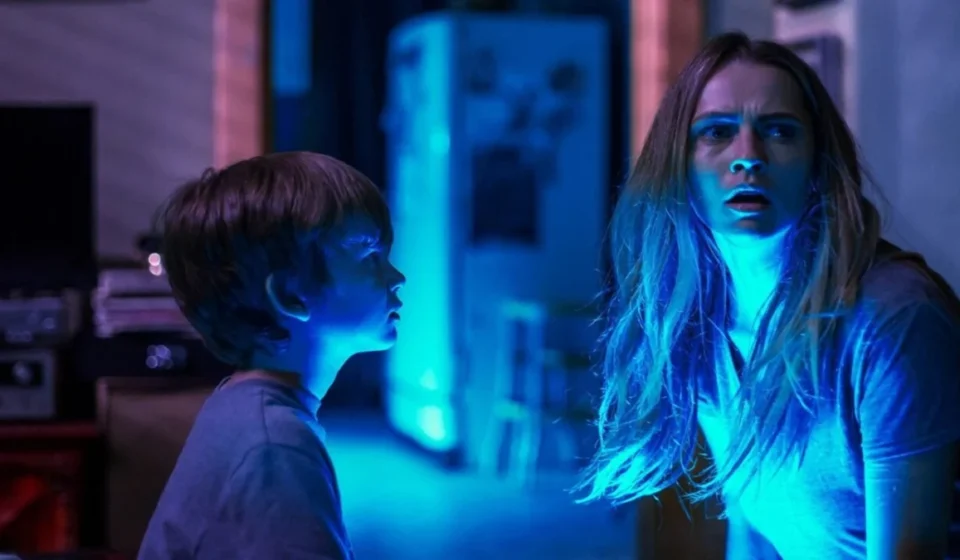
Ten years ago, on July 22, 2016, audiences across the globe collectively held their breath in darkened theaters as the jump-scares of Lights Out turned a simple, primal fear—what lurks in the shadows when the switch is flipped?—into a cinematic phenomenon. Directed by David F. Sandberg and produced on a modest $5 million budget, the film grossed a staggering $149 million, proving that the transition from a low-budget internet short to a blockbuster tentpole was not just possible, but potentially the most lucrative business model in modern horror.
Today, as we reflect on a decade of changing industry standards, Lights Out remains the gold standard of the "YouTube-to-Hollywood" pipeline. However, as a new generation of creators like Curry Barker and Kane Parsons rise to prominence, the conversation has shifted. The industry is no longer just looking for the next Lights Out; it is looking to cannibalize the digital landscape entirely.
The Chronology of the Digital Springboard
The path from a viral short to a feature-length production has been a well-trodden, albeit evolving, road for over a decade. The chronology of this phenomenon reveals a steady acceleration in how quickly digital creators are being absorbed into the studio system.
- 2004: James Wan and Leigh Whannell establish the template by creating a short-film proof-of-concept for the bathroom scene in Saw, securing the trust of investors through sheer visual ingenuity rather than a massive budget.
- 2008: Damien Leone begins the long, arduous journey of building the Terrifier franchise, with Art the Clown appearing in shorts long before the 2016 feature release.
- 2013: David F. Sandberg uploads his three-minute short Lights Out to YouTube and Vimeo. It goes viral, racking up millions of views and triggering a fierce bidding war among major studios.
- 2013–2015: Andy Muschietti’s short film Mama catches the eye of Guillermo del Toro, leading to a 2013 feature adaptation that establishes Muschietti as a major genre voice.
- 2019–2020: The cycle tightens; Jacob Chase’s short Larry is fast-tracked into the 2020 feature Come Play.
- 2024–Present: The "New Wave" era. Creators like Kane Parsons (Backrooms) and Curry Barker (Milk & Serial) move from high-concept internet horror to major studio deals, often bypassing the traditional decade-long "grind" of their predecessors.
Supporting Data: The Economics of the "Viral Bet"
The financial logic behind this trend is sound, if somewhat cynical. Studios operate on risk-mitigation strategies. A short film provides a proven "proof of concept" with an existing, built-in audience. When a short film accumulates millions of views, it serves as a risk-free focus group.
Compare the return on investment (ROI) for these projects against traditional original IP:
- Lights Out: $5M production budget vs. $149M global box office.
- Terrifier (2016): A $35,000 production budget that birthed a franchise worth millions in merchandise, cult status, and theatrical revenue.
- Smile (2022): Developed from Parker Finn’s short Laura Hasn’t Slept, it became one of the most profitable horror films of the decade.
The math suggests that for every dollar spent scouting YouTube or Vimeo, the potential for a massive, scalable return is significantly higher than buying a traditional spec script from an unproven writer.
The New Guard: Barker, Parsons, and the Institutional Shift
There is currently a significant "hoo-ha" surrounding the next generation of horror directors. Curry Barker and Kane Parsons are frequently cited as the spiritual successors to the early-aughts masters like Eli Roth and James Wan. However, there is a distinct difference in their trajectories.
Unlike Sandberg, who spent a decade working in documentary filmmaking and animation before his breakthrough, Barker and Parsons have ascended with blistering speed. Their success with projects like Obsession and the Backrooms series has allowed them to pitch original feature concepts rather than merely expanding their shorts.

However, this rapid ascent brings a new set of questions. Does a lack of "grind time"—the years spent honing craft in relative obscurity—impact the longevity of a filmmaker’s voice? As studios scramble to acquire rights to viral sensations like Alex Kister’s The Mandela Catalogue (secured by Steven Spielberg) or Siren Head, the industry is effectively outsourcing its development phase to teenagers and young adults with cameras and editing software.
Implications: The Icarus Complex
The primary danger in this model is the "IP IV" drip. Once a creator is brought into the studio fold, they are often immediately tasked with managing established intellectual property rather than developing their own.
Look at the filmography of the modern horror auteur:
- David F. Sandberg: After Lights Out, he was quickly moved to Annabelle: Creation and the Shazam franchise. While commercially successful, his unique "voice" has been largely stifled by the demands of corporate tentpoles.
- Andy Muschietti: Following the success of Mama, his career became synonymous with the IT duology and a controversial turn into the DC Extended Universe.
- Mike Flanagan: While he maintained a strong authorial voice for years, he, too, has gravitated toward adapting established literary works (Stephen King, Shirley Jackson) rather than original, ground-up concepts.
The implication is clear: the industry is excellent at finding talent, but poor at fostering it. We risk turning our most promising horror visionaries into high-paid functionaries. When a director like Parker Finn—who crafted the brilliant Smile 2—is immediately tasked with a remake of a classic like Possession, one must wonder if the industry is interested in the artist’s growth or simply their brand recognition.
Conclusion: The Path Forward
The future of horror is undoubtedly housed online, but the "internet-to-Hollywood" pipeline is a double-edged sword. While it provides a democratic, meritocratic path to success, it also threatens to burn out talent before they can truly define their careers.
The success of Lights Out ten years ago was a lightning-in-a-bottle moment that celebrated a singular, terrifying concept. It was a communal theatrical experience that reminded us why we love the dark. If the next generation—Barker, Parsons, and those yet to be discovered—are to avoid the "Icarus" route, they must be afforded the same luxury as their predecessors: the space to fail, the space to create, and, most importantly, the space to grow beyond the shorts that made them famous.
Studios must recognize that the value of these creators lies not in the "viral" nature of their past work, but in the retention of their specific, unshackled creative voice. If we want to see the next great horror masterpiece, we must stop viewing these directors as mere content providers and start treating them as the auteurs they are capable of becoming. Until then, we will continue to watch, waiting for the lights to go out once more.