
Twenty-seven years ago, on July 23, 1999, audiences were introduced to the small-town, blood-soaked world of Mount Rose, Minnesota. Drop Dead Gorgeous, a biting mockumentary satire directed by Michael Patrick Jann and penned by former pageant queen Lona Williams, arrived during a crowded summer dominated by American Pie and 10 Things I Hate About You. While the film initially struggled to find its footing, it has since transcended its "box office disaster" origins to become a celebrated piece of pop culture history.
The Main Facts: A Satire Ahead of Its Time
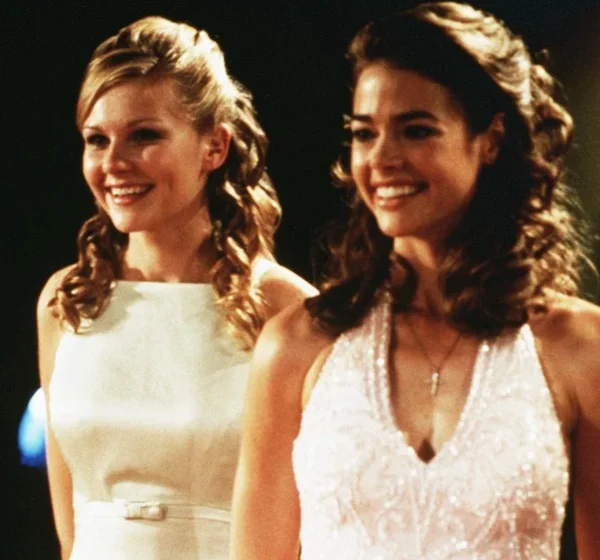
At its core, Drop Dead Gorgeous is a dark, irreverent look at the high-stakes world of teenage beauty pageants. Starring Kirsten Dunst as the wide-eyed, ambitious Amber Atkins, and featuring a powerhouse ensemble cast including Denise Richards, Kirstie Alley, Ellen Barkin, Amy Adams, and Allison Janney, the film functions as a hybrid of Miss Congeniality and the cynical energy of Heathers.
Despite its now-legendary status, the film was a financial casualty of the late-90s teen comedy gold rush. Produced on a budget of approximately $15 million, it grossed only $10.5 million domestically. Critics were largely unsparing; the film holds a modest 46 percent rating on Rotten Tomatoes, with Entertainment Weekly labeling it "graceless" and the late, legendary Roger Ebert famously questioning how anyone could have deemed the screenplay worthy of filming.
A Chronology of Chaos: From Set Tension to Cult Stardom
The Creative Friction
The production was far from a seamless experience. Screenwriter Lona Williams, drawing from her own authentic experiences as a Minnesota pageant contestant, often found herself at odds with the film’s first-time director, Michael Patrick Jann. Williams described the process as deeply personal and, at times, painful. She recalled moments of being sidelined by production decisions—such as being told she was "too old" to cameo as a candy striper and being relegated to a non-speaking role as a judge.
Jann, now reflective, admits that his inexperience and youthful arrogance contributed to the friction. "As a 26-year-old, I was probably a little more like, ‘No, we’re f–king doing it this way,’" he admitted in later interviews. This tension, while detrimental to morale, infused the film with a raw, confrontational energy that perhaps contributed to its unique, biting tone.
The Casting Carousel
The film’s casting process was a series of "what-ifs." Melissa Joan Hart, then the reigning queen of teen television thanks to Sabrina the Teenage Witch, auditioned for the role of Amber Atkins before moving on to Drive Me Crazy. Kirsten Dunst was eventually chosen, not for her pedigree in Interview with a Vampire, but for her performance in Celebrity Teen Jeopardy, where Jann found her "guileless" nature perfect for a character who remains relentlessly positive in the face of tragedy.
Supporting roles were similarly reshuffled. Studio executives initially courted Goldie Hawn for the role of the beer-drinking, supportive mother, Annette Atkins, and Sigourney Weaver was the top choice for the ruthless Gladys Leeman. Ultimately, Ellen Barkin and Kirstie Alley stepped in, delivering performances that would become the backbone of the film’s legacy.
Supporting Data: Behind the Scenes and Beyond
The Birth of Future Stars
Drop Dead Gorgeous serves as a fascinating time capsule of talent. It marked the feature film debut of Amy Adams, who played the promiscuous cheerleader Leslie Miller. Allison Janney, who portrayed Loretta, also credits the film as a turning point in her career. Interestingly, Janney’s involvement was largely facilitated by the late Brittany Murphy, who, having worked with Janney on Broadway, insisted the director cast her.
The "Dairy Queens" Lawsuit
The film’s title was a point of contention even before release. It was originally slated to be titled Dairy Queens. The parent company of the ice cream chain, however, took issue with the association and filed a lawsuit, forcing the production to pivot to the now-iconic Drop Dead Gorgeous.
The "Pervert" Encounter
Character actor Matt Molloy, who played the unsettling Judge John Dough, has experienced the strange phenomenon of being recognized by fans in public settings. He reports that on several occasions, teenage fans have confronted him in places like bakeries or malls, shouting, "You’re the pervert!"—a testament to how vividly his performance left an impression on viewers.
Official Responses and Reflections
The Legacy of the "Jesus Doll"
One of the most infamous sequences in the film features Denise Richards’ character, Becky, performing a tone-deaf rendition of "Can’t Take My Eyes Off of You" while dancing with a doll of Jesus on a crucifix. The scene was so polarizing that several extras on set were reportedly offended and walked out of the production entirely. This scene has since become a centerpiece of the film’s cult status, representing the extreme lengths of social satire.
The Original Ending
The film’s dark humor could have been even darker. In the original script, Kirstie Alley’s character, Gladys, died by suicide in prison—an ending that test audiences found entirely too bleak. The scene was cut, and the narrative was adjusted to ensure the film maintained its balance between dark satire and black comedy.
Implications: A Lasting Cultural Impact
Gilmore Girls and the Mother-Daughter Dynamic
Perhaps the most intriguing claim regarding the film’s influence comes from producer Gavin Polone. He has stated that the mother-daughter dynamic between Annette and Amber was a direct inspiration for the concept of Gilmore Girls. He argues that the show as we know it might not have existed without the specific chemistry developed in Drop Dead Gorgeous.
Allison Janney’s Enduring Connection
Despite not being featured on the film’s original promotional poster and not being invited to the premiere due to budget constraints, Allison Janney considers the film one of the most significant of her career. She frequently encounters fans who quote Loretta’s lines to her, noting that the film’s popularity has only grown with time. "I get more people coming up to me saying how much they love that movie than any other thing I’ve done," she noted in an interview with The A.V. Club.
A Lesson in Retrospective Appreciation
The history of Drop Dead Gorgeous serves as a poignant reminder that box office receipts and critical consensus upon release are not always accurate barometers of a film’s value. In 1999, the film was an anomaly, a "most smartest" movie that arrived at the wrong time for mainstream audiences. Today, it stands as a testament to the power of sharp writing and ensemble performances. It proved that while a film might be "fried up" by critics in its own era, its legacy can endure, continuing to influence television, inspire future generations of actors, and delight fans who find comfort in its unapologetic, dark-hearted hilarity.
As we look back, 27 years later, the film’s "graceless" reputation has been replaced by the recognition of its genius. Whether it is the memorable dialogue, the stellar performances of a then-unknown Amy Adams, or the sheer audacity of its premise, Drop Dead Gorgeous remains a cornerstone of the cult comedy genre—a beautiful, messy, and enduringly funny piece of cinema that truly refused to die.