The Evolution of Guerrilla Cinema: Sony Launches the FX5, Redefining Run-and-Gun Production

In a significant expansion of its Cinema Line, Sony has officially unveiled the FX5, a compact, full-frame powerhouse designed to bridge the gap between high-end digital cinema and the agility required for modern, independent storytelling. By integrating 5K Open Gate acquisition, internal 16-bit X-OCN recording, and advanced AI-driven autofocus into a chassis that fits comfortably in a single bag, Sony is effectively signaling a shift in how professional features are delivered to filmmakers.
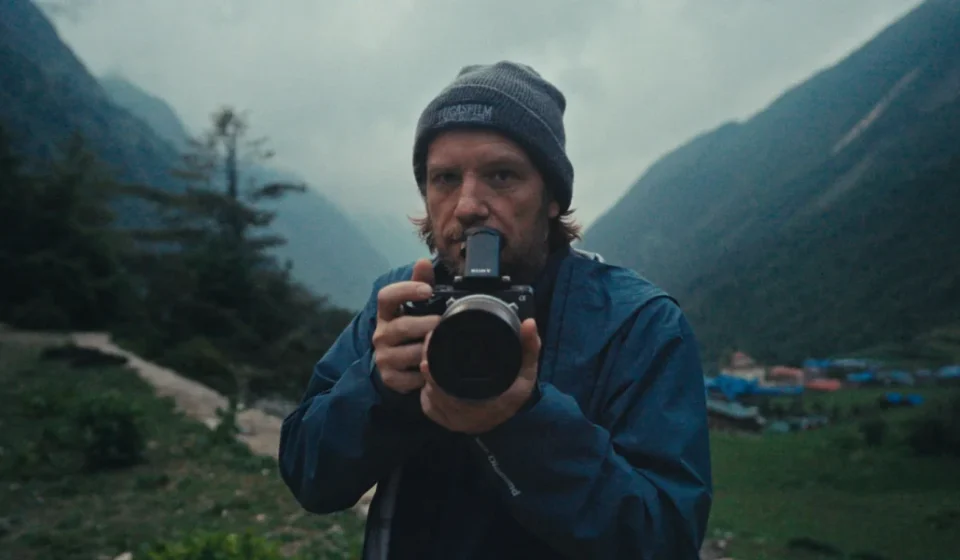
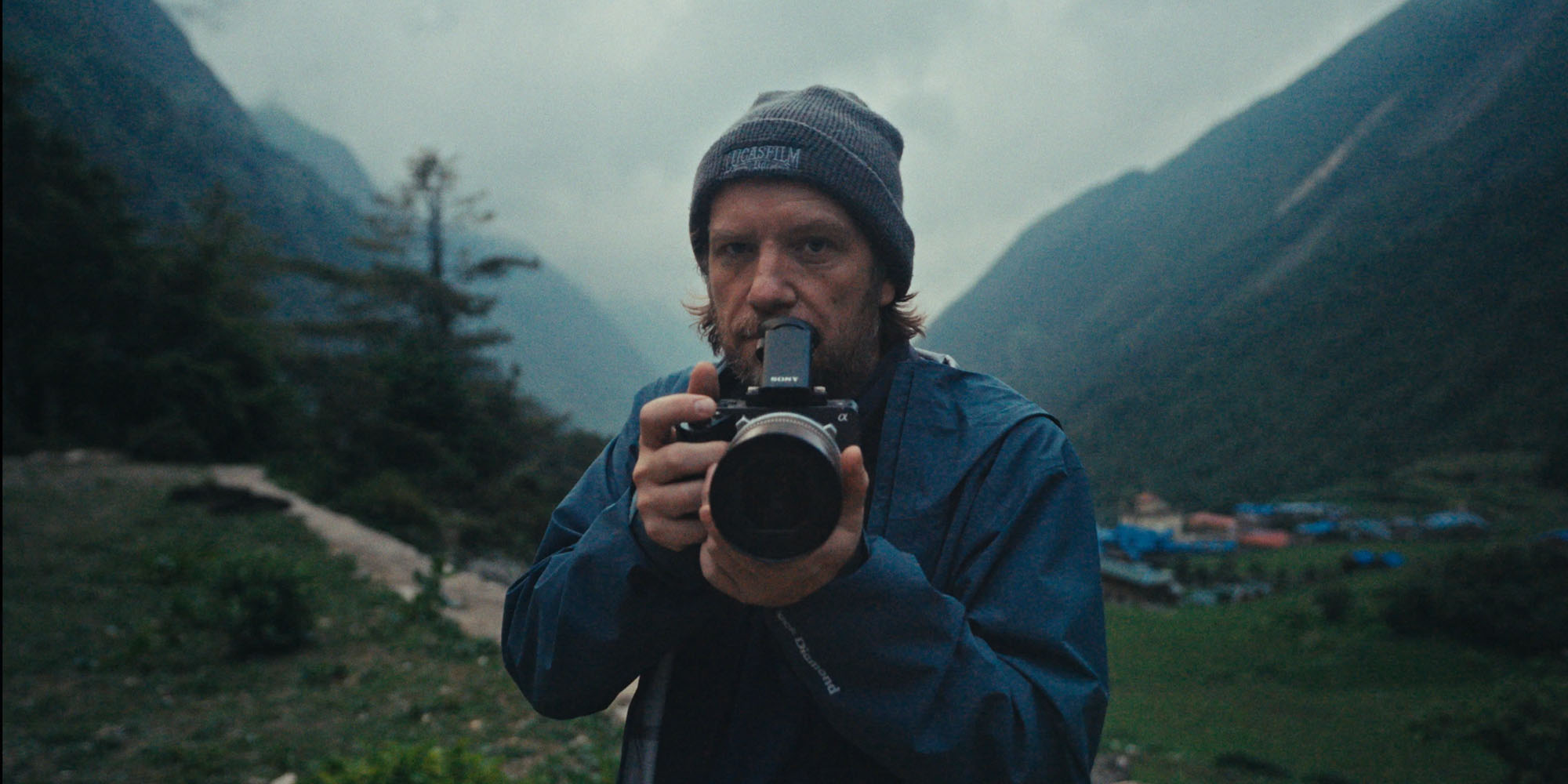
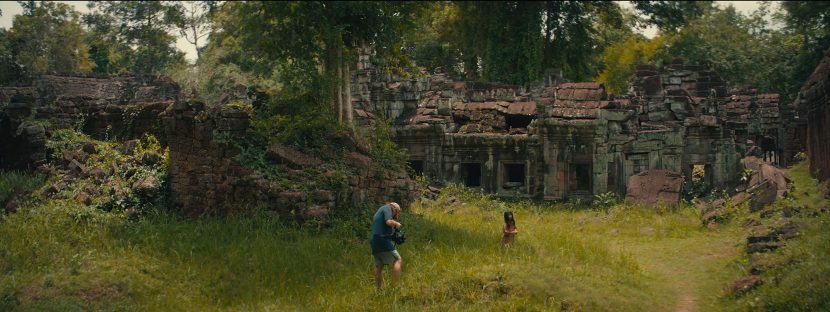
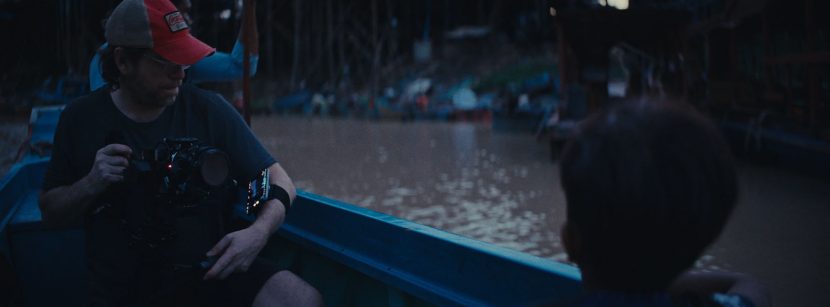
To prove the camera’s capabilities, Sony tapped Gareth Edwards—the visionary director behind The Creator, Rogue One: A Star Wars Story, and the upcoming Jurassic World: Rebirth—to field-test the unit. Edwards, known for his signature "guerrilla" style of filmmaking, took the FX5 on a grueling week-long trek through Cambodia, Thailand, and Nepal. The result is a testament to the camera’s potential: a production that captured world-class imagery while maintaining the footprint of a casual tourist.
The Technical Core: A New Paradigm for Small-Scale Production
At the heart of the FX5 lies a newly developed, fully stacked Exmor RS CMOS full-frame sensor. This is paired with the latest high-speed BIONZ XR2 processing engine and a dedicated AI processing unit, allowing for a level of performance previously reserved for bulkier, more complex rigs.
The camera offers a versatile suite of recording options: 5K at up to 60 fps, 4K at up to 120 fps, and Full HD at 240 fps. Perhaps most impressively, it delivers over 15 stops of dynamic range in S-Log3, providing filmmakers with the latitude necessary for high-contrast environments. For the first time in the FX series, the FX5 supports internal 16-bit scene-linear X-OCN recording, alongside more storage-efficient C1 and C2 variants.
Furthermore, the introduction of 3:2 full-sensor Open Gate recording allows creators to leverage the entire surface of the sensor. This is a game-changer for those utilizing anamorphic lenses, as the camera includes built-in de-squeeze functionality for 1.3x, 1.5x, 1.6x, 1.8x, and 2x optics.
A Chronology of the Field Test
The testing process was designed to push the hardware to its limits. Over the course of seven days, Edwards and his lean team navigated diverse environments ranging from sweltering 35°C urban centers to the sub-zero temperatures of Himalayan villages.
The Setup
Edwards configured the FX5 with a vintage 2x Japanese anamorphic lens and a lightweight gimbal. By utilizing internal X-OCN, he eliminated the need for external RAW recorders, which significantly reduced the weight and complexity of his rig. Instead of a traditional field monitor, Edwards utilized an iPhone as a wireless viewfinder, mounted via MagSafe to the gimbal or worn on his wrist.
The Execution
The team operated with minimal gear: three bags total—one for the camera, one for a compact dolly/slider, and one for accessories. This "non-intrusive" approach allowed them to capture intimate, authentic moments, such as a spontaneous Buddhist ceremony in a mountain monastery. By appearing as a tourist rather than a film crew, Edwards was able to gain access to locations and subjects that would typically require weeks of permitting and heavy production overhead.
Supporting Data and Performance Metrics
Sony has engineered the FX5 to thrive in low-light conditions, a critical requirement for run-and-gun filmmakers. The camera features three Base ISO settings—800, 4000, and 12,800. According to Edwards, the 12,800 setting was a revelation. "If I could see it with my eye, I knew the camera could see it," he remarked, noting that the image quality at this high sensitivity was remarkably clean, marking a significant improvement over the performance of the acclaimed FX3.
The inclusion of an active cooling system—housed in a separate air chamber to protect the electronics—ensures sustained recording in extreme climates. The stabilization system has also been overhauled, with Sony claiming twice the roll-correction range of previous iterations. Additionally, the camera features advanced AI-assisted autofocus that utilizes human pose estimation, allowing the camera to maintain focus on subjects even in complex or low-light scenarios.
Official Perspectives: Gareth Edwards on "Guerrilla Cinema"
For Gareth Edwards, the FX5 is not just a tool; it is an enabler of creative freedom. Speaking on the device, he stated, "Guerrilla filmmaking just went to the next level. The FX5 is the run-and-gun cinema camera to beat."
Edwards emphasized that his best work often happens when he is unencumbered by a traditional, massive crew. "I really don’t want to look like I’m making a movie," he explained. "I want to look like I’m just passing through. That’s when you get the really naturalistic behavior."
He also highlighted the emotional weight of the tool. "Sometimes, I’ve felt like there are little moments in the middle of a shot where you’re holding the camera, and you think to yourself, a year from now, this is going to get a major theatrical release… It gives you such a buzz."
Implications for the Industry
The release of the FX5 signals a fundamental change in the economics and logistics of film production. By packing high-end cinema capabilities into a device that can be powered via a gimbal handle, Sony is removing the technical barriers that have historically forced filmmakers to choose between image quality and mobility.
Workflow Streamlining
The integration of the "Monitor & Control 3.0" application allows for seamless wireless operation, while upcoming updates to "Catalyst Prepare" in August 2026 will further unify the post-production workflow. By moving toward a more self-contained system, Sony is allowing creators to spend less time managing cables and power bricks, and more time focusing on the shot.
Future-Proofing
Sony has demonstrated a commitment to the platform’s longevity by outlining a major firmware roadmap. A version 2.0 update is already planned for August 2027, which promises to add X-OCN high-frame-rate recording at 240 fps, XAVC S-I Open Gate recording, and a dedicated vertical-shooting interface. This long-term support model suggests that Sony views the FX5 as a foundational pillar for the next generation of filmmakers.
Conclusion
The Sony FX5 is more than a mere iterative update; it is a manifestation of a specific philosophy: that the most compelling stories are often found in the most inaccessible places, and that the best technology is that which disappears entirely. For the independent filmmaker, the travel documentarian, or the director looking to maintain a "small footprint," the FX5 offers an unprecedented combination of power and portability.
As production models continue to evolve, the ability to "hide in plain sight" while capturing 5K 16-bit RAW imagery will undoubtedly become a competitive advantage. With the FX5, Sony has provided the keys to that kingdom, proving that the TARDIS-like nature of modern digital cinema—being much larger on the inside than it appears on the outside—is no longer a fantasy, but a standard-issue reality.
The FX5 is scheduled for release in early August 2026, with an Australian body-only price point of A$7,849, marking a premium yet accessible entry point into the high-end Cinema Line ecosystem.