
Introduction: The Long, Strange Trip of the American Middle Class
If one were to craft a cynical definition of the 1960s counter-culture, it might be described as five years of middle-class youth engaging in a peculiar form of "slumming." While the era was undoubtedly defined by genuine political upheaval, civil rights struggles, and an authentic search for spiritual transcendence, there existed a significant undercurrent of economic security. The "dropouts" of the Summer of Love were often those who could afford to drop back in whenever the experiment grew too cold or too hungry. This paradox—protest fueled by parental safety nets and the sale of designer psychedelic candles—remains the bedrock of a specific American subculture.
Decades later, this phenomenon has not vanished; it has simply evolved. Mischa Richter’s new documentary, Summer Tour, serves as a sprawling, atmospheric window into the contemporary manifestation of this legacy. The film follows the "Deadheads"—the nomadic devotees of the Grateful Dead—as they navigate the 2023 tour of Dead & Company. Through Richter’s lens, we see that the "blissed-out" wanderer is no longer a relic of the past but a mantle taken up by a new generation of "Zoomers" who are cosplaying a revolution their grandparents started.
Main Facts: The Documentary and the "Zoomer" Deadhead
Summer Tour, produced in part by indie icon Chloë Sevigny, is less a traditional concert film and more a sociological observation of the 2023 Dead & Company tour. This tour was marketed as the "final" outing for the group, which featured core remnants of the original Grateful Dead alongside newer additions like John Mayer. The film centers its narrative—or lack thereof—on the third generation of Deadheads, specifically focusing on a young couple: Jeremiah "Jerry" Pierce and Annabelle "Annie" Dunne.
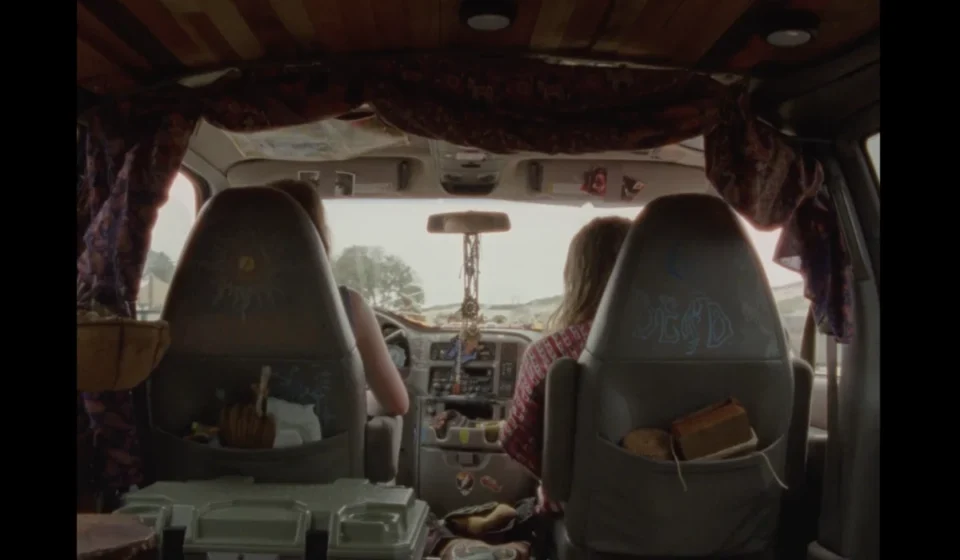
In their early-to-mid-twenties, Jerry and Annie represent the modern face of the movement. They travel across the United States in a van meticulously decorated with macramé and potted plants, creating a mobile domesticity that mirrors the aesthetic of a high-end Pinterest board. Their appearance is the "quintessential" Deadhead uniform: long, sun-bleached hair, tie-dye shirts, peasant dresses, nose rings, and the badge of honor that is dirty, bare feet.
The documentary suggests that for this generation, "hanging out" has been elevated to a sacred mission. They seek something tribal and ancient, yet they do so within a framework of comfort. Jerry, a long-haired Cheshire cat of a young man, hails from upstate New York, where his parents live in a large, well-appointed home. His father is a police officer, part of a family lineage with military ties stretching back to the Civil War. Jerry does not rebel against this tradition in the classic sense; he embraces his parents, acknowledging that their "traditional" lives provide the financial and emotional stability that allows him to roam.
Chronology: Three Generations of the Deadhead Diaspora
To understand Summer Tour, one must understand the three distinct waves of fandom that have sustained the Grateful Dead’s legacy for over half a century:
1. The Originals (1965–1970s)
The first generation consisted of the Haight-Ashbury pioneers—those who were present for the Acid Tests and the birth of the San Francisco sound. For them, following the Dead was a radical act of social defiance, albeit one often subsidized by the post-war economic boom.
2. The Inheritors (1980s–1995)
The second generation emerged in the 1980s and early 90s. This was a "tidal wave" of fandom that saw the Dead transition from a cult act to a stadium-filling juggernaut. This era was characterized by a more self-conscious "bliss," ending abruptly with the death of Jerry Garcia in 1995. This group transformed the parking lot scene into a viable, if informal, economy.
3. The Zoomer Renaissance (2015–Present)
The third generation, captured in Richter’s film, consists of those who discovered the music through parents or digital archives. For these fans, the 2023 Dead & Company tour represented a final chance to touch the hem of the garment. With the passing of key figures and the eventual conclusion of large-scale touring, this generation is seen as the curators of a dying museum, desperately trying to keep the "vibe" alive through modern nomadic living.
Supporting Data: The Economics of Shakedown Street
The "Summer Tour" is not merely a musical pilgrimage; it is a traveling marketplace. The documentary highlights "Shakedown Street," the open-air bazaar that materializes in stadium parking lots. Named after the Dead’s 1978 album, this space is where the "community" sustains itself.
In this micro-economy, fans sell:
- Vegan grilled-cheese sandwiches: A staple of the lot diet.
- Hand-made apparel: Tie-dye, crochet, and upcycled clothing.
- Art and Crafts: Wire-wrapped crystals and psychedelic prints.
However, the documentary subtly points to the inherent privilege of this marketplace. Unlike the genuine itinerant workers of the Great Depression, the "shaggy Zoomers" of Summer Tour are often on a "permanent vacation." The film suggests that this lifestyle is a form of "Spring Break that never ends," supported by the very "traditional paychecks" the fans claim to have moved beyond. The "community" is a clan of fellow travelers united by the ability to opt out of the 9-to-5 grind, a choice that remains inaccessible to those without a safety net.
Official Responses and Critical Reception
The critical reception of Summer Tour has been as divided as the culture it depicts. While some praise Richter for capturing the "rambling aura" of the scene, others criticize the film’s lack of a "dramatic spine."
The Filmmaker’s Lens
Mischa Richter deliberately chose a non-linear, impressionistic style. The film mirrors the experience of a Deadhead: a few minutes of conversation about "freedom" and "community," followed by long interludes of in-concert footage. These musical breaks highlight the two primary modes of Deadhead expression: swaying and twirling. By avoiding a rigid narrative, Richter attempts to immerse the viewer in the "stoner aphorisms" and "good vibes" that define the tour.
The Critique of Structure
Journalists and critics have noted that the film is a "jellyfish of a documentary." It offers no larger vantage point on who these people are when the music stops. There is no investigation into the complexities of their lives outside the van. Critics argue that this lack of structure is "telling," suggesting that if the filmmaker looked too closely at the "flaked-out festival of privilege," the entire beatific illusion might crumble. The film has been described as a "Midsommar II" without the horror—a tribal, ecstatic gathering that feels increasingly disconnected from the harsh realities of the 21st century.
Implications: The Future of the Counter-Culture Brand
The conclusion of the 2023 tour and the aging of the remaining original members (notably Bob Weir and Phil Lesh) signal a definitive end to the "Grateful Dead" as a living, touring entity. The implications for the subculture are profound.
The Commercialization of "Cool"
The "designer psychedelic candles" mentioned in the film’s critique have now become a multi-million dollar industry. The "Deadhead" aesthetic is now a brand, sold in high-end boutiques and fast-fashion outlets alike. Summer Tour illustrates how a movement once rooted in "dropping out" has been successfully integrated into the consumerist machine. The "freedom" Jerry and Annie seek is increasingly curated and performative.
The End of the Nomadic Dream
As the "nail is put in the coffin" of the original touring era, the third generation faces a crossroads. Without the central sun of the live show to orbit, will the community disperse? Or will it evolve into a purely digital or boutique experience? The documentary suggests that the "all-American stoner kid" is a permanent fixture of the national psyche, but the specific "Deadhead" variant may soon become a historical reenactment rather than a living rebellion.
Final Thoughts: A Festival of Privilege
Ultimately, Summer Tour portrays the Deadhead scene as a "sprawling, flaked-out festival of privilege." It is a testament to the enduring American desire to find something "tribal, primitive, and sacred" in a world that feels increasingly sterile. However, the film leaves the viewer with a lingering question: Is this a genuine alternative lifestyle, or is it merely the most expensive, longest-running costume party in history? As the credits roll on the 2023 tour, the "blissed-out" smiles of Jerry and Annie suggest that for those who can afford the ticket, the answer doesn’t really matter. The music, and the privilege to hear it, remains "all good."