The Silence of the Satluj: Censorship, Memory, and the Cinematic Battle Over Punjab’s Disappeared

In the landscape of contemporary Indian cinema, few films have carried as much political weight or faced as much institutional resistance as Honey Trehan’s Satluj. Originally titled Punjab ’95, the film serves as a biographical account of Jaswant Singh Khalra, a bank manager turned human rights activist who uncovered a systematic campaign of extrajudicial killings by the Punjab police during the 1990s. While the film is a poignant piece of storytelling, its journey from production to the screen—and its subsequent disappearance from digital platforms—has become a meta-narrative on the suppression of truth in the modern age.
Satluj is more than a biopic; it is a visceral confrontation with a dark chapter of Indian history. Despite its "hagiographic hues," as critics have noted, the film’s power lies in its refusal to look away from the "casual cruelty of the state." However, the very forces the film seeks to expose appear to have orchestrated its marginalization, leading to a saga of censorship that spans international film festivals, federal censor boards, and global streaming giants.
Main Facts: A Narrative of Discovery and Disappearance
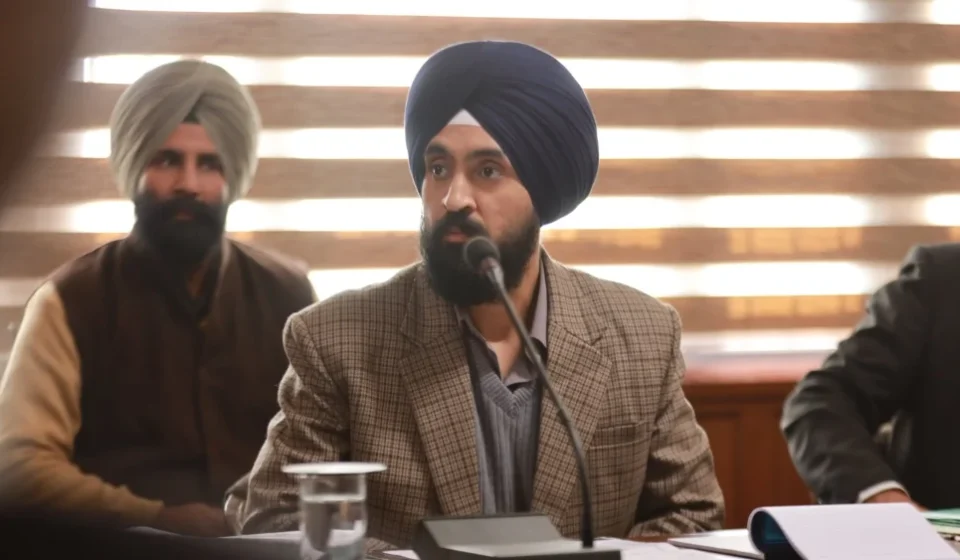
The core of Satluj revolves around the life of Jaswant Singh Khalra, portrayed by the global Punjabi icon Diljit Dosanjh. The film begins with a somber prologue: Punjab police officers engaging in mundane, casual conversations before executing prisoners by moonlight. These acts are framed not as extraordinary events, but as routine procedures under the guise of "curbing terror."
The protagonist, Khalra, is initially an ordinary man—a bank manager with a "kindly demeanor" who is thrust into a nightmare when an elderly aunt’s son goes missing. His search for one individual leads him to a labyrinth of state-sponsored violence. He discovers a "harrowing paper trail" revealing that thousands of Sikhs, officially listed as "missing" or "absconding" by the police, had been secretly cremated as "unidentified" bodies.
Key Elements of the Film:
- Director: Honey Trehan, known for his meticulous attention to atmospheric detail.
- Lead Performance: Diljit Dosanjh, whose transition from a high-energy pop star to an "ego-less saint" has been hailed as a career-defining performance.
- Themes: The dichotomy of Sikh duty (Seva) versus state authoritarianism; the weaponization of labels like "terrorist" to justify dehumanization.
- Visual Style: Cinematographer K. U. Mohanan utilizes "shadowy façades" and "intimate textures" to create a reality that feels both spiritual and claustrophobic.
Chronology: The Turbulent Path to the Public
The timeline of Satluj is a testament to the challenges of telling "uncomfortable" histories in India’s current political climate.
- Late 2022 – Early 2023: Production concludes on Punjab ’95. The film is highly anticipated due to the involvement of producer Ronnie Screwvala and star Diljit Dosanjh.
- August 2023: The film is officially selected for the Toronto International Film Festival (TIFF). However, in a move that shocked the industry, it was abruptly removed from the lineup without a clear explanation from the festival organizers or the producers.
- Late 2023 – Early 2024: The film enters a protracted battle with the Central Board of Film Certification (CBFC) in India. Reports indicate the board demanded over 120 cuts, including the removal of specific geographical references and the renaming of the film from Punjab ’95 to Satluj (referencing the river that became a graveyard for the disappeared).
- July 3, 2024: After nearly a year of delays, the film is quietly released on the Indian streaming platform Zee5.
- July 5, 2024: Within 48 hours, the film is pulled from the platform for viewers within India.
- July 10, 2024: The film is removed from Zee5’s international catalog, effectively erasing its legal digital footprint worldwide.
Supporting Data: The Scale of the History
The "pedagogy" of Satluj is rooted in grim historical data. The real Jaswant Singh Khalra’s investigation focused primarily on the Amritsar, Majitha, and Tarn Taran districts. His findings were staggering:
- The Cremation Statistics: Khalra uncovered records from municipal cremation grounds showing that at least 2,000 "unidentified" bodies had been cremated by the police in just one district.
- The Human Toll: Human rights organizations later estimated that between 1984 and 1995, as many as 25,000 individuals were subjected to enforced disappearances and extrajudicial executions in Punjab.
- The Fate of the Activist: In September 1995, Jaswant Singh Khalra himself was abducted by the police while washing his car outside his home. He was never seen again. In 2005, six police officers were convicted of his murder.
The film meticulously recreates this "illicit machinery." By focusing on the "mass cremations of people still marked ‘missing’," Trehan transforms a legalistic investigation into a "wrenching emotional impact" that resonates with the audience’s sense of justice.
Official Responses and the Censor’s Scissors
The Indian government and the CBFC have maintained a stance that the film, in its original form, could potentially incite communal tensions or "misrepresent" the actions of the security forces during a period of active insurgency.
The CBFC Mandates:
The demand for 120+ cuts is almost unprecedented for a major feature film. The censors targeted:
- References to specific political figures and police officials.
- The use of the word "Punjab" in the title, suggesting an attempt to de-link the atrocities from a specific state identity.
- Scenes depicting the brutality of the interrogation centers.
The Streaming Paradox:
Zee5 has offered no official statement regarding the sudden removal of the film. Industry insiders suggest that "informal pressure" from government agencies often dictates the availability of sensitive content on OTT (Over-The-Top) platforms, which currently operate in a regulatory gray zone in India. This "secondary tale of fascistic process," as described by critics, mirrors the very suppression the film depicts.
The Filmmakers’ Stance:
Honey Trehan has largely remained silent during the most intense periods of censorship, likely to ensure the film saw the light of day in some form. However, the version that briefly appeared on Zee5 is described as an "uncompromised vision despite its bloat," suggesting that the filmmakers fought to keep the emotional and moral core of Khalra’s story intact.
Implications: The Medium as the Message
The saga of Satluj has profound implications for the future of artistic expression and historical memory in India.
1. The "Streisand Effect" and Rogue Screenings
By attempting to bury the film, authorities have inadvertently heightened its significance. The prompt notes that "rogue community screenings" have popped up across India and the diaspora since the film’s removal from Zee5. For many, the act of watching Satluj has become a form of protest—an "engagement akin to searching through records long-buried."
2. The Sanitization of History
The film’s "passing mention" of the Khalistan separatist movement is a strategic choice. By focusing on the universal human rights violations rather than the complex political ideologies of the era, Trehan makes the rebuttal to "government overreach more palatable to mass audiences." However, the film also highlights how labels like "terrorist" and "insurgent" are used as "de facto death sentences," a critique that remains highly relevant in contemporary global discourse.
3. Diljit Dosanjh’s Cultural Pivot
For Diljit Dosanjh, Satluj represents a departure from his usual "brand" of lighthearted entertainment. His portrayal of Khalra as a "moral conscience" cements his status not just as a performer, but as a guardian of Punjabi identity. The film frames his presence as "liturgical," suggesting that for the Sikh community, this is not just a movie, but a sacred act of remembrance.
4. The Digital Frontier of Censorship
The removal of Satluj from a global platform like Zee5 highlights the vulnerability of digital media. Unlike physical film reels of the past, digital content can be deleted with a single command, making "truth" more fragile than ever. The film’s mission statement—an exposé of power and its suppression of truth—has been validated by the very attempts to silence it.
In conclusion, Satluj stands as a monumental, if flawed, achievement. At 164 minutes, it may suffer from "speed bumps" and repetitive "didactic approaches," but its existence is a victory over enforced amnesia. As long as the "terrible secrets" of the Satluj river remain part of the collective consciousness, the film will continue to serve as a "tremendous weight" against the scales of injustice. Through the lens of Honey Trehan and the performance of Diljit Dosanjh, Jaswant Singh Khalra’s voice continues to speak truth to power, even from the silence of a deleted streaming link.