From "Redline" to Global Phenomenon: Jordana Brewster Reflects on 25 Years of The Fast and the Furious

It has been a quarter-century since the world was first introduced to the high-octane streets of Los Angeles, where illegal drag racing and deep-seated family loyalty collided in a mid-budget Universal project then titled Redline. Today, the film—rebranded as The Fast and the Furious—stands as the foundation of one of the most commercially successful and culturally enduring franchises in cinematic history. For Jordana Brewster, who stepped into the role of Mia Toretto while still a sophomore at Yale, the journey from an uncertain audition to a Cannes-certified classic remains a surreal, defining chapter of her life and career.
The Audition: Finding the "Patrician" Edge
In the late 1990s, the landscape for young actors was vastly different. When Brewster first auditioned for director Rob Cohen, she was a collegiate student attempting to balance academia with the volatile world of Hollywood casting. The project was viewed by studio executives as a modest street-racing flick, not the billion-dollar titan it would eventually become.
However, the casting process was far from straightforward. Cohen, while intrigued by Brewster’s presence, harbored a specific concern: she was perhaps too refined for the grit of the Toretto family’s world.
"My agent at the time, Peter Levine, said, ‘They want to rough you up a little bit,’" Brewster recalled in an interview with IndieWire. "Rob was concerned that you have a patrician air."

To overcome this, Cohen took a leap of faith, tasking the young actress with studying the raw, emotional performances of Anna Magnani to ground her character. This was followed by a baptism by fire in the form of a racing boot camp in Las Vegas. For a young actor who had only recently obtained her driver’s license, the experience was profoundly intimidating. "I wanted to impress everyone, but I felt so out of my league," she admitted. "I remember having a table read and feeling like a fish out of water."
A Chronology of a Franchise
The evolution of the Fast franchise is a study in perseverance and strategic reinvention. When The Fast and the Furious premiered in 2001, it relied on practical effects and a character-driven narrative that anchored its high-stakes car chases in human stakes.
The Early Years and Unexpected Success
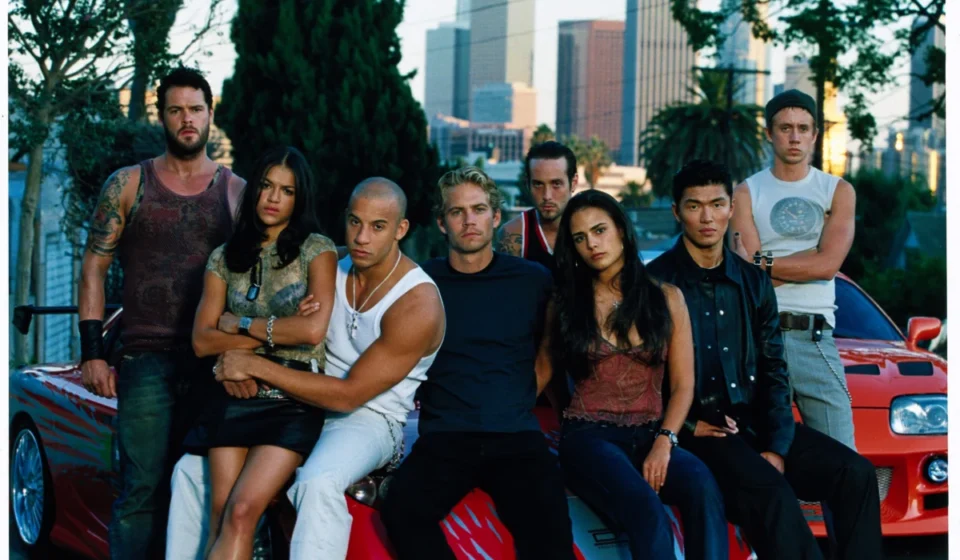
The initial film introduced audiences to the Toretto siblings—Dom (Vin Diesel) and Mia (Brewster)—and their precarious relationship with undercover FBI agent Brian O’Conner (Paul Walker). The film’s success was not a foregone conclusion. Following the commercial disappointment of her feature debut, The Faculty, Brewster was cautious about her expectations. The weekend The Fast and the Furious opened at #1, however, marked a "seminal moment" that changed her life irrevocably.
The Wilderness Years
The franchise’s trajectory was not linear. When the sequel, 2 Fast 2 Furious, moved forward under director John Singleton, the original cast was notably absent. Brewster recalls this period with a mix of professional disappointment and acceptance. "I just thought, ‘Oh, that’s a bummer. I guess they’re going in a different direction,’" she noted.

The third installment, Tokyo Drift, functioned as a soft reboot, stripping away the core ensemble entirely, save for a fleeting cameo by Vin Diesel. This moment in the chronology proved pivotal; it allowed the series to find its international footing, eventually paving the way for the return of the original cast in the 2009 film Fast & Furious.
The Justin Lin Renaissance
The franchise truly hit its stride with the arrival of director Justin Lin, a filmmaker with an indie sensibility who understood that the heart of the series lay in the chemistry of its characters. "I loved the idea of Justin coming from an indie background and restarting the franchise," Brewster said. The subsequent release of the fifth film, which saw the crew move to Brazil, signaled the moment the franchise truly tapped into a massive, worldwide audience, turning the series into a global cultural export.
Supporting Data: The Anatomy of Chemistry
A key, often overlooked, element of the franchise’s success is the authentic chemistry between its leads. The relationship between Brewster’s Mia and Walker’s Brian was not a manufactured romance but one that evolved through genuine off-screen friendship.
Brewster’s reflections on her late co-star are poignant. "I was dating someone, and he was dating someone, and I found him physically beautiful, but it was almost an unattainable beauty," she explained. "I didn’t feel there was off-screen chemistry, initially. But he was such a warm, wonderful, chill guy that he made me extremely comfortable."

As the years passed and the cast grew together, the boundary between the characters and the actors blurred. "The chemistry grew as the movies progressed and we talked about life and having kids," she added. The tragic loss of Walker in 2013 remains a shadow over the franchise, yet his influence remains the emotional anchor for both the fans and the cast.
Official Perspectives: Crafting a "360-Degree" World
When asked why the first film resonates so strongly 25 years later, Brewster points to the depth of the writing. "I think the movie worked because everyone had a backstory," she noted. "You understand where each person’s coming from and what’s motivating them. There’s a 360-degree view."
This commitment to character, combined with Rob Cohen’s "annoyingly thorough" insistence on authenticity, created a blueprint that modern blockbusters often struggle to replicate. At a recent 25th-anniversary screening at the Cannes Film Festival, Brewster found herself impressed by the structural integrity of the first film, noting that Cohen gave every cast member their "moment in the sun."
Implications: The Legacy and the Future
As the franchise looks toward the production of its 11th installment, the scale has expanded exponentially from the street-racing origins of 2001. However, the impact of that first film continues to ripple through the industry.

A Cultural Touchstone
The transition of The Fast and the Furious from a "mid-budget flick" to a piece of cinema canonized at Cannes is a testament to the unpredictable nature of the film business. For Brewster, the legacy is complex. She is often reminded of the film’s longevity by younger fans. "Recently this 20-year-old came up to me and said, ‘You were my crush when I was growing up,’" she recounted. "And I was like, ‘Oh God, we’re at that level now?’ Because I still see myself as a 25-year-old."
Looking Ahead
While production on the next chapter has yet to commence, the discussions are ongoing. Brewster hopes to be on set by early next year, marking yet another milestone in a journey that has lasted more than half her life.
Ultimately, the legacy of The Fast and the Furious is not just in the box office receipts or the gravity-defying stunts. It is in the endurance of the Toretto family and the actors who brought them to life. As Brewster prepares to revisit the role that defined her career, she does so with a sense of gratitude for the "wonderful thing" that has become her life’s work.
The Fast and the Furious returns to theaters for a week-long 25th-anniversary engagement beginning August 21, inviting a new generation to witness the start of a phenomenon that, against all odds, changed Hollywood forever.