The Sound of Silence: Rebecca Hall and Janicza Bravo Deconstruct the Unsettling Reality of ‘The Listeners’

Editor’s Note: The following feature contains major spoilers for the finale of the Starz limited series "The Listeners."
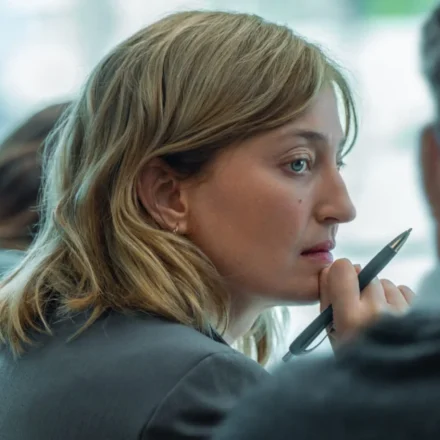
In the age of hyper-connectivity, few things are as isolating as an experience that exists only within the confines of one’s own skull. That is the haunting, visceral premise of The Listeners, the recently concluded Starz limited series that has captivated audiences with its blend of psychological horror and deeply human drama. Starring Rebecca Hall as Claire, a woman whose life begins to disintegrate when she starts hearing a persistent, inexplicable buzzing sound, the series serves as a chilling examination of gaslighting, societal alienation, and the desperate, often destructive human need for connection.
While the series—based on the novel by Jordan Tannahill—functions as a slow-burn horror for the audience, behind the scenes, it was a profound creative union between Hall and director Janicza Bravo. As the series reaches its conclusion, the creative team is finally pulling back the curtain on the show’s ambiguous ending, the narrative function of its "taboo" central relationship, and the real-world anxieties that fueled its creation.
The Anatomy of an Unravelling: A Chronology of the Buzz
The narrative trajectory of The Listeners is one of slow-motion destruction. Claire, an educator, finds her world turned upside down when a low-frequency hum—audible to no one else—begins to dominate her existence. The isolation of this symptom is absolute until she discovers that a student, Kyle (played by Ollie West), hears the exact same frequency.

This discovery acts as the catalyst for the show’s primary conflict. As the pair begins to bond over their shared, isolating condition, the optics of their relationship trigger a catastrophic fallout. Because Kyle is her student, the professional and social boundaries are perceived as shattered by those around them, including Claire’s own family. The series meticulously maps out the descent: from the first moment of recognition in a classroom to the inevitable, destructive suspicion from outsiders, leading to a climax that leaves the audience with more questions than answers.
The Creative Bond: A "Ride or Die" Partnership
For Rebecca Hall, the decision to sign on to The Listeners was multifaceted. Lacking a finished script at the time of her hiring, she turned to Tannahill’s source material and the prospect of collaborating with Janicza Bravo.
"I found it to be an intensely, silently political piece of work," Hall remarked during a recent interview. "It’s about so many different things, and it unlocked this need we all have to connect."
The "other big piece" of the puzzle was the directorial vision of Bravo. Hall’s admiration for the director was well-established, rooted in a mutual acquaintance with actor Tessa Thompson and a deep appreciation for Bravo’s previous work, most notably the visceral, kinetic Zola. "She has true vision," Hall said. "I would really sort of follow her to the ends of the earth and do anything she’d asked me to do. I genuinely would ride or die."

Bravo returned the sentiment with equal intensity. "I’m just so in love with her," the director said of Hall. "Releasing the show and finding a home in the U.S. was not an easy feat. We made the show inside of the strike, and then we didn’t sell our show because there was a strike. Regardless of how it’s received, I feel incredibly proud of the work. I am so grateful for the relationship that came out of it… I feel forever tethered to her."
The "Twinship" Effect: Visual Metaphors and Casting Choices
One of the most striking visual elements of The Listeners is the uncanny physical resemblance between Hall and West. During the audition process, the connection was so immediate that Bravo realized they shared a distinct, almost genetic similarity.
"I remember auditioning with him on Zoom," Hall recalled, "and Janicza was like, ‘Your profiles, you kind of look exactly the same. You have the same bone structure.’"
Bravo did not shy away from this observation; she leaned into it. The characters’ "twinship" was emphasized through deliberate costume and hair choices, including having the actors sport identical haircuts. This visual mirroring served to heighten the sense that Claire and Kyle were two sides of the same coin, further isolating them from the "normal" world that could not hear the sound or understand their connection.

Bravo playfully described the dynamic—and the social perception of their relationship—as "the dark side of perimenopause." She noted that because society views their bond as inherently suspect, the tragedy of the show is that their intimacy is deemed a "midlife crisis" rather than the profound, shared survival experience that it actually is.
Decoding the Finale: Ambiguity and Real-World Inspiration
The series finale has sparked intense debate among viewers, particularly regarding the nature of the "sound" and the tragic fate of Kyle. When asked to clarify the ending, both Hall and Bravo leaned into the ambiguity of the storytelling.
"I think that the ending is most likely not satisfying—at least it certainly wasn’t for me," Bravo admitted. "I don’t mean satisfying in terms of the end of a show, I mean her end, where does it end for that character… I don’t know that any of the characters in this world walked away feeling totally satisfied."
Hall offers a more philosophical take, suggesting that the beauty of the show lies in its dual nature. "I think it’s one of those that’s actually ambiguous. There is a real-world answer to this [sound], but that doesn’t stop all the other things being true as well… I think that there is still room for both things to be real."

Regarding the origin of the sound, Bravo clarified that while the show eventually frames it as potentially "industrial," the inspiration is grounded in documented phenomena. "There are these sounds that have appeared in certain towns that have driven people mad," she noted, citing reports in the UK, the U.S., and Canada. "There’s maybe one in Ottawa, which is what I believe inspired Jordan to write the book."
Implications: The Heartbreak of Isolation
The most gutting element of the finale is the loss of Kyle, a turn of events that serves as the final, brutal punctuation mark on Claire’s journey. For both the characters and the audience, the death is a devastating blow.
"It’s heartbreaking," Hall said of the character’s trajectory. "His whole trajectory is very heartbreaking."
Bravo echoed this, emphasizing the profound loneliness that remains once the only person who understood the truth is gone. "She lost her only friend in the world, and it wasn’t supposed to go like that."

The implications of The Listeners extend far beyond its central mystery. It acts as a mirror to modern anxieties regarding our inability to hear one another—both literally and figuratively. By focusing on the "sound" as a catalyst for societal collapse, the series forces viewers to confront how quickly we are willing to ostracize those whose lived experiences deviate from the accepted norm.
A Legacy of Collaboration
While the narrative of The Listeners ends in tragedy, the professional bond forged between the cast and crew suggests a bright future. Both Hall and Bravo have expressed a desire to continue working together.
As the industry reflects on this limited series, it is clear that the project’s strength lies in its refusal to offer easy answers. It challenges the audience to sit with the discomfort of the unknown and to recognize that, sometimes, the most dangerous thing is not the sound we hear, but the silence of those who refuse to listen.
For those who have followed the series since its inception, the finale serves not as a closure, but as an invitation to re-evaluate the ways in which we define "normal" connections. As for the prospect of a reunion between Hall and West under Bravo’s direction, the chemistry is undeniable. Whether they take on a Twins remake or another high-concept drama, the collaboration is one to watch.

The Listeners finale is currently streaming, leaving audiences with a lingering, resonant hum that is likely to last long after the credits roll.