Divine Madness: Mark H. Rapaport’s ‘Godhead’ Challenges the Boundaries of Faith and Taboo

In the landscape of contemporary independent cinema, few filmmakers possess the courage to stare directly into the abyss of human trauma with as much unflinching grace as Mark H. Rapaport. Following the buzz surrounding his 2023 debut, Hippo, Rapaport returned to the Fantasia International Film Festival this year with Godhead—a sophomore feature that proves his initial promise was no fluke. Godhead is a haunting, philosophical, and aesthetically arresting meditation on the weight of religious upbringing, the stains of shame, and the desperate, often violent, human need for divine validation.
The Premise: A Spiritual Reckoning in the American South
Set against the humid, claustrophobic backdrop of the American South, the narrative of Godhead is deceptively simple yet laden with existential dread. The story follows a local priest, portrayed with weary gravitas by Al Warren, whose isolated existence is shattered by the arrival of two figures who seem to have stepped out of a fever dream.
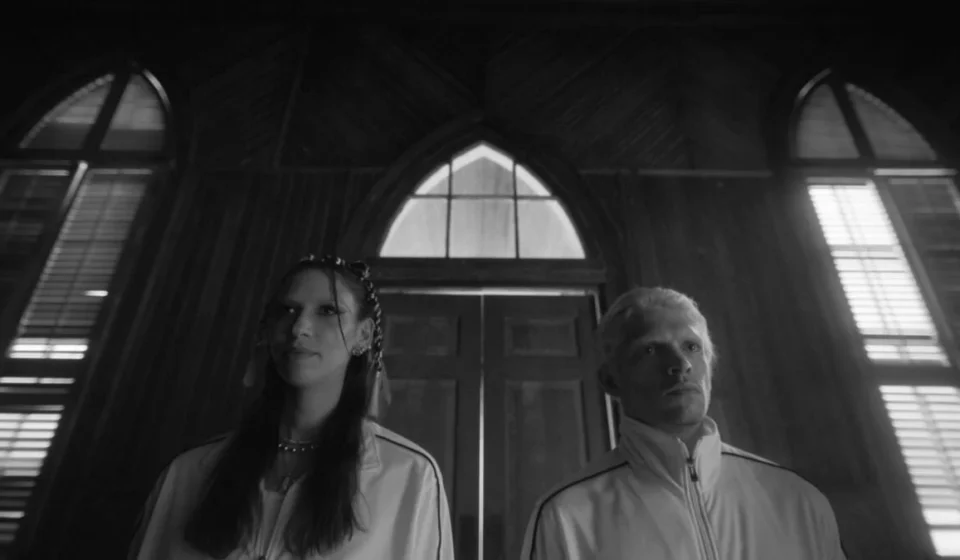
The visitors are fraternal twins, dressed in the hauntingly specific uniform of matching white tracksuits and sneakers—an aesthetic choice that evokes the chilling iconography of the Heaven’s Gate cult. Calling themselves "Firstborn" (Sarah Coffey) and "Secondborn" (Kimball Farley), the siblings present the priest with an impossible, life-altering mission. They claim that one of them is the literal Holy Spirit and that they require a third party to act as an arbiter. Their goal? To determine which twin is the true vessel of divinity before the sun rises. The "chosen" one is to be executed, effectively allowing them to ascend to Heaven and complete the "Godhead"—a concept they have marked upon their own palms in the form of a crudely drawn, desperate dove.
The priest, naturally, views this as a sick, manipulative game—a mockery of the faith he has spent his life serving. However, as the night progresses and the twins demonstrate a profound, supernatural inability to inflict violence upon one another, the priest is dragged into a spiritual reckoning that forces him to confront the dark, buried demons of his own past.
A Chronology of Artistic Evolution
To understand the impact of Godhead, one must look back to Rapaport’s emergence in the indie scene. Hippo established a specific, off-kilter voice—one that balanced the grotesque with the tender. With Godhead, Rapaport has refined this voice into something sharper and more dangerous.
The Development Phase
Rapaport’s transition from Hippo to Godhead marks a significant maturation in his thematic scope. While his debut felt like a provocative exploration of the fringes of human behavior, Godhead acts as a thesis statement on the architecture of religious trauma. The production, characterized by its intimate scale, relied heavily on the chemistry between its three leads, allowing the dialogue—often philosophical and oscillating between the mundane and the metaphysical—to drive the narrative tension.
The Festival Debut
The film’s reception at the Fantasia International Film Festival was electric. Having built a loyal following with his previous work, Rapaport was greeted by an enthusiastic crowd. The premiere served as a litmus test for the film’s controversial subject matter. By addressing taboo topics—including sexual assault, incest, and the inherent corruption of religious fanaticism—the film risked being dismissed as "provocation for provocation’s sake." However, the consensus among attendees was that Rapaport had achieved something far more profound: a work of high art that demands a visceral reaction.
Technical Brilliance: The Aesthetic of the Sublime
One cannot discuss Godhead without highlighting the masterful cinematography of William Babcock. Shot in a luminous, high-contrast black-and-white, the film avoids the "gritty" tropes often associated with indie horror, opting instead for a clean, almost transcendental visual language.
Visual Symbolism
Babcock’s camera treats the twins with a soft, angelic reverence that creates a jarring dissonance with their violent intentions. Kimball Farley, reprising his role from Hippo, is a standout. With his bleached eyebrows, fried platinum hair, and wide, unblinking eyes, he possesses a haunting screen presence. When he lunges at the priest or holds the weapon, the lighting ensures he looks like a fallen seraph rather than a common delinquent. This visual ambiguity is central to the film’s power; the viewer is constantly forced to wonder if they are witnessing a miracle or a nightmare.
![‘Godhead’ Plunges Viewers into a Stunning, Unsettling Examination of Fanaticism, Faith, and Forgiveness [Fantasia Review]](https://www.dreadcentral.com/wp-content/uploads/2026/07/GH_Still_6-1200x675.jpg)
The "Lynchian" Influence
The film begins with the grounded, earthy pacing of a Flannery O’Connor short story—steeped in regional decay and moral complexity—before shifting into a surreal, dreamlike register that fans of David Lynch’s Eraserhead will immediately recognize. It is this shift that elevates Godhead from a standard psychological thriller into a piece of existential horror.
Character Dynamics and Performance
The emotional anchor of the film is undeniably Kimball Farley. His performance is a masterclass in controlled intensity. Alongside Sarah Coffey, he creates a dynamic that is both tender and deeply uncomfortable. Their chemistry suggests a shared history that goes beyond the typical sibling bond, hinting at secrets that the film slowly, agonizingly unravels.
The audience’s reaction to these revelations is a testament to the script’s tight pacing. During the film’s second act, when the true nature of the twins’ secret is partially unveiled, the theater was filled with a mix of sharp gasps and uneasy laughter. Rapaport understands the "uncomfortable laugh" better than most directors, utilizing it to break the tension of the film’s darkest moments, only to tighten the screws immediately after.
Implications: The Theological Questioning
Beyond the performances and the cinematography, Godhead succeeds because it refuses to provide easy answers. The film is a Rorschach test for the viewer’s own relationship with faith.
The Problem of Forgiveness
Central to the narrative is the question of worthiness. Are we all, as the film suggests, capable of redemption? Or is the pursuit of divine favor merely a shroud we use to cover our most base desires? The priest’s struggle represents the universal conflict between the dogma we are taught and the reality of the human condition.
The Ambiguity of Evil
Rapaport introduces concepts that he never fully resolves, leaving the audience to grapple with the fallout long after the credits roll. As viewers left the theater, the lobby buzzed with debate. Was the beauty found in the film’s visuals a justification for the evil depicted? Can a "Godhead" exist in a world defined by trauma? These are not mere plot holes; they are intentional voids left for the audience to inhabit. The film is not a "comfort movie," but it is a "necessary" one for those who find themselves caught between the rigid structures of organized religion and the chaotic, messy reality of personal spiritual evolution.
Conclusion: A Lasting Impression
Godhead is a challenging, audacious, and profoundly moving piece of cinema. Mark H. Rapaport has moved beyond the "taboo-breaking" label and into the territory of a true auteur. He has captured the specific, localized agony of religious trauma and projected it onto a cosmic scale.
While some may find the subject matter too distressing, those willing to sit with the film’s discomfort will find themselves rewarded with a profound look at the fragility of faith. Whether the twins were truly divine messengers or simply the tragic result of a broken environment is secondary to the experience of the film itself. Godhead is a work of art that demands multiple viewings—not because it is easy to understand, but because it is impossible to forget. It serves as a reminder that even in the darkest, most twisted corners of the American South, the search for the divine remains a central, defining struggle of the human spirit.