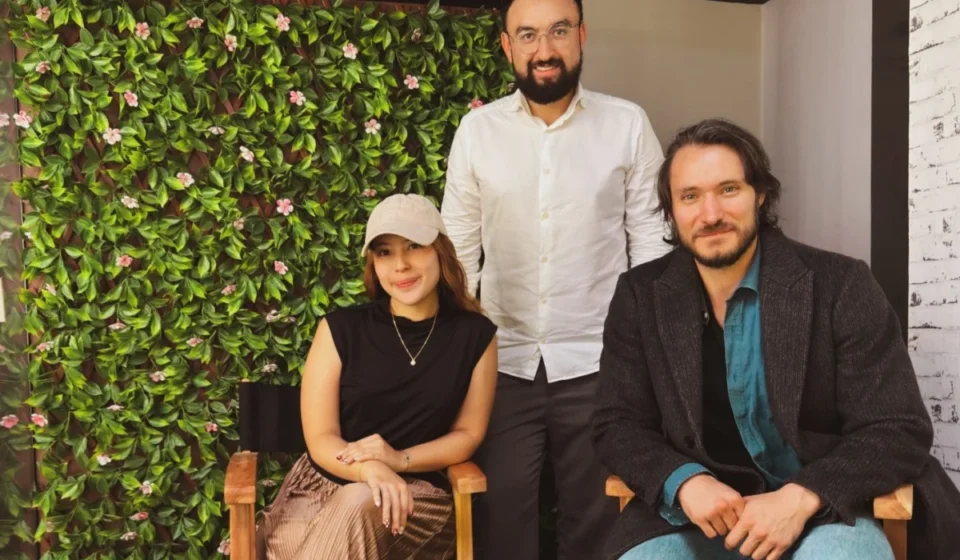

In the vast, unforgiving expanse of northern Chile’s Atacama Desert, a new cinematic force is taking shape. La Puta Vida, an ambitious international feature film, has officially commenced principal photography, marking a significant milestone in South American co-production. Directed by Chilean filmmaker Sebastián Araya Serrano, the project stands as a complex, multi-layered narrative that fuses the grit of a road movie with the tension of a thriller and the profound depth of an emotional drama.
The film stars Claudio Cataño, the acclaimed Colombian actor currently riding the wave of global recognition for his performance in Netflix’s highly anticipated adaptation of Gabriel García Márquez’s One Hundred Years of Solitude. Alongside him, the film features Germany’s Christine Neubauer—fresh from her turn in the period drama Hundswut—and celebrated Chilean actress Tamara Acosta.
A Complex Web of Production and Collaboration
La Puta Vida is not merely a regional project; it represents a sprawling, five-country co-production that highlights the increasing connectivity of the global film industry. The production is spearheaded by Colombia’s Red Collision Studios and Chile’s Afro Films, with additional partnerships spanning Santiago Film (Germany), Faro Hub (Uruguay), and Viringo Media (Spain).
The logistical orchestration of this project is described by its producers—Diego Conejero, Jose Luis Campos, Alejandro Ugarte, Vanessa Gómez, and Sebastián Caballero—as an "enormous challenge." The decision to shoot in the Atacama Desert, a landscape defined by its extreme aridity and stark beauty, adds a layer of physical rigor that mirrors the internal journeys of the characters.
The Narrative Arc: Origins and Escapes
Set in the year 2005, La Puta Vida follows the life-altering journey of Emma, played by Christine Neubauer. The narrative catalyst is a harrowing discovery: Emma learns that she was abducted as a child and raised within the dark confines of Colonia Dignidad, the infamous Chilean cult and detention center that has become a touchstone of historical trauma in the region.
Driven by a desperate need for identity and truth, Emma embarks on a treacherous journey across the northern Chilean landscape. She is accompanied by Olga, a charismatic con artist, creating an unlikely alliance. Their escape is fueled by fear, as they are relentlessly pursued by Jairo (Claudio Cataño), a cold-blooded hitman tasked with silencing them and recovering stolen capital.
As the trio navigates the desolate terrain, the film transcends the traditional "chase" genre. According to the production team, the desert acts as a "monumental blank canvas" where buried wounds are forced to the surface. Betrayals, shifting allegiances, and unexpected emotional bonds transform the journey into something deeply existential.
The Director’s Vision: A Metaphysical Road Trip
For director Sebastián Araya Serrano, the Atacama is more than a backdrop; it is a character in its own right. In a recent statement regarding the project’s thematic goals, Araya Serrano emphasized the transformative nature of the desert.
"This is both a physical and spiritual journey," the director noted. "Through this extreme journey, Emma, Olga, and Jairo will profoundly transform their identities while confronting the possibility of a second chance: finding a family, stopping the escape, or even choosing to stop killing. The desert becomes a monumental blank canvas where the characters move from emotional aridity toward rebirth."
Araya Serrano’s approach seeks to utilize the harsh, unforgiving geography of the world’s driest desert to strip away the artifice of the characters, forcing them into a state of raw confrontation with their pasts and their potential futures.
The Rising Star: Claudio Cataño’s Perspective
Claudio Cataño, whose career trajectory has surged following his involvement in the One Hundred Years of Solitude adaptation, brings a high degree of intensity to the role of Jairo. In an interview with Variety, Cataño reflected on why he gravitated toward this particular role.
"First of all, the setting where the story takes place and the journey the character undergoes, both physically and spiritually, are ingredients I found deeply unsettling," Cataño said. "All of the characters transform and are active. Beyond that, the genres at play—thriller, Western, and ultimately metaphysical—make the film fascinating."
Cataño views the project as a vital opportunity for cultural exchange. By working within a Latin American context that carries global appeal, he believes the film fulfills a necessary function in broadening cinematic dialogue. He also touched upon the impact of his recent international success, noting that the prestige of the García Márquez adaptation has fundamentally altered his professional landscape.
"It opened a door, not only for me as an actor, but more broadly for Colombian talent as something to be exported and exchanged," Cataño explained. "It was, and continues to be, a window with enormous impact, and through it I was able to work to very high standards, which of course has a positive effect."
Implications for the Regional Film Industry
The production of La Puta Vida is a clear indicator of the ambition fueling the current generation of Latin American filmmakers. For Bogotà-based Red Collision Studios, the film represents a tactical expansion into the international market, signaling a move toward becoming a primary hub for high-budget, cross-border productions.
The producers noted that the inherent risk and emotional depth of the script are precisely what provide the project with its "powerful identity and clear international potential." By pooling resources from five different countries, the production has managed to secure a level of logistical scale that was previously difficult for independent regional projects to achieve.
Technical Excellence and Artistic Craft
The aesthetic quality of La Puta Vida is anchored by a creative team of proven pedigree. Cinematographer Jorge González, who gained critical acclaim for his work on the 2020 thriller Jailbreak Pact (Pacto de Fuga), is tasked with capturing the immense, desolate beauty of the Atacama. His ability to navigate high-stakes tension, as seen in his previous work, is expected to provide the film with a distinct visual language.
Complementing this is the work of production designer Bernardita Baeza, whose recent contribution to the Cannes-winning The Mysterious Gaze of the Flamingo demonstrates a keen eye for atmospheric storytelling. The collaboration between González and Baeza is expected to bridge the gap between the film’s grounded thriller elements and its more abstract, metaphysical themes.
Chronology and Future Outlook
While production is currently in its primary stages in the Chilean desert, the anticipation surrounding the film is already palpable within the industry. The project has undergone a rigorous development phase, navigating the complexities of international co-production treaties and site-specific logistics across the Atacama.
As the filming continues, the industry will be watching closely to see how this blend of European and Latin American talent translates to the screen. With the trend of "Global Latin American" cinema continuing to grow, La Puta Vida is positioned to be a significant case study in how to leverage diverse regional resources to create a cohesive, high-impact narrative.
Conclusion
La Puta Vida represents the maturation of the Latin American co-production model. By combining a high-concept, multi-genre narrative with the raw, elemental power of the Atacama Desert, the production team is aiming for a film that is as emotionally resonant as it is technically accomplished.
With a cast that bridges Colombian, German, and Chilean acting traditions, and a production framework that spans five nations, the film is poised to challenge the boundaries of what regional cinema can achieve on the world stage. As Emma, Olga, and Jairo make their way across the barren sands, they are carrying with them the hopes of a diverse team of creators who believe that in the middle of a "puta vida"—a hard, unforgiving life—there is always room for a profound, transformative rebirth.