The AI Renaissance: How the WIF India x Google Flow Filmathon is Democratizing Cinema

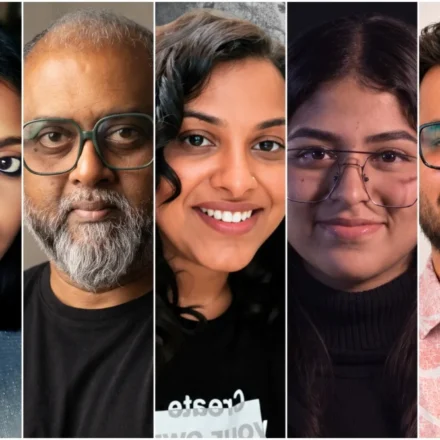
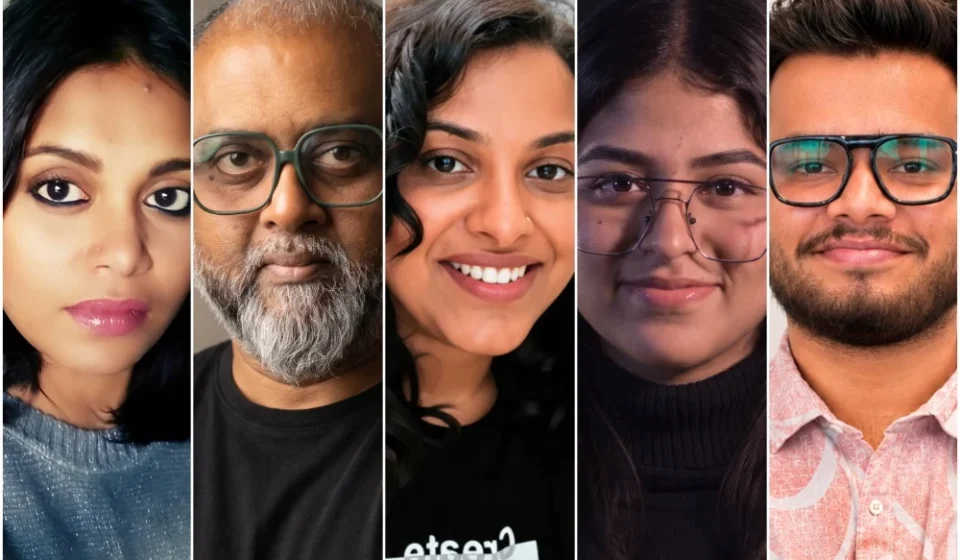
In the heart of Goa, at the prestigious International Film Festival of India (IFFI), a quiet revolution in storytelling is taking center stage. Five visionary filmmakers, hailing from the bustling streets of Mumbai to the remote corners of the Andaman and Nicobar Islands, are set to screen their works—projects born not from million-dollar budgets or high-end production houses, but from the collaborative potential of human imagination and artificial intelligence.
The inaugural WIF India x Google Flow Filmathon, a partnership between Women in Film (WIF) India and Google’s AI-powered creative workspace, Google Flow, has reached its grand finale. By removing the traditional, often prohibitive barriers to entry in the cinematic world, the initiative has spotlighted a diverse group of creators, proving that the future of Indian cinema is as geographically and conceptually broad as the nation itself.
A New Frontier: The Genesis of the Filmathon
The initiative was launched with a singular, ambitious mandate: to democratize the act of filmmaking. For decades, the Indian film industry—colloquially known as "Bollywood" and its regional counterparts—has operated within a gatekept framework where access to high-end equipment, technical crews, and industry connections dictated who could tell stories.
WIF India, under the leadership of founder and CEO Guneet Monga Kapoor, sought to dismantle these silos. By leveraging Google Flow, the organizers provided a suite of AI-assisted tools that allowed storytellers to translate their abstract concepts into visual reality with unprecedented speed and accessibility.
The open call for the Filmathon was met with an overwhelming response, signaling a latent hunger for creative inclusion. With over 850 registrations, the diversity of the applicants was striking: 60% hailed from India’s Tier 1 metropolitan hubs, 30% from Tier 2 cities, and a notable 10% from Tier 3 regions, highlighting that compelling stories are being nurtured far beyond the traditional epicenters of Mumbai, Chennai, and Hyderabad.
The Final Five: A Mosaic of Modern India
The selected finalists represent a cross-section of India’s modern experience, utilizing AI to explore everything from the nostalgic evolution of street food to the haunting depths of folk-horror.
Kerala’s Dual Perspective
Two of the finalists, Aswathi Naduthodi and Syam Manohar, hail from Kerala, a state with a storied history of intellectual and artistic rigor. Naduthodi, based in Calicut, presented "Bombay Mumbai – Vada Pav," a poignant visual essay. By tracing the history of Mumbai through the lens of its most iconic street snack, the film serves as a socio-economic time capsule, utilizing AI to render decades of shifting urban landscapes.
In contrast, Kochi-based filmmaker Syam Manohar leaned into the absurd with his Tamil-language black comedy, "Kuli." The narrative follows a mysterious, unnamed outsider digging a hole in a quiet village, an act that spirals into a satirical commentary on rumor, gossip, and the invasive nature of modern curiosity.
The Haunting of the Islands
Perhaps the most geographically isolated finalist is Promita Banerjee, based in Port Blair, Andaman and Nicobar Islands. Her film, "Sikkal," is a masterclass in atmospheric Hindi folk-horror. By integrating AI-assisted visual effects, Banerjee explores themes of deep-seated guilt and grief, depicting a man haunted by the literal apparitions of his deceased sister. The film serves as a powerful testament to the fact that isolation is no barrier to technical sophistication when the right tools are provided.
Urban Metaphors and Animated Dreams
Mumbai’s Nikhil Shinde contributed "Pedals of Joy," an animated Hindi tale that explores the universal longing for status and happiness. Through the eyes of a young balloon vendor dreaming of a high-end sports bike, Shinde utilizes AI animation tools to weave a narrative of brotherhood and resilience.
Rounding out the group is Delhi-based Srishti Chaudhary, whose film "Nazar" is a dialogue-free, animated exploration of the female experience. By using visual metaphors to address the heavy, often uncomfortable "burden of the unwanted gaze," Chaudhary showcases the psychological depth that AI can help visualize. Notably, Chaudhary designed her character sheets and storyboards entirely within the Google Flow ecosystem, emphasizing the shift toward an "end-to-end" digital creative process.
The Jury: Validating the AI-Augmented Aesthetic
Selecting the finalists from such a vast pool of entries required a discerning panel of industry heavyweights. The seven-member jury included directors Shakun Batra ("Gehraiyaan") and Pan Nalin ("Last Film Show"), editors Nitin Baid and Deepa Bhatia, streaming executive Aparna Purohit, Google Envisioning Studio’s Prashant Paulose, and Cannes Next head Sten Saluveer.
The inclusion of individuals from both traditional filmmaking backgrounds and the cutting edge of the technology sector reflects the Filmathon’s core philosophy: that AI is not a replacement for the auteur, but a powerful extension of the human hand.
Official Responses and the Gender Perspective
A central pillar of the WIF India initiative is the empowerment of female storytellers. Of the five finalists, three are women—a statistic that Guneet Monga Kapoor considers not just a success, but a necessity for the future of the medium.
"Every major technological shift in filmmaking brings with it an opportunity to rethink who gets to make films, whose stories find an audience and whose perspectives shape the medium," Kapoor stated. "It is vital that women are at the center of that conversation, not on the periphery of it. Seeing three of the five selected films come from women filmmakers is particularly encouraging."
Arathi Sethumadhavan, director of international activations and product insights at Google, echoed this sentiment, emphasizing the synergy between human intent and artificial output. "The five finalists powerfully demonstrate how Google’s AI creative studio can expand a filmmaker’s artistic horizon, elevating their craft while ensuring that human imagination remains the undisputed heart of the narrative," she remarked.
The Digital Democratization of Cinema
The underlying mission of the Filmathon, as articulated by Rabia Chopra, WIF India’s director of programs and development, is to lower the barrier to entry. "India has no shortage of compelling stories or people with the imagination to tell them," Chopra noted. "What has historically been missing is equal access to the tools and opportunities that can bring those stories to the screen. You shouldn’t need an expensive camera, an industry network or even a formal filmmaking background to have a voice in cinema."
This sentiment captures the essence of the "democratization" movement. Historically, the "price of admission" for cinema was prohibitively high. By providing tools that handle complex rendering, storyboarding, and post-production tasks, Google Flow acts as a bridge for creators who possess the "why" and "what" of a story but may lack the institutional access to the "how."
Looking Forward: The Future of AI in Indian Media
As the IFFI showcase brings these five films to a global industry audience, the implications for the future are profound. We are witnessing the birth of a new category of independent filmmaking.
The Filmathon is not merely a contest; it is a proof-of-concept for a future where:
- Geography Becomes Irrelevant: As demonstrated by finalists from the Andaman and Nicobar Islands and smaller cities in Kerala, high-quality, festival-ready content can be produced from anywhere with a stable internet connection.
- Narrative Diversity Expands: AI tools allow for the exploration of animation and experimental visual styles that were previously too time-consuming or expensive for independent creators to execute.
- Humanity Remains Central: The consistent theme across all five films—grief, social commentary, urban change, and personal desire—proves that AI remains a tool of expression rather than a creator of intent.
The partnership between WIF India and Google serves as a roadmap for other industries to follow. By fostering an environment where marginalized voices and geographic outliers have the same technical capabilities as seasoned professionals, the industry ensures that the future of Indian cinema remains vibrant, inclusive, and, above all, human-centric.
As these five filmmakers step into the spotlight at IFFI, they carry with them the promise of a more equitable creative landscape. The "Filmathon" may have an end date, but the movement it has catalyzed—a shift toward the democratization of the screen—is only just beginning. Through the lens of these creators, we are not just seeing films; we are seeing the future of a medium that is finally beginning to reflect the true diversity of the people who watch it.