Behind the Walls: Ania Winiarska’s ‘Good Girls’ Exposes the Failure of Poland’s Youth Correctional System

Director Ania Winiarska’s latest documentary, Good Girls, is not merely a film; it is a piercing indictment of a juvenile justice system that has remained stubbornly stagnant for decades. Premiering at the Ji.hlava International Documentary Film Festival, the film provides an unflinching look inside a Polish correctional center for girls—a place where the ghosts of an outdated, patriarchal past continue to haunt the lives of children.
For Winiarska, the project was a test of endurance and empathy. After two years of persistent effort to gain the trust of the residents, she emerged with a film that challenges the societal definitions of "good" and "bad" while questioning whether these institutions are meant to rehabilitate or simply hide the failures of a society that has abandoned its most vulnerable.
The Genesis of a Documentary: Breaking the Silence
The path to Good Girls was fraught with professional and personal doubt. Winiarska, an established filmmaker who has previously focused her lens on the lives of men and boys, found herself unprepared for the emotional landscape of a girls’ correctional facility.
"After six months, I felt like I’d hit a wall," Winiarska told Variety. "I’ve never had this problem before. It was always very natural for me to gain people’s trust, but my previous films were about boys or men. This one was about teenage girls, and even though I’m a woman, I didn’t realize how much shame they carry. I wasn’t prepared for meeting them."
The difficulty lay in the inherent power dynamics. Winiarska arrived at the facility not as an advocate, but as another adult in a system defined by strict surveillance, rigid rules, and the constant threat of punishment. The girls, weary of authority figures, initially viewed her with suspicion. "I think they viewed me as an outsider, but also as someone who was part of the system," she recalled.
It took two years of navigating the bureaucratic and emotional red tape before the cameras finally rolled. The turning point came when the girls realized that Winiarska was not there to judge or report them to the administration. "Once they accepted me, we never had any issues," Winiarska said. "They would tell all the new girls: ‘She’s good. She’s not a snitch.’"
Chronology of the System: Stagnation in the 21st Century
The facility Winiarska captures is a relic of a different era. Despite living in modern, progressive Sweden, the Polish-born director was stunned to find that the institutional methods employed in the center had seen little evolution since the mid-20th century.
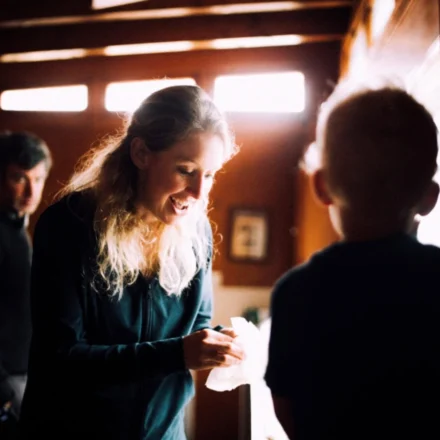
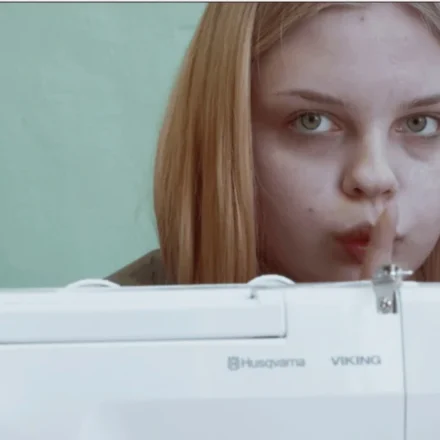
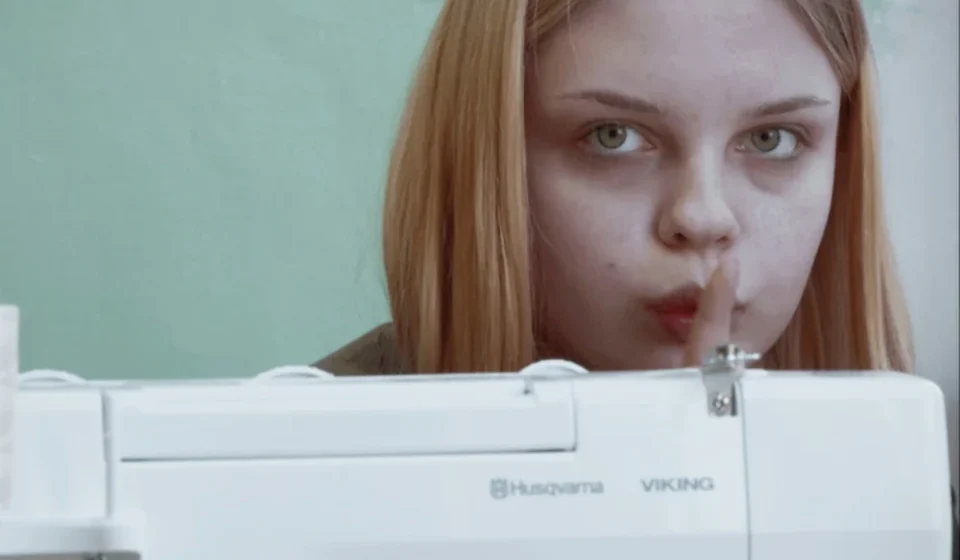
The curriculum, if it can be called that, focuses on domestic traditionalism rather than modern social integration. "Rather than trying to catch up with the 21st century, the girls are taught how to cook and sew," Winiarska noted. While religious classes are no longer mandatory, they were a fixture during her tenure there, highlighting a lingering institutional commitment to traditional values that often clash with the realities of the girls’ lives.
This rigid structure is fundamentally at odds with the needs of the girls, who are often there for reasons that defy the label of "criminal." The center is intended for the resocialization of youth who have committed crimes or are on the precipice of doing so. However, Winiarska’s footage reveals a different reality: girls incarcerated for skipping school, consuming alcohol, or simply acting out against environments that offered them no support.
Supporting Data: When Mental Health is Criminalized
Perhaps the most harrowing aspect of the film is the evidence that the correctional center is frequently used as a dumping ground for systemic failures in mental health care and child protection services.
Winiarska recounts the story of one girl whose descent into the system was precipitated by untreated depression. "She was lying in bed for three weeks and her mom, who has similar issues, couldn’t help her. Neither did her school. Instead, the police came and handcuffed her in her pyjamas," she recounted.
This case is not an anomaly; it is a symptom of a broader societal refusal to address the mental health crisis among the youth. The facility’s staff, while often well-intentioned, are not trained psychologists. They are custodial officers operating in a setting where emotional distress is treated with discipline rather than care. "When you’re not well mentally and you’re locked up and punished for it, it damages you even more," Winiarska observed.
The age range of the girls—from 10 to 18—adds a layer of visceral horror to the viewer’s experience. Winiarska, who has a 10-year-old daughter, admits the weight of this reality is overwhelming. "It’s scary to think about," she said.
The Paradox of Protection
Despite her critique, Winiarska acknowledges a dark, ironic truth: for many of these girls, the correctional center is the only place where they are fed, kept in school, and provided with a baseline of adult supervision.
"Many of them come from neglectful backgrounds and have experienced all sorts of abuse," she noted. "At least over there they have regular meals, they go to school, and if they feel bad, there’s someone to talk to. They didn’t have that at home."
This creates a cruel paradox. The institution provides a fragile safety net that the home environment failed to provide, yet it does so by stripping the girls of their autonomy and forcing them into an environment that hinders their personal growth.
Implications: A Vicious Cycle of Disadvantage
As the film explores, the time spent in the center is a "lost period" that fails to equip these young women for the world outside. When they age out of the system at 18, they are given a nominal amount of money and sent into the world without the skills, support, or emotional maturity to navigate it.
"I only started realizing what’s important in life when I was in my 30s," Winiarska said. "They leave at 18 with a small amount of money. What are they going to do with it? Some party it away or get pregnant over summer breaks. It’s a vicious circle."
The societal implications are profound. By labeling these girls as "bad"—a term heavily influenced by outdated, patriarchal views on female behavior—the state justifies their removal from public life. "In some countries, and that includes Poland, good girls are quiet and obedient," Winiarska noted. "Certain prejudices are very much alive."
The film argues that the lack of honest, open communication—specifically regarding puberty, sex education, and the complexities of growing up—leaves girls from disadvantaged backgrounds uniquely vulnerable. "If I hadn’t had [parents who cared about me], I would probably be one of them," she admitted.
Conclusion: A Call for Systemic Change
Good Girls is currently being represented by Stranger Film Sales, with production backing from Story, Film i Väst, and Tekele Productions. By bringing this story to an international audience, Winiarska hopes to force a reckoning with the way society treats young women who fall outside the narrow, "respectable" path.
These girls are not villains; they are survivors of neglect, untreated trauma, and a system that prioritizes control over care. As the documentary makes clear, these young women possess humor, resilience, and strength, but they are trapped in a "big black hole" of society’s making.
"These girls are strong," Winiarska said, concluding her reflection. "But at that age, you don’t understand the world and the world doesn’t understand you. If this film could change something in our society, it would be so wonderful."
Through the lens of Good Girls, the viewer is forced to confront a uncomfortable question: are these girls in need of correction, or is it the system itself that is fundamentally broken? As the film reaches festivals worldwide, it serves as a timely reminder that the way we treat our most vulnerable youth is the truest measure of our society’s progress.