Suburban Displacement and Temporal Anomalies: A Deep Dive into The End of Oak Street

In the ever-evolving landscape of contemporary science fiction, few films have sparked as much critical discourse as The End of Oak Street. Written and directed by David Robert Mitchell—the visionary behind It Follows and Under the Silver Lake—this latest cinematic outing features Hollywood heavyweights Anne Hathaway and Ewan McGregor in a haunting, surrealist exploration of domestic fragility.
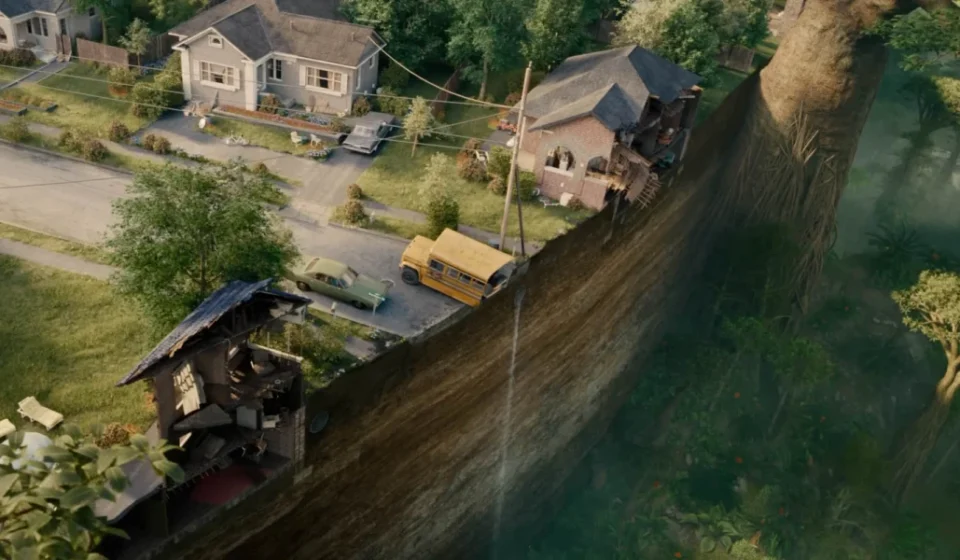
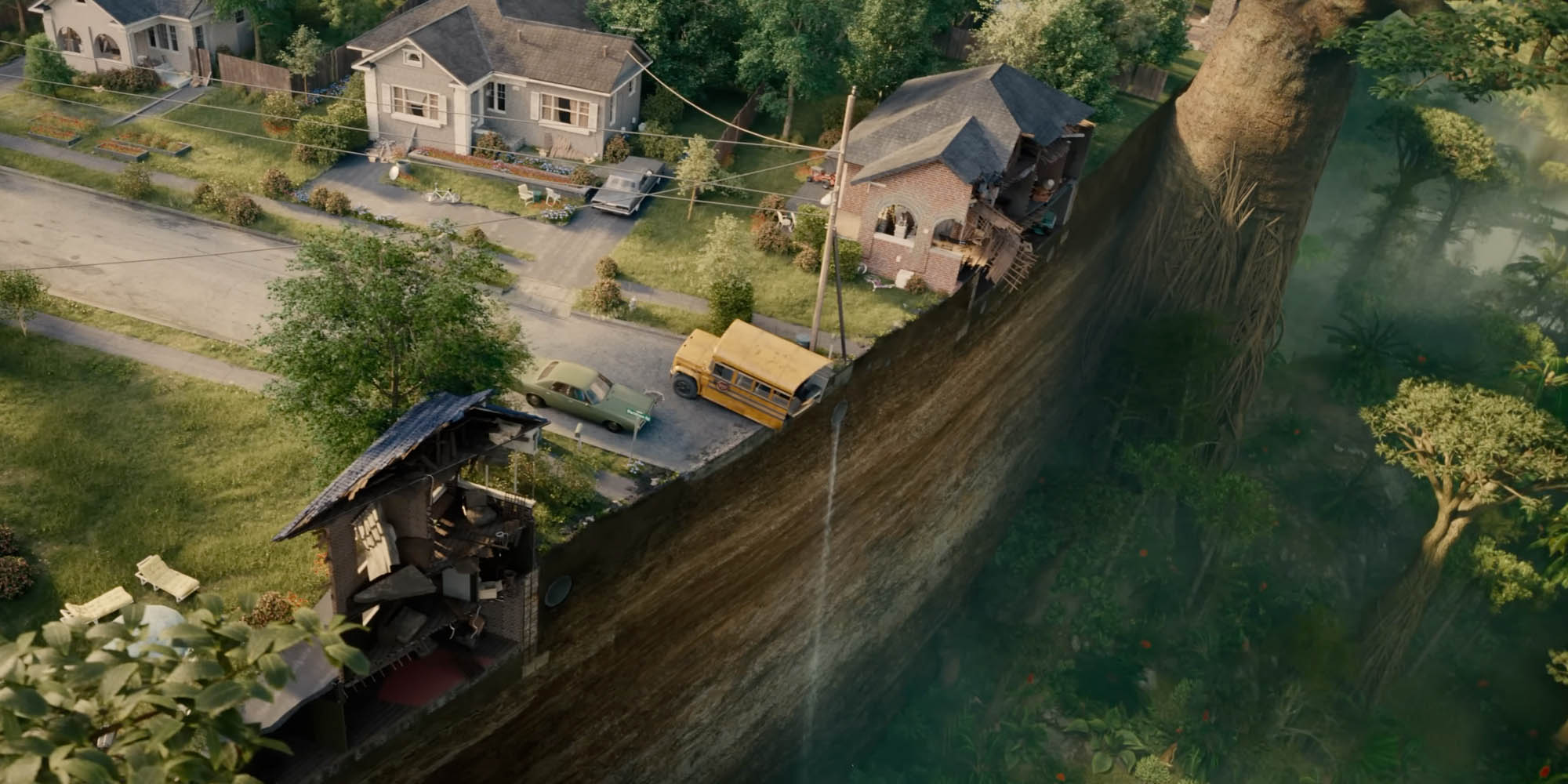
The premise is deceptively simple: the Platt family, anchored by Hathaway and McGregor, finds their idyllic suburban life shattered when a mysterious, unexplained phenomenon teleports their entire neighborhood into an uncharted, temporal void. What follows is not merely a survival story, but a complex meditation on nostalgia, the fragility of the "American Dream," and the crushing weight of time itself.
In the latest installment of The VFX Show (Episode 309), our panel of experts—Matt Wallin, Jason Diamond, and Mike Seymour—pulls back the curtain on the technical wizardry, narrative risks, and aesthetic choices that define this polarizing project.
The Core Narrative: Domesticity in Flux
The End of Oak Street thrives on the juxtaposition of the mundane and the impossible. David Robert Mitchell utilizes the familiar tropes of 1990s suburban life to ground the audience before subverting their expectations with a genre-bending narrative. When the neighborhood is "shifted" to an unknown location, the physical environment remains, but the rules of reality begin to dissolve.
The film focuses heavily on the internal dynamics of the Platt family. Hathaway and McGregor deliver performances that eschew traditional blockbuster heroics in favor of raw, desperate human emotion. As the neighborhood drifts through a temporal abyss, the Platts must contend with the realization that their home is no longer a sanctuary, but a cage. Mitchell’s direction forces the viewer to confront the unsettling question: what remains of our identity when our context is stripped away?
Chronology: From Concept to Temporal Shift
To understand the scale of The End of Oak Street, one must look at the production timeline and the specific choices made during the film’s development.
- Pre-Production (2024): Mitchell began drafting the script with a focus on "liminal spaces"—those transitionary areas that feel both familiar and deeply wrong. The casting of Hathaway and McGregor was finalized early, as Mitchell required actors capable of conveying profound isolation within a confined, ensemble setting.
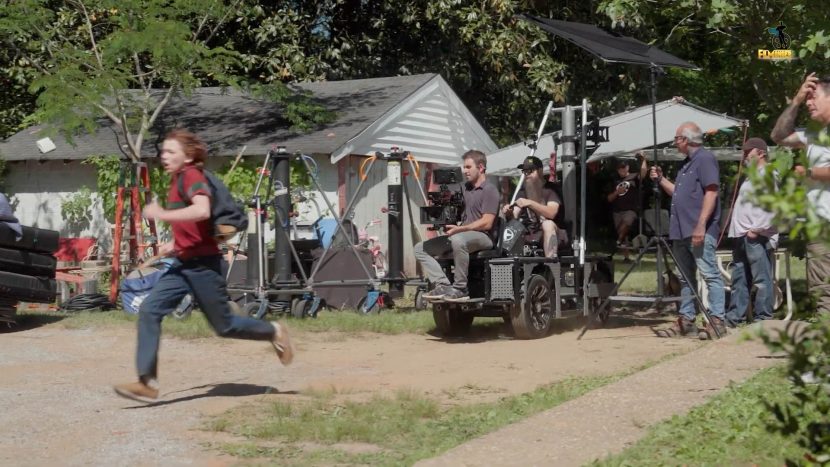
- Principal Photography (2025): The production moved away from heavy CGI reliance, opting for extensive practical sets designed to evoke a "time-locked" aesthetic. The goal was to make the neighborhood feel like a living, breathing character that slowly decays under the pressure of the void.
- Post-Production and VFX (2026): The final stages of the project focused on the "temporal anomalies"—the visual representation of the neighborhood’s displacement. This involved complex compositing and lighting work to ensure that the transition between "known" and "unknown" reality felt seamless yet jarring.
Supporting Data: The Technical Underpinnings
The visual effects team behind The End of Oak Street faced a unique challenge: how to represent the intangible? According to the analysis provided by the fxguide panel, the film relies heavily on "invisible VFX."
The Aesthetics of Decay
The visual language of the film relies on a muted, desaturated color palette that subtly shifts as the narrative progresses. The VFX team utilized high-dynamic-range (HDR) lighting techniques to simulate the strange, non-solar illumination of the void. By mapping the neighborhood in 3D, the production team was able to subtly alter the architecture of the houses in the background, making them appear slightly "wrong" to the viewer without explicitly drawing attention to it.
Soundscape and Immersion
Beyond the visuals, the auditory experience is critical. The sound design team focused on the "hum" of the void—a low-frequency drone that subtly destabilizes the viewer. This is coupled with the absence of ambient suburban noise (no birds, no distant traffic), which creates an oppressive atmosphere that underscores the Platts’ isolation.
Critical Debate: What Worked, What Didn’t?
During the latest episode of The VFX Show, the panel engaged in a rigorous dissection of Mitchell’s filmmaking choices.
The Successes
- Atmospheric Pacing: The panel praised the slow-burn approach. By refusing to rush into the "action" of the sci-fi premise, Mitchell allows the audience to bond with the Platt family, making the eventual stakes feel deeply personal.
- Performance Chemistry: Both Hathaway and McGregor were lauded for their ability to portray "ordinary people in extraordinary circumstances" without resorting to archetypal survivalist tropes.
The Points of Contention
- Ambiguity vs. Resolution: The film’s ending remains a significant point of debate. Some viewers and critics have argued that the lack of a concrete explanation for the "event" is a bold stylistic choice, while others found it frustratingly vague.
- VFX Overload: While the technical execution was universally praised, some segments of the panel felt that certain scenes in the final act leaned too heavily on visual spectacle, momentarily breaking the intimate, grounded tone established in the first two acts.
Implications: The Future of Suburban Science Fiction
The End of Oak Street represents a shifting trend in the genre. For years, science fiction has leaned toward the "epic"—galactic empires, alien invasions, and high-tech dystopias. Mitchell’s film, however, brings the focus back to the domestic sphere, suggesting that the most terrifying voids are not the ones in space, but the ones in our own backyards.
By stripping away the safety of a recognizable world, the film serves as a metaphor for the rapid changes in modern society. We are all living in a time of uncertainty, and the Platts’ struggle to define their reality is, in many ways, a reflection of the collective anxiety felt by modern audiences.
The film’s success (or lack thereof) at the box office will likely dictate whether studios continue to fund "high-concept, low-action" dramas. It is a risky proposition, but one that challenges audiences to think, analyze, and debate long after the credits roll.
Official Production Credits and Panel Information
As we dissect the complexities of this film, we extend our gratitude to the team that made this analysis possible. This week’s discussion featured:
- Matt Wallin (@mattwallin): A digital artist and industry veteran who brings a technical eye to the nuances of lighting and compositing.
- Jason Diamond (@jasondiamond): Providing a critical perspective on the narrative structure and character development.
- Mike Seymour (@mikeseymour): The lead host and principal analyst, whose expertise in VFX provides the backbone for the fxguide deep-dives.
Special thanks to Jim Shen for his tireless work in the editing and production of the podcast.
We invite our readers and listeners to join the conversation. Do you believe the Platt family’s journey is a masterpiece of modern existentialism, or a pretentious exercise in visual style? Your feedback is the lifeblood of our community. Please feel free to reach out to the team at the provided email address or connect with us on our social channels.
For those who want to explore the technical documentation further, don’t forget to subscribe to the fxguide YouTube channel and follow our podcast on your preferred platform. The "end" of Oak Street may be a mystery, but the journey of understanding it is only just beginning.
Disclaimer: This article summarizes the discussion held in The VFX Show #309. For the full experience, please listen to the episode, where the team puts every frame of this film under the microscope.