The Weight of History: Analyzing ‘Godzilla Minus Zero’ and the Evolution of the Kaiju Epic

In the annals of cinema, few franchises have managed to balance the spectacle of city-leveling destruction with the quiet, crushing weight of national trauma quite like Toho’s Godzilla series. Following the monumental, Oscar-winning success of 2023’s Godzilla Minus One, writer-director Takashi Yamazaki has returned to the director’s chair with a sequel that dares to ask what happens when a nation already pushed to its brink is forced to endure a second, more catastrophic collapse.
Titled Godzilla Minus Zero, the film has sparked conversation not just for its ambitious scope, but for its intentionally provocative nomenclature. As Yamazaki previously explained regarding Minus One, the title was a dual-pronged metaphor: signifying both the film’s position as a prequel to the 1954 original and the concept of a postwar Japan struggling to rise from a state of total societal depletion. Godzilla Minus Zero continues this thematic exploration, though it introduces a narrative intensity that pushes the franchise into darker, more complex territory.
The Chronology of Destruction
Godzilla Minus Zero picks up the narrative threads shortly after the resolution of its predecessor. If Minus One explored the struggle to rebuild a country at "zero," Minus Zero finds that fragile equilibrium shattered by an external, extraterrestrial force.
Set in 1949—two years after the events of the previous film—the story introduces a new threat that shifts the paradigm of the franchise. While the world believed the King of the Monsters had been dealt with, the arrival of King Ghidorah complicates the survival arc of the protagonists. The three-headed titan, which makes its debut in the mountains of Nagano following a meteorite impact, acts as a catalyst for a new wave of desperation. By placing this conflict in 1949, Yamazaki creates a tight, suffocating window of time where Japan is still reeling from the scars of the recent world war, lacking the infrastructure or the international support to handle a multi-pronged kaiju assault.

Supporting Data: A Human-Centric Disaster
While the spectacle of Godzilla Minus Zero is undeniably the film’s primary draw, the heart of the production remains firmly rooted in the evolution of its human characters. Returning protagonist Kōichi Shikishima (Ryunosuke Kamiki), the former kamikaze pilot who found a measure of peace in Minus One, is dragged back into the fray. His journey is no longer one of simple survival, but of protecting a newfound family, including his wife Noriko (Minami Hamabe) and their adoptive daughter, Akiko.
The supporting cast provides the necessary intellectual and emotional scaffolding to support the film’s grander themes. Hidetaka Yoshioka returns as the brilliant, eccentric Naval engineer Noda, who now heads the Large-Scale Disaster Response Bureau. He is joined by two new critical figures:
- Makoto Aoyama (Masami Nagasawa): A meteorologist whose prescient weather data becomes the key to tracking and predicting Ghidorah’s erratic movements.
- Kanji Murakami (Min Tanaka): An embittered biologist whose history—surviving Hiroshima, the Ginza attack, and the new Matsumoto assault—serves as the film’s moral conscience, representing the "survivor’s burden."
The inclusion of the U.S. Army as a geopolitical foil adds a layer of cynicism to the film. Unlike the domestic focus of the previous entry, Minus Zero highlights the cold, calculated interests of occupying forces who view the kaiju threat as a tactical opportunity rather than a humanitarian crisis. This divergence in perspective highlights the isolation of the Japanese survivors and underscores the "grassroots" heroism that Yamazaki prizes.
Official Responses and Production Philosophy
The production of Godzilla Minus Zero represents a massive technical leap for the studio. Yamazaki and his team have utilized the lessons learned from the "resourceful" CGI of Minus One to deliver a visual experience that is both weightier and more visceral. The aerial battle sequences, set against the backdrop of the Japanese countryside and scored with Wagnerian intensity by composer Naoki Satō, have been lauded as some of the most technically accomplished setpieces in the history of the genre.

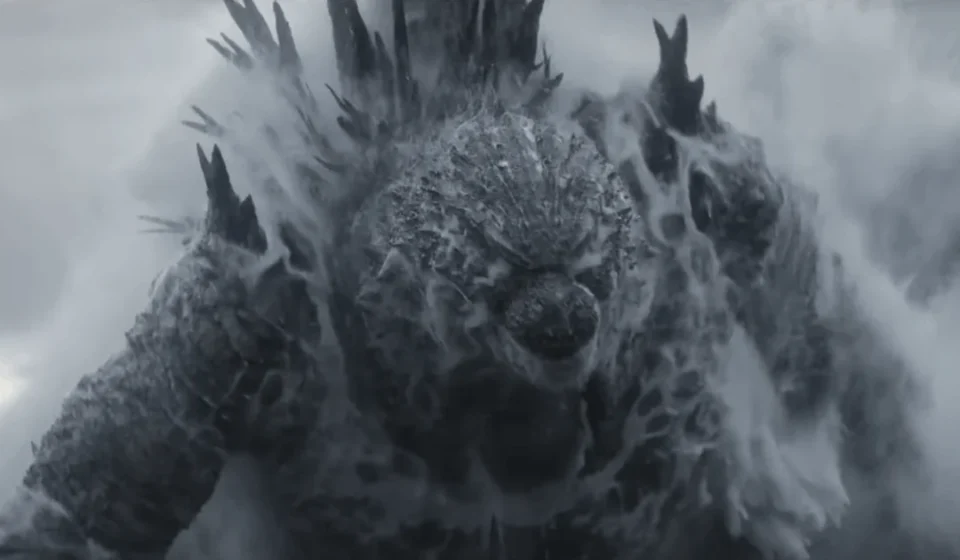
Critics and audiences alike have noted the "R-rated" intensity of the film’s climactic brawls. Yamazaki’s approach has been to treat the monsters not as cartoonish antagonists, but as a "recurring weather phenomenon"—an unstoppable force of nature that forces humanity to confront questions of vengeance, peace, and the cost of survival. The director has leaned into a darker, grayscale aesthetic for these sequences, emphasizing the bleak reality of a world that can never truly feel safe again.
Implications: The Trilogy’s Middle Chapter
With the release of Godzilla Minus Zero, it is becoming increasingly clear that Yamazaki is architecting a three-part epic. The film does not provide easy answers; it leaves the future of its characters and their nation in a state of precarious ambiguity.
Thematic Nuance and Societal Despair
The film engages in a dialogue with the broader history of Japanese cinema. By echoing the existential dread found in the works of Akira Kurosawa or the later masterpieces of the postwar era, Minus Zero attempts to elevate the kaiju genre beyond simple monster-versus-monster brawls. It successfully frames the destruction not as an end, but as a recurring cycle that demands a response from the human soul.
The character of Kanji Murakami, in particular, acts as a bridge to historical reality. His story evokes the real-life endurance of individuals like Tsutomu Yamaguchi, who survived the atomic bombings of both Hiroshima and Nagasaki. This connection grounds the fantastical elements of the film in a very real, very painful human history.

The "Godzilla" Factor
A common critique of modern monster movies is that the titular titan is often sidelined. However, in Godzilla Minus Zero, the monster’s absence is as potent as his presence. His looming threat creates a vacuum of terror that dictates every decision made by the characters. When Godzilla does appear, the impact is magnified by the preceding silence, turning his return into a catastrophic event that feels earned rather than obligatory.
Conclusion: A New Standard for the Kaiju Epic
Godzilla Minus Zero is an ambitious, if occasionally uneven, exploration of trauma and resilience. While it may not reach the same heights of social commentary as the 1954 original, it succeeds in creating a modern, high-stakes drama that respects its heritage while pushing the boundaries of what a "monster movie" can be.
The film premiered at the 2026 New York Film Festival to significant acclaim, with many noting that the "silly" title belies a profound emotional core. As GKIDS prepares for the film’s wide release in U.S. theaters on November 6, 2026, the industry is watching closely. If Minus Zero is any indication, the future of the Godzilla franchise is not just in the size of its monsters, but in the depth of the scars they leave on the people who must endure them.
The film serves as a poignant reminder: in a world defined by its catastrophes, the true measure of a society is not how it avoids the monster, but how it chooses to live in the shadow of the inevitable. Yamazaki has successfully turned the "minus" into a variable of survival, and in doing so, has cemented his place as a visionary in the modern era of kaiju cinema.