Shadows of the 1974 Conspiracy: Analyzing Hur Jin-ho’s Political Thriller ‘The Assassin(s)’

The intersection of historical trauma and cinematic imagination has long been a fertile ground for South Korean filmmakers. From the Gwangju Uprising to the assassination of Park Chung-hee in 1979, the nation’s turbulent journey toward democracy provides a reservoir of stories that resonate with modern audiences. However, Hur Jin-ho’s latest magnum opus, The Assassin(s) (alternatively titled The Assassins), takes a daring step back to 1974, focusing on an earlier, equally seismic event: the attempted assassination of President Park Chung-hee that resulted in the tragic death of First Lady Yuk Young-soo.
Premiering to significant acclaim at the Toronto International Film Festival (TIFF), where it secured the position of second runner-up for the International People’s Choice Award, the film has been hailed as a South Korean equivalent to Oliver Stone’s JFK. By weaving a complex web of journalistic inquiry, police procedural, and high-stakes political espionage, Hur Jin-ho transforms a historical "cold case" into a propulsive, anti-authoritarian anthem.
I. Main Facts: A Cinematic Reimagining of a National Tragedy
The Assassin(s) is a high-budget political thriller directed by the acclaimed Hur Jin-ho, a filmmaker previously best known for his delicate explorations of human emotion in classics like Christmas in August and One Fine Spring Day. This project marks a significant stylistic departure for Hur, as he embraces the "faction" genre—a blend of fact and fiction—to scrutinize the gaps in the official 1974 investigation.
The Core Premise
The film centers on the events surrounding August 15, 1974, during a Liberation Day ceremony at the National Theater of Korea. While President Park Chung-hee was delivering a speech, a gunman—identified historically as Mun Se-kwang, a Zainichi Korean (an ethnic Korean living in Japan)—opened fire. While the President survived, his wife, Yuk Young-soo, was fatally wounded. The film posits that the "lone gunman" theory serves as a convenient veil for a much deeper, more insidious conspiracy involving the Korean Central Intelligence Agency (KCIA) and the suppression of the free press.
The Star-Studded Ensemble
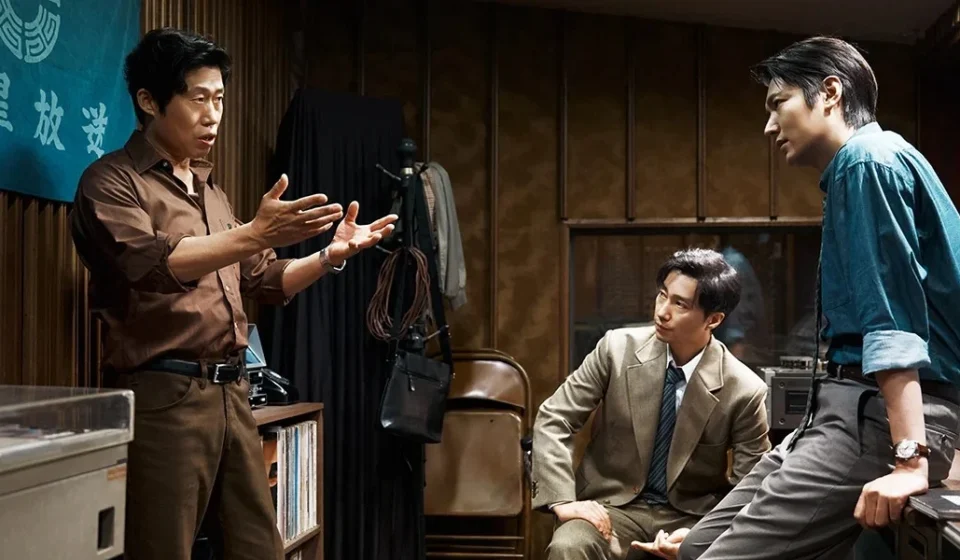
The film’s gravity is anchored by a "murderer’s row" of South Korean talent:
- Lee Min-ho as Young-il: A fiery rookie journalist with high-level familial connections who witnesses the shooting firsthand.
- Park Hae-il as Jae-hwan: A world-weary City Desk editor at the Dong-sung Daily, representing the ethical backbone of the fourth estate.
- Yoo Hai-jin as Cheol-goo: A diligent local detective who finds himself at the center of the storm after being ordered to stand down during the security breach.
- Park Hoon and Bae Seong-woo: Providing critical supporting roles as a ruthless KCIA enforcer and a conflicted newspaper editor, respectively.
II. Chronology: The Clockwork Unraveling of a Conspiracy
The narrative structure of The Assassin(s) functions like a ticking time bomb, meticulously tracking the days leading up to and the chaotic weeks following the assassination attempt.
1. The Pre-Event Suppression
The film opens by establishing the suffocating atmosphere of the Yushin regime. The KCIA is shown harassing the staff of the Dong-sung Daily, a fictionalized stand-in for the real-world newspapers that faced intense censorship during the 1970s. This prologue establishes the stakes: the truth is already under siege before the first bullet is even fired.
2. The Liberation Day Incident
The centerpiece of the first act is a visceral recreation of the shooting. Through the eyes of the rookie Young-il, the audience experiences the confusion of the National Theater. The film highlights the "holes" in the official record—the ease with which the assassin entered the building and the strange behavior of the security detail.
3. The Parallel Investigations
Following the tragedy, the film splits into two investigative tracks that eventually converge:
- The Journalistic Path: Jae-hwan and Young-il begin connecting the dots between the assassin’s background in Japan and the KCIA’s foreknowledge of his arrival.
- The Forensic Path: Detective Cheol-goo, sidelined and punished for his attempts to do his job, begins his own "off-the-books" inquiry into the ballistic evidence and the security lapses that allowed Mun Se-kwang to get within range of the President.
4. The Revelation and Climax
As the "puzzle pieces shift into place," the film enters a high-octane final act. The protagonists move from dusty archives and back-alley meetings to dangerous confrontations with the KCIA. The climax is not merely a physical showdown but a race to publish the truth before the state can permanently "disappear" the evidence.
III. Supporting Data: The Mechanics of "Faction" and Performance
To understand why The Assassin(s) resonated so deeply at TIFF, one must look at how Hur Jin-ho utilizes specific cinematic techniques to bridge the gap between historical record and imaginative fiction.
The "JFK" Methodology
Like Oliver Stone, Hur uses the "process and proficiency" of his characters to build credibility. By showing the mundane details of sleuthing—peeking at documents, interviewing disgruntled sources, and analyzing photographs—the film makes its more "outrageous" fictional claims feel grounded in reality. The "highly fictitious context" mentioned by critics is balanced by a commitment to the procedural genre.
Character Dynamics and Performance Data
The chemistry between the three leads provides the emotional core that prevents the film from becoming a dry political lecture:
- Lee Min-ho’s Evolution: Known globally for his "Hallyu" star status in romantic dramas, Lee delivers a gritty, transformative performance. His character, Young-il, serves as the audience’s surrogate—starting as an idealistic observer and hardening into a determined whistleblower.
- Park Hae-il’s Gravitas: Park, a veteran of Korean cinema (Decision to Leave), brings a quiet, simmering intensity to Jae-hwan. He represents the "old guard" of journalism, exhausted but unwilling to break.
- Yoo Hai-jin’s Everyman Appeal: Yoo provides the necessary groundedness. As Cheol-goo, he represents the common citizen caught in the gears of a machine far larger than himself. His punishment by the "suits" serves as the catalyst for the audience’s own sense of injustice.
Production Value
The film’s recreation of 1970s Seoul is meticulous. From the fashion and the heavy-set vehicles to the smoky newsrooms, the aesthetic serves to immerse the viewer in a time when information was a luxury and silence was a survival tactic.
IV. Official Responses and Historical Context
The real-world 1974 assassination attempt remains one of the most debated chapters in modern Korean history. While the film is a work of fiction, it draws directly from decades of public skepticism.
The Official Record
Historically, the South Korean government concluded that Mun Se-kwang acted on orders from North Korea, traveling from Japan with a stolen handgun to carry out the hit. Mun was swiftly executed in December 1974, only four months after the incident.
The Lingering Questions
For decades, critics and conspiracy theorists have pointed to several anomalies:
- Security Failures: How did a known activist enter a high-security event with a firearm?
- Ballistic Discrepancies: Some witnesses and forensic hobbyists have questioned whether the fatal shot that hit the First Lady actually came from the assassin or a panicked security guard’s return fire.
- The "North Korean Connection": While the government blamed Pyongyang, others have suggested the incident was allowed to happen—or even facilitated—to justify further crackdowns on civil liberties under the Yushin Constitution.
The Film’s Disclaimer
Hur Jin-ho begins the film with a disclaimer, a standard but necessary move to navigate the sensitive political waters of South Korea. While the film "luxuriates in process," it acknowledges that it is an interpretation of the "national mood of frustrated anti-authoritarianism" rather than a definitive historical document.
V. Implications: The Cultural Resonance of Truth-Telling
The success of The Assassin(s) at international festivals and its anticipated domestic impact highlight several key trends in global and Korean cinema.
1. The Power of "Anti-Authoritarian" Cinema
The film taps into a global zeitgeist of distrust toward institutional power. By portraying journalists and local cops as heroes standing against a monolithic intelligence agency, Hur Jin-ho crafts a story that is as relevant in 2024 as it was in 1974. It serves as a "melodramatic tribute" to those who speak truth to power, regardless of the personal cost.
2. The Evolution of Korean "Faction"
South Korean cinema has perfected the art of the historical thriller. Films like The Man Standing Next (about the 1979 assassination) and 12.12: The Day (about the 1979 coup) have seen massive box office success. The Assassin(s) continues this lineage, proving that there is a massive appetite for "popcorn-munching fun" that doesn’t shy away from complex political themes.
3. Diplomatic and Social Complexity
By including the "Zainichi" element and the fraying tensions between North and South, the film explores the "larger ideals of a nation under political suppression." It reminds audiences that the 1974 shooting wasn’t just a domestic tragedy but a geopolitical event that involved Japan and the broader Cold War struggle.
Conclusion
Hur Jin-ho’s The Assassin(s) is more than a mere history lesson; it is a "solid and propulsive" thriller that uses the "holes in a public investigation" to build an imaginative and riveting mystery. While it may not provide the definitive answers to the 50-year-old mystery of Yuk Young-soo’s death, it succeeds in its primary mission: to provoke curiosity, to entertain, and to honor the spirit of those who refuse to accept the official story at face value. As the film concludes, it leaves the audience with a sense of "journalistic urgency," reminding us that while history is written by the victors, the truth is often found in the margins, protected by those brave enough to look where they shouldn’t.