Into the Abyss: An In-Depth Analysis of Quarxx’s Brutal Masterpiece, The Ones Who Grieve

In the landscape of contemporary horror, where "elevated" genre fare often leans heavily on atmosphere and grief-as-metaphor, French auteur Quarxx has delivered a film that feels less like a narrative and more like a descent into a fever dream of historical trauma. The Ones Who Grieve (Les Âmes en peine), which recently premiered to polarizing reactions at Fantastic Fest, stands as a monument to uncompromising nihilism. For the dedicated horror enthusiast, it is a visceral endurance test; for the casual viewer, it is a harrowing, often repulsive, journey into the darkest recesses of human depravity.
The Premise: A Landscape Stained by the "Black Veil"
Set in the claustrophobic, mud-caked reality of late 19th-century rural France, The Ones Who Grieve immediately establishes an aesthetic of decay. The region is under the shadow of the "Black Veil," a mysterious, possibly supernatural, ailment that transforms the afflicted into ravenous, feral monsters.
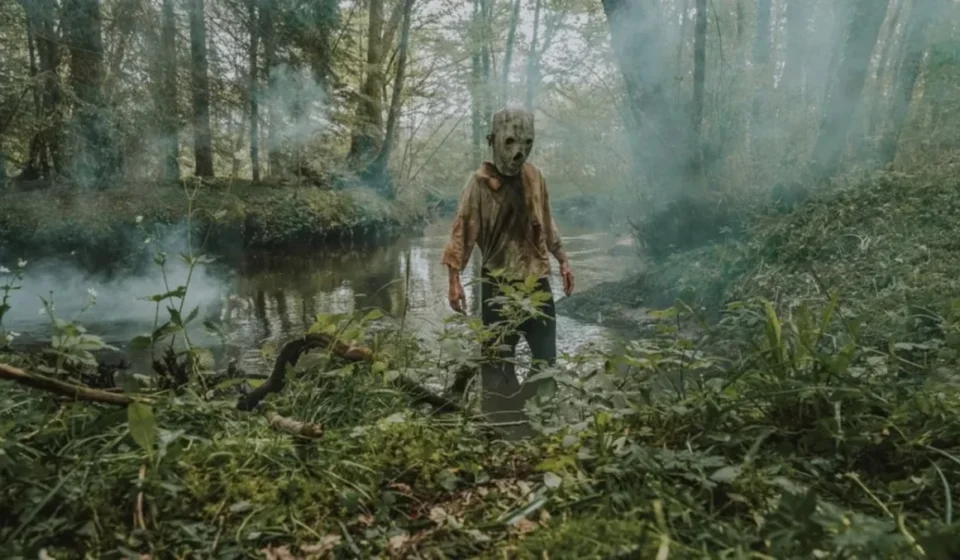
The story centers on Zélie (Zélie Rixhon), a young woman living under the thumb of her father, Jacob (Thierry Frémont). Jacob is a "Masker"—a figure who occupies a precarious space between medical practitioner and religious zealot. In his distorted worldview, the afflicted are not patients to be cured, but souls to be neutralized. His "treatment" is a ritual of grotesque penance: he sews the eyes and mouths of the sick shut, forces them into crude wooden masks, and abandons them in the unforgiving wilderness. Jacob justifies this brutality through a warped interpretation of scripture, arguing that because taking a life is a mortal sin, he is simply letting nature—and the elements—take its course.
A Chronology of Cruelty: The Anatomy of the Film
The film’s narrative is not a traditional arc, but rather a series of escalating vignettes that track the disintegration of the human spirit.
The Opening Act: The Ritual of the Mask
The film wastes no time in establishing its tone. In one of the most difficult sequences in recent horror memory, Jacob performs his "surgery" on a terrified child. The scene is shot with an unflinching lens, serving as a brutal mission statement for the rest of the film. The violence is wet, visceral, and uncomfortably intimate.
The Descent into Depravity
Following the initial introduction to the world of the Masker, the film abandons any pretense of traditional storytelling. It drifts into the territory of the French Extremity movement, utilizing a relentless onslaught of taboo subjects. The audience is forced to witness scenes of sexual violence, systemic rape, mutilation of both flesh and genitalia, cannibalism, and incest.
The Climax and Resolution
As the film reaches its conclusion, the power dynamics of the rural community begin to shift. The victims are eventually granted an opportunity to turn the tables on their tormentors. However, in keeping with the film’s relentlessly nihilistic philosophy, this subversion offers no sense of catharsis. The cycle of violence simply resets, proving that in the world of The Ones Who Grieve, there is no such thing as justice—only degrees of suffering.
Supporting Data and Production Context
While the narrative content is polarizing, the technical execution of the film demands recognition. Quarxx’s vision is undeniably distinct, painting a portrait of rural France that feels hauntingly ethereal, reminiscent of the gothic atmosphere seen in The Vourdalak.
- Cinematography: The visual language of the film is its strongest asset. The grime and the beauty of the landscape are captured in a way that makes the viewer feel the rot of the setting.
- Performance: Zélie Rixhon, Isabelle Anciaux (who plays Zélie’s mother, Emilie), and Thierry Frémont deliver powerhouse performances. They inhabit roles that are physically and emotionally draining, successfully conveying the weight of historic misogyny that serves as the film’s thematic bedrock.
- The Score: Composed by Benjamin Leray, the musical accompaniment is notably incongruous. By opting for sounds that often clash with the on-screen action, Leray creates an auditory dissonance that heightens the viewer’s discomfort.
Official and Critical Perspectives
The discourse surrounding The Ones Who Grieve is heavily divided, mirroring the divide between mainstream horror sensibilities and the "Midnight Movie" subculture.
![‘The Ones Who Grieve’ Review: Visceral, Unflinching, and Unpleasant Historical Horror [Fantastic Fest]](https://www.dreadcentral.com/wp-content/uploads/2026/09/ONES_WHO_GRIEVE_Still.jpg)
Critics have pointed out that while the film is a masterclass in tone, it often feels "hollow" beneath its surface-level brutality. The film is undeniably a "handsomely made picture," yet it struggles to provide a moral or philosophical anchor. When the characters deliver lines such as, "I have fathered a succubus. Because of you, I will go to Hell," the film touches upon the genuine, historically accurate misogyny of the 19th century, yet it rarely explores these themes beyond their role as catalysts for further violence.
"For the Midnight Movie crowd," one critic noted, "those bemoaning horror’s contemporary scaling back from confrontation, The Ones Who Grieve is a winner. For everyone else, it’s simply a stark reminder of how awful the world can be."
Implications: The Future of Extremity in Cinema
The existence of The Ones Who Grieve raises important questions about the direction of the horror genre. In an era where many films are designed to be "digestible" or easily consumed on streaming platforms, Quarxx has created a piece of art that actively repels the audience.
1. The Death of the "Feel-Good" Horror
Modern audiences have become accustomed to horror that offers a cathartic release—the "final girl" triumphs, or the monster is defeated. The Ones Who Grieve rejects this contract entirely. It offers no resolution, no redemption, and no escape from the cycle of violence. This creates a significant barrier to entry for general audiences, but it also solidifies the film’s status as a cult object for those seeking the extreme.
2. The Limits of Metaphor
There is a fine line between using violence as a tool to explore historical trauma and using violence for its own sake. The Ones Who Grieve walks this line precariously. While it successfully depicts the oppressive, patriarchal nature of its setting, the sheer volume of "putrescence" often threatens to drown out any meaningful social commentary. The film acts as a mirror, reflecting the most barbaric acts of humanity, but it leaves the interpretation of those reflections entirely to the viewer.
3. The "Shower Factor"
Perhaps the most telling metric for a film like this is the "shower factor"—the visceral, physical need to wash oneself after the credits roll. The Ones Who Grieve succeeds in this regard more than almost any other film in recent memory. It is a grueling experience that stays with the viewer, not necessarily because of its narrative depth, but because of the sheer intensity of its unpleasantness.
Final Assessment: Nihilism as Art
Ultimately, The Ones Who Grieve is a film that refuses to compromise. It is a stark, bleak, and profoundly nihilistic work that will undoubtedly be remembered as a hallmark of extreme cinema. While it may lack the nuance or the narrative cohesion to appeal to a broad audience, it is a triumph of mood and commitment.
Quarxx has not just made a horror movie; he has created a cinematic endurance test. Whether that is a worthy pursuit is a question that each viewer must answer for themselves. For some, the experience will be transformative; for others, it will be a regrettable descent into darkness. One thing is certain: having seen it, it is impossible to look away, and even harder to forget.