Sky-High Ambitions: How Michelle Khare is Redefining the Boundaries of Digital Storytelling

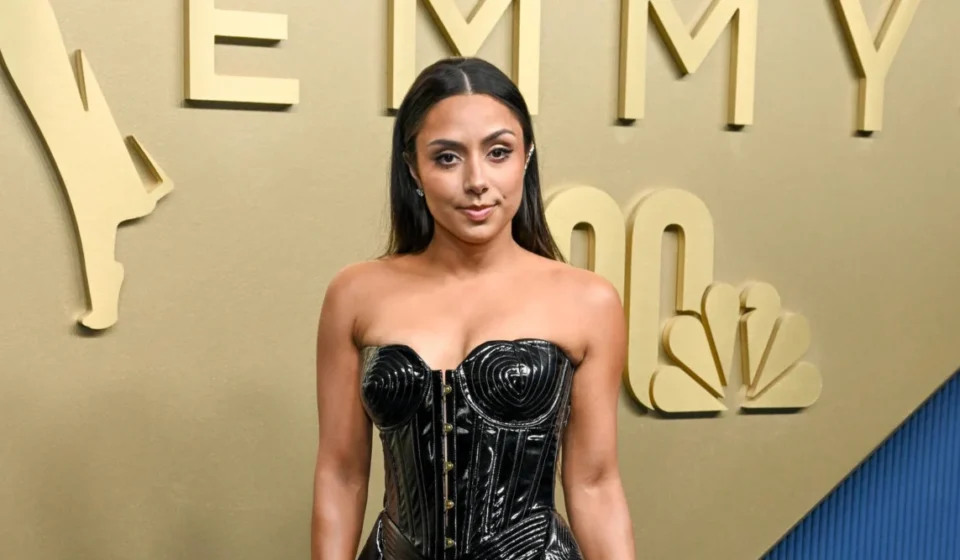
The red carpet of the Emmy Awards is traditionally a space reserved for the polished elite of legacy television—the network executives, the prestige drama stars, and the late-night comedy veterans. Yet, amidst the flashbulbs and designer gowns this year, Michelle Khare stood as a symbol of a seismic shift in the entertainment landscape. While others discussed their next scripted series, Khare was busy studying for her pilot’s license, preparing to launch her latest, most ambitious stunt for her groundbreaking YouTube series, Challenge Accepted.
For Khare, the juxtaposition of the Emmy glam chair and a flight simulator is not merely a quirk; it is a mission statement. As an architect of the modern digital creator economy, she is proving that the barrier between "YouTuber" and "television producer" has not just blurred—it has effectively vanished.
The Evolution of the "Challenge Accepted" Ethos
At its core, Challenge Accepted is a documentary-style odyssey that treats every episode with the gravity of a high-stakes film production. Khare does not merely "try" new things; she immerses herself in the rigorous, often grueling training regimens required to master complex disciplines. From military-grade obstacle courses to high-altitude aeronautics, the series has built a massive, loyal audience by documenting the intersection of human endurance and meticulous preparation.
"I’m attempting to get a pilot’s license in a condensed period of time," Khare shared during an interview on the Emmy red carpet. "That’s to prepare for a really big stunt we’re working on later this year."
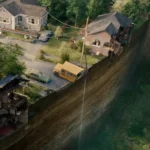
While she remains tight-lipped about the specific mechanics of the stunt, the stakes are undeniably high. Khare has previously made headlines for successfully recreating some of Tom Cruise’s most death-defying cinematic maneuvers. Her upcoming project, which reportedly involves the aeronautical feat of flying a house using helium balloons, serves as a testament to her commitment to "big and bold" ideas that traditional gatekeepers might have dismissed as too risky or cost-prohibitive.
Chronology: From Digital Upstart to Industry Disruptor
To understand the weight of Khare’s presence at the Emmys, one must look at the timeline of her ascent.

- The Foundational Years: Khare began her journey by leveraging the accessibility of YouTube, recognizing that the "only barrier to entry is the upload button." By focusing on high-production value and narrative rigor, she elevated the standard for unscripted digital content.
- Spring 2026: A watershed moment occurred when Khare was honored with the 2026 IndieWire Honors Pulse Award. The accolade recognized her pivotal role in expanding the possibilities of independent storytelling. In her acceptance speech, she famously declared that she had "never been more proud" to be a YouTuber.
- Awards Season 2026: Following the award, Khare and her team took the audacious step of petitioning the Television Academy for inclusion on the ballot for "Outstanding Hosted Nonfiction Series or Special." This move signaled a formal challenge to the traditional hierarchy of the medium, placing her digital-native program in direct competition with broadcast and cable giants.
- The Present Day: Khare continues to iterate on her format, moving toward larger-scale stunts and cross-platform collaborations, cementing her status as a bridge between the decentralized web and the prestige of televised awards.
The Democratization of Ambition: Supporting Data and Insights
The rise of creators like Khare is not an anomaly; it is a reflection of a fundamental shift in how audiences consume and value content. Khare’s success is built upon a philosophy of "permissionless innovation."
"When I started as a kid watching my favorite shows on TV, I always thought that the only way to participate in that world was to be fully welcomed into it by someone else," Khare explained. "And now to craft that story ourselves and to take ownership over it is really incredible."
Data supports the idea that the "creator-as-studio" model is yielding high returns. Unlike traditional television, which often operates on a top-down model with extensive development cycles, the YouTube ecosystem allows for rapid iteration and a direct, unfiltered feedback loop with the audience. Khare’s production team, while independent, operates with a level of sophistication—specialized training, rigorous documentation, and professional-grade cinematography—that rivals traditional non-fiction television.
Official Perspectives and Industry Influence
Khare’s influence is felt most acutely among her peers. During the Emmys, she was seen in the company of other digital pioneers like Brittany Broski, Sean Evans, and Julian Shapiro-Barnum. These creators are not merely colleagues; they are part of a broader ecosystem that is redefining the "television" medium.
"It’s really special to get to create on YouTube because the only barrier to entry is the upload button," Khare noted. "And I think there are so many creators that are making really premium content. I’m so inspired by all of them."
When asked about the possibility of transitioning into reality competition shows such as The Traitors or Survivor—staples of the traditional TV landscape—Khare’s response was characteristically bold: "Challenge accepted. I don’t say no. I’m really, really excited about what’s possible for the future—and excited to be included."

This sentiment underscores a lack of tribalism in her approach. She views YouTube not as a replacement for television, but as an expansion of its definition. She argues that the evolution of technology has democratized storytelling, allowing creators to circumvent the "yeses" of executives and move straight to the execution of complex, visionary projects.
The Implications: A New Era for Storytelling
The implications of Khare’s career trajectory are significant for both the digital and traditional media sectors. By proving that a YouTuber can command the same level of respect, resources, and critical attention as a network star, she is forcing the Television Academy and other gatekeepers to grapple with an evolving reality.
The Bar Remains High
Access to the tools of creation does not imply a lowering of standards. Khare’s work is famously demanding; her productions often require months of preparation, safety coordination, and logistical planning. Her dedication to her craft challenges the misconception that digital-first content is inherently "lower quality" than traditional broadcast media.
The Shift in Creative Ownership
Perhaps the most lasting impact of Khare’s career is the shift in ownership. By retaining creative control over her stunts and the overarching narrative of her series, she has secured a level of autonomy that few performers in the traditional system ever achieve. This shift signals a future where the creator—not the network—holds the keys to the intellectual property.
The Future of the Ballot
While Challenge Accepted has yet to secure an Emmy nomination, the fact that it is being considered alongside established productions is a victory in itself. It sets a precedent that will likely encourage more independent creators to seek institutional validation, eventually forcing a complete overhaul of how "television" is categorized in the digital age.
As the industry looks toward the next cycle of award nominations and content production, Michelle Khare stands at the vanguard of this transformation. She has turned the "Challenge Accepted" motto into a professional blueprint, showing that when technology, talent, and a refusal to wait for permission collide, the results are nothing short of breathtaking. Whether she is piloting a plane or orchestrating a complex, house-flying stunt, Khare is not just creating content—she is building the infrastructure for the next generation of storytelling.