The 78th Primetime Emmy Awards: A Night of Glitz, Gridiron Conflicts, and Contentious Outcomes

The 78th Primetime Emmy Awards have concluded, leaving the television industry to digest a ceremony defined by bold upsets, a persistent diversity crisis, and an unconventional scheduling choice that pitted Hollywood’s biggest night against the opening week of the NFL. Hosted by Law & Order: Special Victims Unit icon Mariska Hargitay, the evening attempted to balance the gravitas of prestige television with the modern demands of multi-platform engagement. While the ceremony was lauded for its brevity—clocking in three minutes under its allotted runtime—the discourse surrounding the winners’ list has been anything but brief.
The Main Facts: A Night of Statistical Anomalies
The 2026 Emmys will likely be remembered for the sweeping success of the limited series DTF St. Louis. Despite facing stiff competition from the critically acclaimed second season of Beef and the Matthew Rhys-led drama The Beast in Me, DTF St. Louis emerged as the night’s undisputed juggernaut, securing seven statues including the top prize for Outstanding Limited or Anthology Series.
The ceremony also saw a historic double-win for Matthew Rhys, who defied pundits—including those who had confidently pegged Oscar Isaac for a Beef victory—by taking home both the Lead Actor in a Limited or Anthology Series and Lead Actor in a Comedy Series awards. This rare feat underscored a night of unpredictable outcomes that kept even the most seasoned industry analysts on their toes.
A Chronology of the 78th Emmys
The evening began with a surprising display of on-screen chemistry during the opening segment, where host Mariska Hargitay and comedic titan Jean Smart shared a scene that sent social media into a frenzy. Their playful, palpable tension set an irreverent tone for a broadcast that seemed determined to break the mold of the standard awards show opener.
Approximately an hour into the ceremony, the pacing hit a high note with a stand-up segment by John Mulaney. His introduction to the Lead Actor in a Dramatic Series category served as a masterclass in industry satire, drawing genuine laughter from the audience—a rare sight in the often-stiff environment of televised galas.
The middle of the ceremony was dominated by technical and directing awards, where Slow Horses director Saul Metzstein pulled off a major upset in the Drama Directing category, besting heavyweights like Noah Wyle and Vince Gilligan. However, Gilligan eventually found his own moment of triumph, securing a writing honor for the episode "Pluribus," which voters favored over more conventional dramatic storytelling.
The evening concluded on a note of efficiency, wrapping up three minutes ahead of schedule—a feat rarely seen in the era of bloated live television.
Supporting Data and Key Industry Shifts
Several structural changes significantly influenced the outcome of the 78th Emmys:
The Variety Category Merger
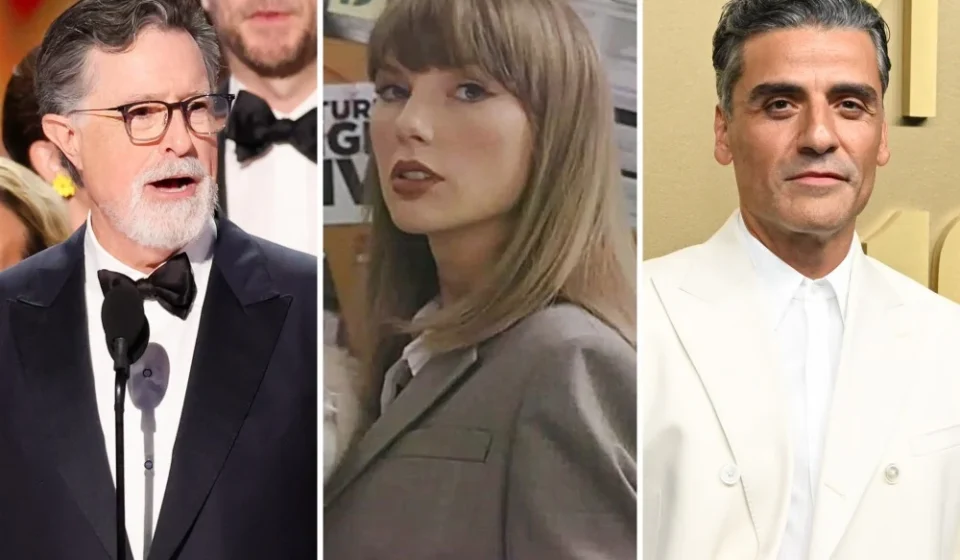
This year saw a major shift in how variety programming was recognized. In 2015, the Academy split Outstanding Variety Series into two categories: "Sketch" and "Talk." The 2026 ceremony reversed this decision, merging them back into a single field. This created a high-stakes showdown between Stephen Colbert’s The Late Show—in its final season—and the perennial powerhouse Last Week Tonight with John Oliver. Ultimately, Colbert’s swan song earned the victory, a nod to his enduring influence on the talk-show landscape.
Vote Splitting and "The Pitt"
The race for supporting actress was marked by a classic case of vote splitting. The ensemble of The Pitt was expected to dominate, but the sheer volume of talent from that show likely cannibalized its own support. This opened a clear lane for Allison Janney, who secured the win for her work on The Diplomat.
The "Double-Life" of Taylor Swift
In a moment that highlighted the logistical gymnastics required of modern celebrity, Taylor Swift managed to be in two places at once. Having pre-taped a comedy sketch for the Emmy broadcast to support host Mariska Hargitay, Swift successfully navigated her schedule to attend the season opener for the Kansas City Chiefs, supporting her husband, Travis Kelce.
The Diversity Crisis: A Persistent Snub
Despite the glamour of the evening, the 78th Emmys faced immediate and intense criticism regarding the lack of representation among its acting winners. As noted by industry analyst Clayton Davis, every single lead and supporting acting award went to a white performer.
This result has sparked a heated debate regarding the Academy’s voting body. In an era where diverse storytelling is at the heart of the "Prestige TV" boom, the total absence of actors of color in the winners’ circle has cast a long shadow over the 2026 ceremony. Critics are asking why, in 2026, the industry continues to struggle with systemic imbalances that appear to ignore the contributions of non-white performers. This "Emmys So White" narrative is expected to dominate trade headlines for weeks to come, putting pressure on the Television Academy to re-examine its voting demographics and inclusivity mandates.
Implications: Ratings, Strategy, and the "Gridiron Giant"
Perhaps the most puzzling decision of the night was the scheduling. The Television Academy chose to air the ceremony opposite the first Monday Night Football game of the NFL season, which featured the Kansas City Chiefs.
For the average television viewer, the choice was binary: the prestige of the arts or the spectacle of the gridiron. In a climate where linear television ratings are already in a state of precipitous decline, experts argue that placing the Emmys in direct competition with a national sports obsession was a strategic error. The move suggests a potential disconnect between the Academy’s programming team and the viewing habits of the modern audience. If the Emmys are to remain a cultural touchstone, they must address these logistical hurdles, as well as the aesthetic ones—such as a red carpet that many critics felt lacked the daring fashion risks of years past.
Looking Forward: A Call for Change
The 78th Primetime Emmy Awards were a microcosm of the current state of the television industry: technically brilliant, occasionally hilarious, and increasingly out of touch with the demands of a diverse and fragmented audience.
The victory of quirky, unconventional characters like Patricia Moyer, played by Kate O’Flynn in Widow’s Bay, proves that voters are still willing to reward bold, artistic risks. However, the lack of diversity in the acting categories and the blatant disregard for counter-programming strategies serve as reminders that the ceremony is in desperate need of a modernization effort.
As the industry moves toward the 79th iteration, the conversation must shift from "who won" to "what the wins signify." If the 2026 ceremony is remembered as the year the Emmys went head-to-head with the NFL and lost, the next year must be defined by a renewed commitment to relevance, inclusivity, and the celebration of the medium’s full spectrum of talent. The "leave ’em wanting more" philosophy that defined the show’s brevity was a success, but for the Emmys to truly thrive, they must first ensure they are giving the audience a reason to stay tuned in the first place.