The Gilded Cage: Rubaiyat Hossain’s ‘The Difficult Bride’ and the Horror of Perfection

At the 2026 Venice Film Festival, filmmaker Rubaiyat Hossain unveiled her fourth feature, The Difficult Bride, a film that arrives with the aesthetic precision of a high-end editorial and the visceral discomfort of a surgical procedure. In a cinematic landscape currently preoccupied with the grotesque commodification of the female form—most notably seen in Coralie Fargeat’s The Substance—Hossain’s latest offering attempts to carve out a unique space within the genre of body horror. By rooting its narrative in the hyper-pressurized environment of a Dhaka beauty parlor, the film serves as both a chilling supernatural thriller and a biting critique of class stratification in contemporary Bangladesh.
A Visionary’s Evolution: From Realism to the Surreal
Rubaiyat Hossain has long been a chronicler of the female experience, consistently placing intersectional feminist themes at the center of her filmography. Her previous works—Meherjaan, which navigated the traumatic legacy of the Bangladesh Independence War through a female lens; Under Construction, a poignant look at identity reclamation; and Made in Bangladesh, a sharp industrial drama centered on female unionization—established her as a director deeply committed to social realism.
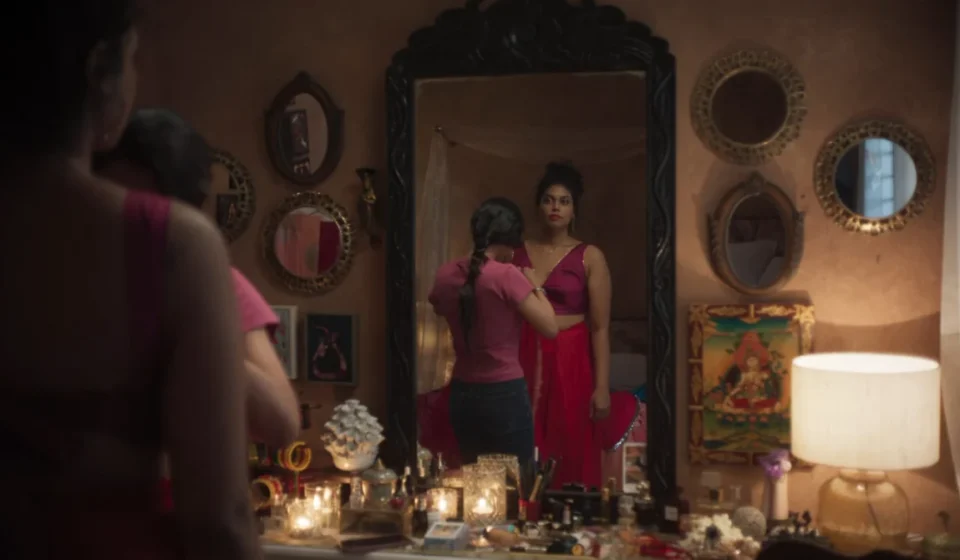
With The Difficult Bride, Hossain pivots into the atmospheric, adopting a style that feels both claustrophobic and opulent. By utilizing her own home as the primary set for the beauty salon, she imbues the space with a deeply personal, lived-in quality. The cinematography by Leonor Teles acts as a bridge between two worlds: lingering, sensuous shots of silk fabrics, vibrant floral arrangements, and lightbulb-stippled mirrors are juxtaposed against raw, guerrilla-style footage of Dhaka’s streets, where the harsh reality of the city’s unhoused population and child laborers creates a jarring visual dissonance.
The Anatomy of the Narrative: A Chronology of Decay
The film follows Zai (played by newcomer Zaineen Chowdhury Karim), a privileged, Western-educated aspiring author who finds herself caught in the machinery of bridal expectation. Zai is the quintessential "ghost" of her own life; she navigates the city behind the tinted windows of a chauffeur-driven SUV, ears filled with the lyrics of pop songs that ironically comment on her "performative" existence.

As the date of her arranged marriage looms, Zai is pressured into a rigorous, almost punitive, beauty regimen by the salon’s manager, played with an unnerving, icy perfection by Azmeri Haque Badhon. The salon is not a sanctuary but an abattoir of vanity. The narrative tension escalates through a series of "beauty" procedures that quickly devolve into body horror: needles pricking porcelain skin, the extraction of blemishes, and the constant, rhythmic sound of steam and metal.
The plot takes a supernatural turn when the apparition of a deceased former client—a bride whose beauty remains frozen in time—begins to haunt the mirrors. This spectral presence, embodied by model Sunerah Binte Kamal, serves as a dark mirror to Zai’s own anxieties. As Zai’s internal resolve to marry fractures, physical manifestations of her trauma appear: inexplicable scratches on her legs and recurring, festering blemishes that defy dermatological logic.
Supporting Data: The Craft of Claustrophobia
The effectiveness of The Difficult Bride lies largely in its technical execution. Sound designer Marie-Clotilde Chery transforms mundane salon sounds—the clink of a gold earring, the sharp hiss of a hair straightener—into triggers for visceral anxiety. Complemented by Jim Williams’ discordant, electro-pop-infused score, the film constantly signals to the audience that beneath the veneer of wedding-day joy, there is a rot taking hold.
The film relies heavily on symbolism, though it is here that the narrative occasionally stumbles. From severed cow heads to snails inching across the soles of luxury heels, the film is saturated with metaphors for the decay beneath the surface of Zai’s wealth. While visually arresting, these elements sometimes feel heavy-handed, distracting from the more nuanced exploration of class dynamics occurring between Zai and the salon worker, Minoti (Reekita Nondine Shimu).

The Intersection of Class and Gender: An Official Perspective
The dynamic between Zai and Minoti is, arguably, the film’s most successful thematic thread. Minoti, the working-class spa employee, serves as the only point of connection to the outside world for the isolated Zai. She is the one who facilitates Zai’s minor acts of rebellion—such as sourcing marijuana—yet she remains deeply aware of the chasm between them.
In interviews during the festival, Hossain has emphasized that the beauty industry in South Asia is not merely about aesthetics; it is a gatekeeper of social status. For women like Zai, beauty is a requirement for securing a "good" marriage; for women like Minoti, it is a service to be performed for the elite, with little prospect of ever participating in the status it confers.
The film further complicates this by framing the internal crisis of its protagonist against the backdrop of external societal instability. As news reports of student protests and rising violence against women broadcast in the background, Zai’s personal trauma becomes a microcosm of a city in flux. The "difficult bride" is not just a woman resisting a marriage contract; she is a symbol of a generation caught between traditional expectations and the isolating, curated reality of modern digital life.
Implications: A Polished Conclusion or a Missed Opportunity?
Despite its technical brilliance and provocative setup, The Difficult Bride encounters difficulty in its third act. After building a dense, atmospheric mystery, the film opts for a conclusion that feels overly neat. The complex social and psychological threads that Hossain spent the first two acts weaving are smoothed over, leaving the audience with few substantive conclusions.

The film’s failure to fully interrogate its own premises—particularly regarding the intersection of feminist theory and the "cursed bride" trope—is its most significant drawback. While it successfully subverts the horror tropes of the genre, it ultimately struggles to provide a definitive statement on the toxic industries it critiques.
As it stands, The Difficult Bride is an accomplished, if slightly uneven, piece of cinema. It stands as a testament to Hossain’s ability to capture the specific, suffocating atmosphere of a life lived for the gaze of others. However, in its final moments, the film mirrors the very beauty industry it critiques: it presents a flawless, polished surface that, upon closer inspection, leaves the viewer longing for a bit more depth beneath the foundation.
Critical Assessment
- Director: Rubaiyat Hossain
- Cinematography: Leonor Teles
- Cast: Zaineen Chowdhury Karim, Azmeri Haque Badhon, Sunerah Binte Kamal, Reekita Nondine Shimu
- Genre: Body Horror / Social Drama
- Festival Status: Premiered at the 83rd Venice International Film Festival
- Current Distribution Status: Seeking U.S. distribution
- Grade: C
Ultimately, while the film is a visually stunning addition to the growing sub-genre of "beauty horror," it serves as a reminder that even the most compelling visual metaphors cannot compensate for a lack of narrative resolution. The "difficult" bride remains an enigma, not because the film is profound, but because the script stops short of allowing her character to fully unravel. As the credits roll, one is left wondering what might have been had the film dared to be as messy and unrefined as the reality it attempts to expose.