
In the canon of Martin McDonagh, the line between the profoundly tragic and the aggressively absurd has always been porous. From the blood-soaked confessionals of In Bruges to the quiet, existential isolation of The Banshees of Inisherin, McDonagh has mastered the art of the "banter-mad" killer—characters who trade razor-sharp insults while standing on the precipice of their own moral annihilation. His latest feature, Wild Horse Nine, takes this established template and attempts a daring, if uneven, transfiguration: a classic American Western, transplanted to the rugged, isolated shores of Easter Island (Rapa Nui), set against the looming, historical shadow of the 1973 Chilean coup d’état.
The result is a film that functions as a double-edged sword. While it offers a welcome expansion of scale—positioning its protagonists not just as hitmen, but as the grim, unfeeling cogs of 20th-century American imperialism—it also struggles under the weight of its own historical reality. Where In Bruges could afford the luxury of a self-contained, fictional moral crisis, Wild Horse Nine is haunted by the ghosts of thousands of real-world victims, creating a friction that at times renders the film’s trademark seriocomic absurdity feel both brilliant and profoundly glib.
The Architecture of a Global Conspiracy
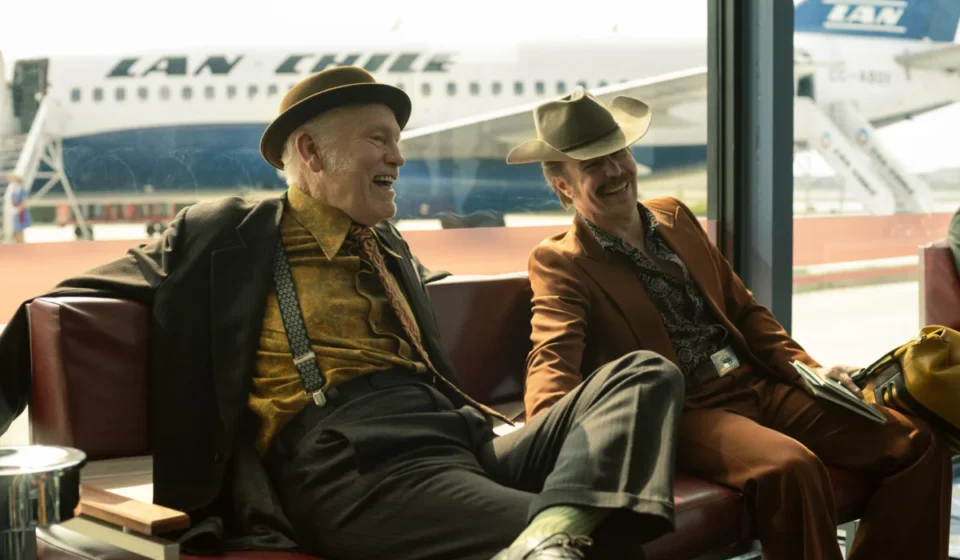
The film’s central narrative follows two CIA operatives, Chris (John Malkovich) and Lee (Sam Rockwell), who serve as the "office husband" pairing that drives the film’s prickly, post-Guy Ritchie dialogue. Chris is a man who carries the weight of a violent career like a well-worn coat; he is the living, breathing personification of the CIA’s destabilization efforts throughout the 20th century.
The chronology of his career is a map of the Cold War’s darkest chapters. He was present in the Congo during the fall of Patrice Lumumba; he was on the ground in Cuba during the failed attempts to topple Fidel Castro in 1961; and, in a detail that draws a sharp, cynical line from history to fiction, he was in Dallas on that fateful Friday in November 1963. He recounts his 68 kills with the casual, detached air of a man reading a grocery list, his lack of remorse serving as a chilling testament to the banality of evil.
As the film opens, the two men are stationed in Chile, meticulously orchestrating the September 11, 1973, coup against President Salvador Allende. It is a period of high-stakes, real-world horror, yet the protagonists remain detached, treating the dismantling of a democracy as a professional nuisance. Their "PTO"—a getaway to Easter Island—serves as the film’s primary setting, where the two men await the inevitable bloodshed they have set in motion, passing the time by staring at the ancient moai statues and debating the theological status of Nazis in the afterlife.

Supporting Data: The Weight of Memory and Erasure
Wild Horse Nine is only the second feature film ever shot on the remote, volcanic soil of Rapa Nui, following Kevin Reynolds’ 1994 epic Rapa Nui. The choice of location is central to the film’s thematic preoccupation with time, memory, and the impermanence of empires.
Cinematographer Ben Davis renders the island with a sun-bleached, almost hallucinatory clarity. The landscape is presented as a "lost idyll," a stark contrast to the profane, chatter-heavy violence of the two lead characters. The moai statues, standing for centuries as silent witnesses to the rise and fall of Polynesian civilization, serve as a mirror for Chris’s own deteriorating psyche. As his memory begins to erode—a plot device that echoes Memento—the statues become symbols of all that remains when the humans who created them are long forgotten.
Malkovich, delivering his most locked-in performance since Burn After Reading, captures the fragility of this erosion perfectly. His Chris is a man caught between the bravado of an old-school cowboy and the creeping paranoia of someone who knows he has become a liability to the agency he served. He is a monster who is slowly losing his ability to remember his own monstrous acts, while Lee, played with a frantic, weary energy by Rockwell, acts as his unwilling and increasingly desperate caretaker.
Official Responses and Creative Impasse
While the film has garnered attention for its stylistic boldness, it has also sparked a debate regarding the appropriateness of using the Pinochet coup as a backdrop for a black comedy. Critics have pointed out that while McDonagh’s "glibness" provides the film with its most successful laughs, it also makes the narrative feel "transparently manufactured."
The core issue lies in the credibility of the characters’ moral awakenings. The audience is asked to believe that a man who helped topple governments and orchestrated political assassinations would experience a "come-to-Jesus" moment of existential guilt. While McDonagh attempts to wrestle with whether or not the audience should care about such a late-stage moral shift, the film often leaves the question moot. The emotional stakes are frequently undercut by the film’s own reliance on cynical conspiracies and high-octane, madcap action sequences that occur as the plot nears its climax.

Implications: When Comedy Meets Conscience
The film’s ultimate failure—and its most poignant success—is its refusal to offer the audience the catharsis of a clean, moral resolution. There is no grand confession, no divine redemption for Chris. Instead, as their "vacation" turns into a matter of national security, the film devolves into a chaotic flurry of gunfire, hostage-taking, and desperate, shouted profanities.
The implication is clear: the American interventions that Chris represents are not just political tools; they are cycles of violence that outlive the men who initiate them. By placing these characters in the shadow of statues that have survived for nearly a millennium, McDonagh suggests that the CIA’s "great" works are ultimately ephemeral. The film posits that American interventionism is less a grand geopolitical strategy and more a punchline to a cosmic joke—a joke that is being told in a language that, for the victims, was never funny to begin with.
Conclusion: A Master at a Crossroads
Wild Horse Nine is, at its heart, a film about the struggle to forget. Chris wants to erase the trail of bodies he has left behind, and his failing mind is only too happy to oblige. The CIA, meanwhile, is determined to ensure that he never shares the secrets of his past. Trapped between these two forces are the characters, and by extension, the audience, watching the slow, grinding collapse of a man who realized too late that he was never the hero of his own story.
Though the film struggles to maintain its balance between the sardonic and the sincere, its most powerful moments are those found in the quiet, ambient tension between memory and erasure. It is a work that feels at once overly ambitious and strangely listless, a film that is constantly reaching for a profound truth about history, only to get distracted by its own desire to be the smartest, darkest thing in the room.
Ultimately, Wild Horse Nine confirms that while Martin McDonagh remains one of our most distinct voices, he is currently at a creative crossroads. He has the technical skill to weave comedy and tragedy into a single frame, but in this latest outing, the threads are beginning to fray. Whether this is a sign of a new direction or merely a temporary lapse in judgment, the film stands as a fascinating, if deeply flawed, meditation on the cost of power and the silence of the history we leave behind.

Grade: B-
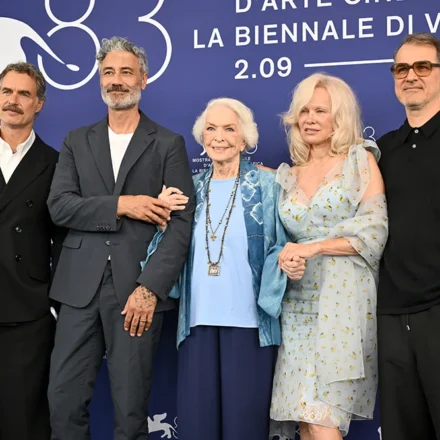
Wild Horse Nine premiered at the 2026 Venice Film Festival. Searchlight Pictures is scheduled to release the film in theaters nationwide on Friday, November 6.